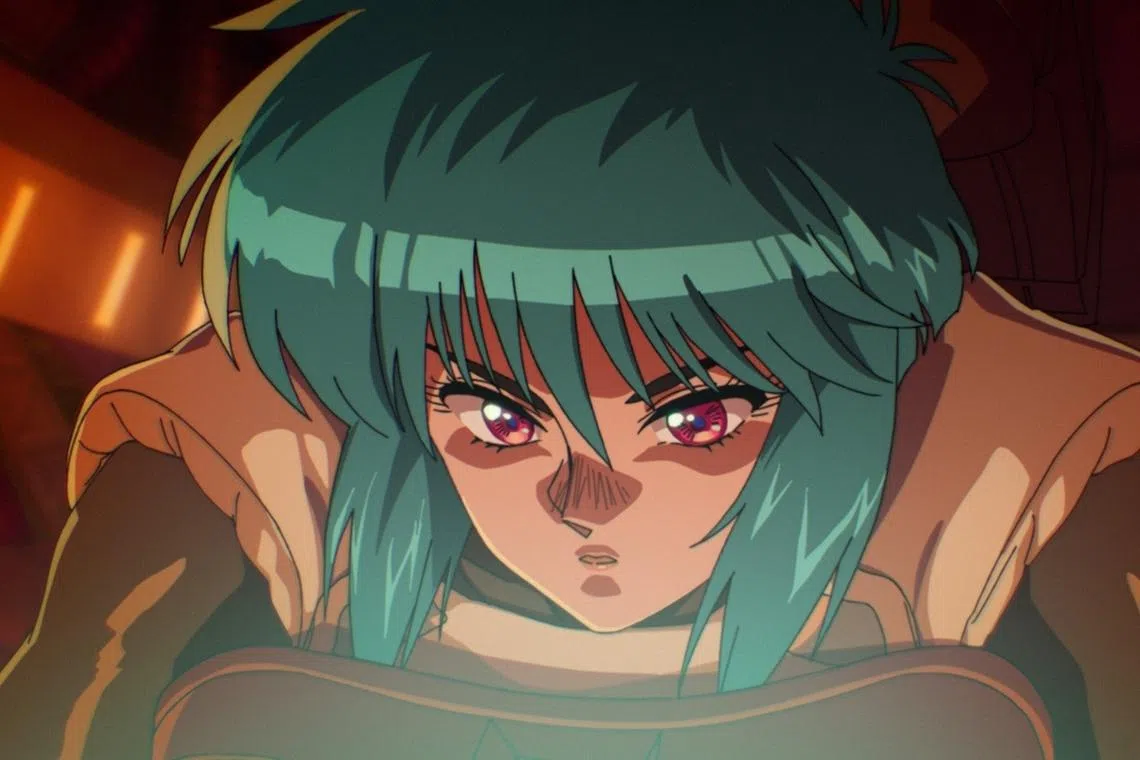
Ghost In The Shell is one of the most influential pieces of Japanese science fiction, inspiring seminal films like The Matrix series (1999 to 2021) and Avatar (2009), and countless anime and video games, including the Metal Gear franchise (1987 to present).
Japanese artist Masamune Shirow’s original manga from 1989 is set in 2029, at a time where cybernetic implants have become common and cyberbrains allow people to connect to various networks and machines with their minds, effectively making them cyborgs.
The story follows Major Motoko Kusanagi as she forms a counter-terrorism unit fighting various forms of cybercrime.
The manga has been adapted several times, including a hugely popular 1995 film directed by Japanese animator Mamoru Oshii, and a fan-favourite animated series for Japanese TV in the early 2000s by Kenji Kamiyama (titled Stand Alone Complex).
But more recently, a notoriously bad 2017 American live-action adaptation starring Scarlett Johansson and a couple of CGI-animated shows and movies have damaged the franchise’s reputation, at least as source material.
Previous Ghost In The Shell projects have focused only on a portion of the story or spun new narratives based in its universe.
But for the latest series, Japanese animation studio Science Saru (Scott Pilgrim Takes Off, 2023; Dan Da Dan, 2024) aims to adapt the entire original manga faithfully.
The first season, covering Volume 1, is now streaming on Prime Video, and it vibrantly captures the philosophising of the manga along with its humour and appealing relationships.
In an interview in June, the day after the series’ premiere at the Annecy International Animation Film Festival in the French Alps, director Mokochan (his given name is Touma Kimura), speaking through an interpreter, discussed making The Ghost In The Shell, the timeliness of the story and why it was important that this new adaptation be mostly hand-drawn.
These are edited excerpts from the conversation.
This is the first time we’re seeing a long-form adaptation of the manga.
What were you excited to explore that we haven’t seen in earlier versions? I wanted to establish the relationship between Kusanagi and (her boss) Chief Aramaki, which is something we devote a fair bit of time to because we have the opportunity to dive deeper into that.
Also, to establish the atmosphere of the story, and to replicate the impression you get when you first open this manga.
The show has a very specific ’90s look despite being made now and being set in 2029.
Why was this important? The ’90s have a bit of a different feel compared with now, and using the technology from that era gives the story more of a....