Trump’s declaration that he had decided at the last moment to delay, “for a short time,” a U.S.
strike on Iran once again raised tensions across the Middle East.
He said he had responded to requests from Gulf leaders who asked for more time for negotiations with Tehran, but also made clear he had ordered the U.S.
military to remain ready to launch a “large-scale attack” immediately if talks fail.
On Wednesday evening, the Iranian news agency Tasnim, which is close to the regime, reported that the United States had delivered a new proposal to Tehran.
“They transmitted a new text to Iran via Pakistan,” a source close to the negotiations told Tasnim.
“Iran is currently reviewing the text and has not yet responded.
Pakistan is trying to bridge the gaps, but these efforts have not yet produced final results.” Before that proposal, the Wall Street Journal reported that the U.S.
and Israel were preparing new strikes against Iran, possibly as early as next week.
Behind this pause lies an unusual balance of power.
On one side, a major U.S.
concentration of naval, aerial and defensive assets around Iran, giving Washington the ability to quickly resume strikes, defend its bases and allies, and apply maritime pressure on Tehran.
On the other side, Iran, which has been significantly weakened in recent months, still retains capabilities sufficient to impose heavy costs: a substantial missile arsenal, drones, regional proxy forces, an enriched uranium stockpile approaching weapons-grade levels, and one critical strategic lever that worries the entire world: the Strait of Hormuz.
Two aircraft carriers, destroyers and thousands of troops around Hormuz At present, according to USNI News, which tracks the U.S.
Navy, two American aircraft carrier strike groups are operating in the Arabian Sea: the USS Abraham Lincoln and the United States Ship (USS) George H.W.
The USS Gerald R.
Ford, which had been part of the unusually large regional deployment, has already returned to its home port in Norfolk, Virginia after an 11-month deployment.
But the presence of two strike groups still preserves significant firepower against Iran.
Around the carriers operate air wings including F/A-18 fighter jets, F-35C stealth aircraft, EA-18G Growler electronic warfare jets, E-2D command and control aircraft and helicopters.
In addition, guided-missile destroyers and other vessels are deployed across the Arabian Sea, the Red Sea and the eastern Mediterranean.
USNI also reported that an amphibious force from the USS Tripoli is operating within the U.S.
Central Command area of responsibility, alongside Marine vessels and mine warfare ships sent to the region.
This presence enables the United States to rapidly resume strikes on Iran from sea and air, using aircraft, cruise missiles, intelligence capabilities and electronic warfare, while also providing a broader defensive umbrella for U.S.
bases, regional partners, Israel and maritime routes in the Gulf.
In addition to naval forces, the U.S.
has already deployed F-35, F-15E and F-16 aircraft, B-2 and B-52 bombers, KC-135 refueling tankers and extensive intelligence, surveillance and electronic warfare systems in its operations against Iran.
The arena that has become the central bargaining chip and the possibility of NATO involvement If at the beginning of the current war the focus was on nuclear facilities and the missile program, the Strait of Hormuz has now become an equally central strategic hub.
has already announced restrictions on maritime traffic to and from Iranian ports but stressed it does not intend to block free passage of vessels heading to non-Iranian ports.
At the same time, United States Central Command has launched a mine-clearing operation in the strait after, according to U.S.
statements, the Islamic Revolutionary Guard Corps laid naval mines in the area.
Earlier this month, Trump launched “Operation Project Freedom,” aimed at restoring commercial shipping through Hormuz under a U.S.
protective umbrella.
The move was suspended two days later, but the U.S.
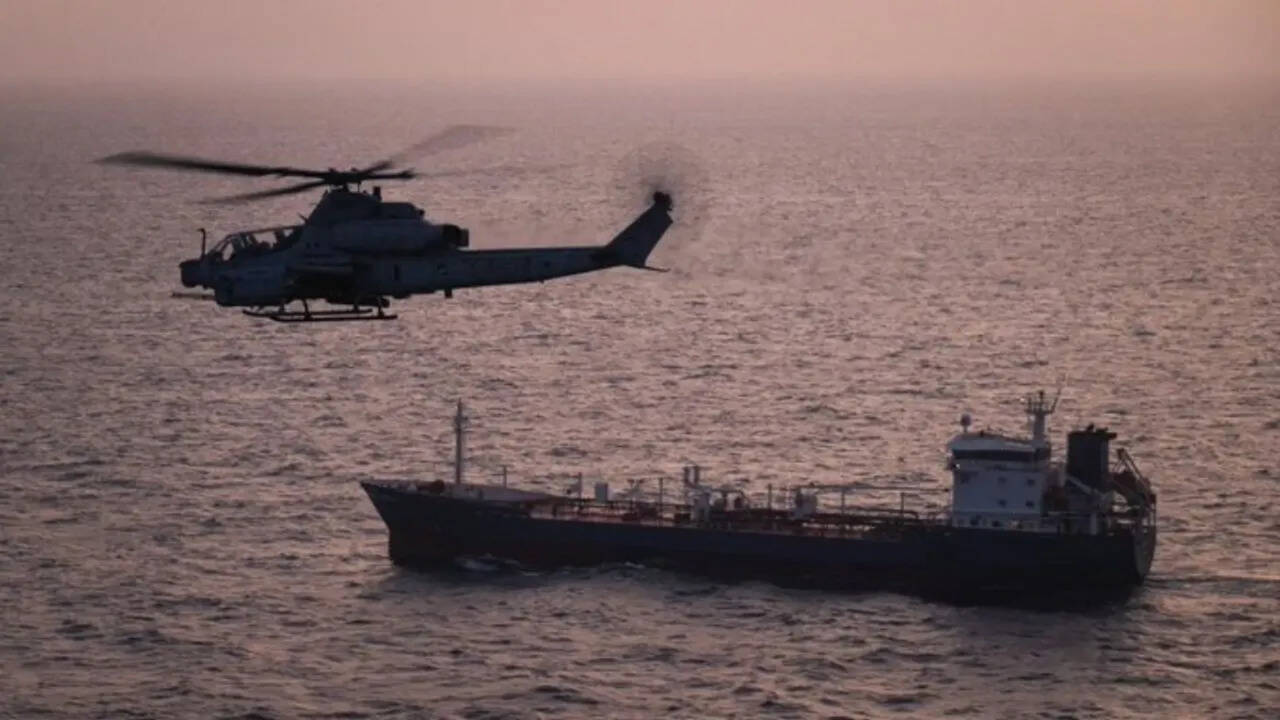
continues to maintain a large naval and air presence designed to protect its forces, enforce maritime pressure on Iran and deter attacks on commercial shipping.
According to CENTCOM, the force in the Strait of Hormuz includes guided-missile destroyers, more than 100 aircraft from land and sea bases, unmanned systems and about 15,000 military personnel.
Bloomberg reported that NATO is also considering intervention if the strategic shipping lane is not reopened by early July.
According to the report, alliance discussions are underway on assisting safe passage for ships through the blocked strait.
A diplomat from a NATO member state said the idea has support from several members but still lacks the unanimous approval required.
If approved, such a move would mark a significant shift in NATO policy regarding the U.S.-Israel war with Iran and bring the alliance more directly into efforts to secure freedom of navigation in the Gulf.
For Iran, this is not just a shipping lane but a survival lever.
Before the war, the strait carried about a quarter of global seaborne oil trade....