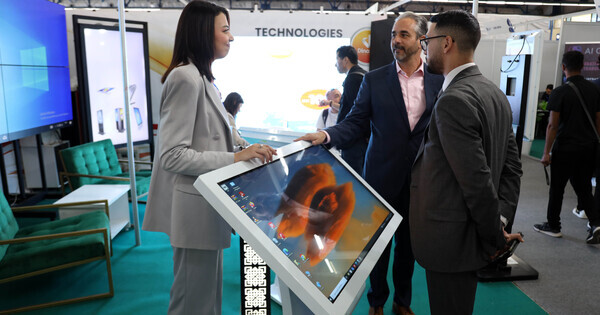
Tuesday, April 21, 2026 at 4:30 p.m.
ET CALL PARTICIPANTS President — David RosaChief Financial Officer — Jamie SamathChief Medical Officer — Jamie WongSenior Vice President, Strategy & Investor Relations — Daniel Connally Total Procedures -- Increased 17% to 890,000, including 16% growth in da Vinci and 39% growth in Ion procedures.da Vinci Procedures (U.S.) -- Rose 14%, supported by 31% growth in after-hours procedures and a 4% increase in U.S.
utilization, with da Vinci 5 utilization about 11% higher than Xi.da Vinci Procedures (Outside U.S.) -- Grew 19%, now representing 38% of total da Vinci volume, led by general surgery and gynecology; Asia growth lagged, with ongoing challenges in China and Japan.Ion Procedures -- Expanded 39% to 43,000 procedures, including clinical adoption reinforced by recent Mayo Clinic data showing a diagnostic yield of 79% and sensitivity of 85% for malignancy.Single Port (SP) Platform Procedures -- Increased 68%, driven by adoption in Korea, the U.S., and early-stage growth in Europe, Japan, and Taiwan; SP system utilization in the U.S.
grew 22% year over year.Revenue -- Gained 23% to $2.77 billion, with recurring revenue of $2.4 billion comprising 86% of the total; constant currency revenue growth reached 22%.Installed Base and Placements -- Placed 431 da Vinci systems globally (including 232 da Vinci 5, 34 SP, and 34 XiR systems), plus 52 Ion systems; da Vinci 5 base now near 1,500 systems, used by almost 13,000 surgeons.Leasing & Trade-In Activity -- da Vinci leasing represented 56% of placements, up from 47% the prior quarter, with trade-in transactions at 119, a rise from 67, mainly due to da Vinci 5 upgrades in the U.S.Average Selling Price (Purchased da Vinci 5) -- $1.7 million, higher than $1.6 million last year, with growth influenced by more da Vinci 5 and dual-console systems, partially offset by higher trade-ins.Instrument & Accessory Revenue -- Climbed 23% to $1.7 billion; da Vinci I&A revenue per procedure was about $1,880, up from $1,780, driven by product mix and FX, partially offset by lower bariatric and high cholecystectomy cases.Service Revenue -- Rose 19% to $434 million, reflecting increases in the installed bases of both da Vinci (12%) and Ion (22%) systems; service revenue per da Vinci system advanced 6% due to a higher da Vinci 5 mix.Non-GAAP Operating Margin -- Reported at 39%, reflecting leverage of fixed costs and product cost reductions; non-GAAP gross margin improved to 67.8% from 66.4% the prior year, despite ongoing tariff impacts.Non-GAAP Net Income and EPS -- Achieved $901 million and $2.50 per share, respectively, up from $662 million and $1.81 per share.GAAP Net Income and EPS -- Reported $822 million and $2.28 per share, compared to $698 million and $1.92 per share.Cash and Investments -- Ended with $8 billion, a decline from $9 billion driven by $1.1 billion in share repurchases, distributor acquisition in Italy, Spain, and Portugal, and $103 million in capital expenditures, offset by operating cash flow and equity proceeds.Gross Margin Outlook -- Updated non-GAAP gross profit margin guidance to 67.5%-68.5%, reflecting a 20 basis point reduction in expected tariff impact and greater input costs, including for freight and memory.Procedure and OUS Growth Forecasts -- Raised full-year da Vinci procedure growth outlook to 13.5%-15.5%, up from 13%-15%; expects OUS procedure growth to benefit from new reimbursement in Japan for seven procedures and premium reimbursement for robotic rectal resection.Cybersecurity Incident -- Cyber incident in Q1 resulted in unauthorized access to certain customer and employee data; no disruption to operations or significant financial impact, with new security protocols being implemented.Innovation and Digital Initiatives -- da Vinci 5 and Force Feedback instrumentation cleared in March for broader use; ongoing investments in digital ecosystem and My Intuitive+ are foundational to the AI and telesurgery road map.
Need a quote from a Motley Fool analyst? Email [email protected] Jamie Samath stated, "While Q1 results were not significantly impacted by higher oil and memory prices, we do expect those to have a greater unfavorable impact in the remainder of the year," highlighting anticipated margin headwinds.China remains challenged by "relatively low tender activity," "domestic competition and policy-driven pricing pressure," and continued uncertainty about new reimbursement codes until at least 2027.Japanese procedure growth "remained below historical levels," and Samath said, "we remain cautious in our outlook for the Japanese market in the short term given the financial position of public hospitals in recent periods."Jamie Samath noted, "With respect to the expiration of subsidies for enhanced premiums under ACA, while we did not see any significant impact on procedure volumes in Q1, at this time, we remain cautious as to what the potential impact, if any, might be," signaling U.S.
volume risk.
Intuitive Surgical (ISRG 3.04%) reported double-digit growth in total procedures and revenue, signaling continued broad adoption of its da Vinci, Ion, and SP platforms.
Management executed key strategic priorities, advancing the da Vinci 5 ecosystem, accelerating SP platform growth, and investing in product innovation, digital capabilities, and geographic expansion.
Recent FDA clearances for Force Feedback instrumentation expand clinical utility, while strong recurring revenue underscores business durability.
Cash was deployed for shareholder returns and M&A, and updated guidance reflects cautious optimism tempered by explicit macro, geopolitical, and reimbursement risks.
Management increased its full-year da Vinci procedure growth range and raised gross margin guidance, explicitly citing improved operating leverage and cost reduction initiatives.Clinical evidence from the Mayo Clinic demonstrated Ion's diagnostic utility, with a 79% yield and 85% sensitivity for malignancy, and a notable 23 percentage point improvement in early-stage diagnosis rates since 2019.Operational resilience was highlighted, as a cyber incident did not disrupt business or materially affect financial results; further cybersecurity enhancements are underway.Outside the U.S, expanded reimbursement coverage and policy changes in Japan and Europe are expected to contribute to growth, while China remains pressured by low tenders, competition, and pricing constraints.Strategic capital deployment included $1.1 billion in share repurchases and the acquisition of distributor businesses in key European markets, indicating ongoing commitment to both growth and shareholder returns.
INDUSTRY GLOSSARY SP Platform: Intuitive's Single Port robotic system enabling surgery through a single incision.Ion Platform: A robotic-assisted endoluminal system for minimally invasive lung biopsies.Force Feedback Instrumentation: Instruments providing real-time tactile data to surgeons during robotic procedures, supporting surgical precision and safety.Quintuple Aim: Strategic healthcare goals emphasizing better patient outcomes, improved patient and care team experiences, lower costs, and expanded access.My Intuitive+: A digital platform supporting training, telepresence, and program insights for robotic surgeons and hospitals.EBUS (Endobronchial Ultrasound): Technology integrating ultrasound with bronchoscopy to assess and stage lung disease.ROSE (Rapid On-Site Evaluation): Real-time assessment process for diagnostic biopsy adequacy, under development for use with Ion.XiR: Refers to an upgraded or extended version of the da Vinci Xi surgical system.
Full Conference Call Transcript David Rosa: Good afternoon, and thank you for joining us.
Q1 was a solid start to the year for Intuitive, driven by 17% total procedure growth and broad-based adoption across da Vinci and Ion as customers continue to advance minimally invasive care.
In Q1, da Vinci procedures grew 16% to 847,000, and Ion procedures increased 39% to 43,000.
Performance was strong in the U.S.
and Europe, with mixed results in Asia.
In the United States, da Vinci procedures grew 14% year-over-year, led by strength in general surgery.
Growth was supported by a 31% increase in after-hours procedures and higher overall utilization.
da Vinci 5 utilization continues to exceed that of da Vinci Xi, driving U.S.
utilization growth to 4%.
Outside the U.S., da Vinci procedures grew 19%, led by continued strength in general surgery and gynecology as adoption expands beyond urology.
The lower growth rate relative to prior quarters reflects ongoing challenges in China and Japan.
In China, the environment remains largely consistent with recent quarters reflecting relatively low tender activity across the category, domestic competition and policy-driven pricing pressure.
Given our belief in the long-term opportunity, we continue to make investments to improve procedure growth, establish favorable patient charge codes and support other market access activities.
In Japan, procedure growth improved sequentially, but remained below historical levels following fewer system placements in 2025.
We are encouraged by recent policy developments, including incremental financial support for higher-volume robotic programs and new reimbursement for 7 additional procedures.
Both policies to be effective starting in June 2026.
Jamie will describe these changes in more detail shortly.
I have confidence in our ability to execute our international strategy.
Investments in our organizational capabilities, clinical trials and research, and market access efforts are yielding supportive robotic surgery policies and reimbursements in many of the countries we serve.
The arc of progress is evident with OUS procedures now representing 38% of total da Vinci volume, up from 25% a decade ago.
We are well positioned to expand access and drive deeper adoption in these countries with the addition of XiR to our system portfolio, and our overall ecosystem of technologies, training and services.
Turning to capital.
We placed 431 da Vinci systems in Q1, including 232 da Vinci 5 systems, 34 SP systems and 34 XiR systems.
We also placed 52 Ion systems in the quarter.
As da Vinci 5 moves into broader clinical use globally, customer adoption and feedback remain very encouraging.
Customers are building experience with the da Vinci 5 ecosystem, resulting in increased clinical throughput and expanded access to da Vinci surgery.
At the recent annual SAGES conference, several clinical abstracts demonstrated objectively lower tissue forces using da Vinci Force Feedback instrumentation across multiple procedure types.
We continue to believe that objective knowledge of applied forces in surgery will lead to improved surgical outcomes and are investing to demonstrate this at scale.
In March, we received FDA 510(k) clearance for additional uses of our Force Feedback instruments.
Five of 6 instruments are now cleared for 15 uses, while our Mega SutureCut Needle Driver is cleared for 10 uses.
Combined with multiyear investments in supply chain and manufacturing, this clearance supports broader availability in Q2 that will increase over the rest of the year.
We expect adoption of Force Feedback instrumentation to progress steadily through 2026 and beyond.
Turning to our digital ecosystem.
We continue to invest in the data and digital infrastructure that underpins our longer-term innovation road map.
da Vinci 5 captures real-world surgical data at greater scale and fidelity, enabling deeper insight into how procedures are performed in practice.
That insight paired with clinical context from connected electronic medical records, provides better understanding of variation, workflow and outcomes, and informs current and planned digital and AI-enabled capabilities.
My Intuitive+ continues to play an expanding role in training and program support, with growing adoption of Intuitive Telepresence capabilities that enable proctoring, mentoring and collaboration across surgeons and sites.
Collectively, these efforts are foundational to our long-term digital and AI road map where we expect to add telesurgery, deeper decision support and augmented dexterity, including aspects of future automation, all in pursuit of advancing the Quintuple Aim.
I'm excited by the progress our development teams are making.
Turning to our Single Port Platform.
SP momentum continued in the quarter with procedures growing 68% year-over-year.
Growth was driven by expansion in Korea and the U.S.
and ongoing early adoption across select international markets.
Recently, U.S.
surgeons performed the first non-IDE nipple sparing mastectomy cases as we advance our measured rollout focused on training and support of our customers.
We also moved our single-port stapler into broad launch, which will support deeper penetration in thoracic and colorectal procedures as customers expand their programs.
Our teams are focused on new product and procedure launches, expanding our customer base and securing new geographic clearances.
Over the midterm, SP will incorporate much of the da Vinci 5 ecosystem, including current and future digital and AI capabilities.
We're excited about the potential of SP to drive meaningful improvement in the Quintuple Aim.
Moving to Ion.
We're pleased with the results and progress this quarter.
Ion's North Star is to help physicians improve lung cancer patient survival.
Clinical publications continue to reinforce progress here, including a recent Mayo Clinic publication of approximately 2,000 patients, which demonstrated that use of Ion supports earlier identification of malignancy with the potential to improve patient survival.
Dan will walk through the study in more detail later in the call.
Our teams are making progress on our rapid on-site tissue evaluation technology, or ROSE, and endobronchial ultrasound integration as we look to further streamline the time from detection to diagnosis.
Looking ahead, our company priorities for 2026 are unchanged.
First, the global expansion of our platforms, digital feature releases and ecosystem enhancements.
Second, increased adoption for focused procedures by country through training, commercial activities and market access efforts.
Third, building industrial scale, enhancing product quality and achieving manufacturing optimization.
And finally, advancing innovation to reach more patients in current and new disease states.
Before I turn the call over to Jamie, I want to recognize an important leadership transition at Intuitive.
Myriam Curet is retiring this quarter after more than 20 years as Intuitive's Chief Medical Officer.
I'd like to thank Myriam for all her efforts in advancing our mission as a physician, a patient advocate and a business leader.
I'm also pleased to announce Dr.
Jamie Wong's promotion to Chief Medical Officer and member of our executive leadership team.
Jamie provides -- combines a deep clinical background as a practicing da Vinci urologist with his experience of more than a decade at Intuitive, leading a variety of functions.
As CMO, he will lead our global medical office, overseeing customer training, clinical evidence generation and research, and reimbursement and market access efforts.
And with that, I'll turn the time over to Jamie to take you through our finances in greater detail.
Jamie Samath: Good afternoon.
I will describe our performance on a non-GAAP basis, and I'll summarize our GAAP results later in my remarks.
A reconciliation between our non-GAAP and GAAP results is available on our website.
All references to total procedures and their related growth rates include both da Vinci and Ion procedures.
Before detailing our quarterly results, I would like to briefly address the cyber incident that occurred during the first quarter, which resulted in unauthorized access to some customer business and contact information as well as certain Intuitive employee and corporate data contained in certain of our IT business applications.
The incident did not disrupt our business or manufacturing operations and did not affect our products.
It also did not have a significant impact on our first quarter financial results.
We have contained the incident, notified customers and informed appropriate data privacy regulators.
We are also taking additional steps to further strengthen our cybersecurity protocols.
In Q1, total procedures grew 17%, reflecting 16% growth in da Vinci procedures and 39% growth in Ion procedures.
Quarter 1 revenue increased 23% to $2.77 billion, with recurring revenue also higher by 23% to $2.4 billion, accounting for 86% of total revenue.
On a constant currency basis, revenue growth was 22%.
Non-GAAP operating margin was strong at 39%, primarily reflecting leverage of fixed costs.
The strength of our financial results reflect the continuing global expansion and procedure adoption of our da Vinci 5, Ion and SP platforms.
Turning to the clinical side of our business.
In the U.S., total procedures increased 15%, reflecting 14% growth in da Vinci procedures and 37% growth in Ion procedures.
For our da Vinci platforms, we continue to see strong growth in cholecystectomy and appendectomy procedures, which combined grew by 31%, driven in part by continued expansion of use of da Vinci during after-hours and on weekends.
We are starting to see emerging evidence that a broad set of clinical outcomes for appendectomy are improved with da Vinci surgery as compared to laparoscopy.
Over the last year, in the U.S.
we've invested in incremental clinical support for surgeons performing benign gynecology procedures given the opportunity to improve patient outcomes.
While total U.S.
gynecology procedures grew 10% in Q1, investments in this area drove a 19% increase in non-hysterectomy benign procedures, including sacrocolpopexy, endometriosis, oophorectomy and myomectomy during the quarter.
da Vinci bariatrics procedures in the U.S.
continue to be impacted by the growth in use of GLP-1s and declined approximately 10%.
da Vinci utilization in the U.S.
increased 4% in Q1, higher than recent quarters, driven by a growing installed base of da Vinci 5 systems, where utilization is approximately 11% higher than Xi.
With respect to the expiration of subsidies for enhanced premiums under ACA, while we did not see any significant impact on procedure volumes in Q1, at this time, we remain cautious as to what the potential impact, if any, might be.
Outside the U.S., total procedures grew 20% with da Vinci procedure growth of 19%, reflecting strong results in India, Canada, the U.K., Korea and Taiwan, and solid growth in distributor markets, Italy and Germany.
The market in China continued to be challenging.
In Q1, procedure growth was below the corporate average, reflecting lower tenders and competitive and pricing pressures.
There are ongoing discussions with provinces regarding potential new charge code and reimbursement policies in China for robotic procedures.
We are actively engaged with policymakers but do not expect clarity on the outcome of these matters until 2027.
Procedure growth in Japan was also below the corporate average, reflecting lower capital placements over the last several quarters.
In Q1, the Japanese Ministry of Health, Labor and Welfare, or MHLW, recently introduced incremental reimbursement for hospitals that exceed robotic procedure volumes of 200 qualifying cases per year.
In addition, 7 new procedures have been granted robotic reimbursements starting in June of 2026.
Furthermore, rectal resection has been granted premium reimbursement when performed robotically.
While we are encouraged by these steps, we remain cautious in our outlook for the Japanese market in the short term given the financial position of public hospitals in recent periods.
Globally, we continue to see healthy procedure growth for our SP platform at 68% for Q1 with strength in Korea and continuing robust early-stage growth in Europe, Japan and Taiwan.
In the U.S., SP's average system utilization continued to accelerate following recent additional clearances, growing 22% as compared to quarter 1 of last year.
During the quarter, we moved our new SP stapler into broad launch in the U.S., where it was used in almost 40% of cases where we would expect a stapler to be used.
We are planning to move the SP stapler into measured launch in Korea and Europe in Q2 as we expand manufacturing capacity.
As a result of our clinical performance, total I&A revenue in quarter 1 grew 23% to $1.7 billion.
da Vinci I&A revenue per procedure was approximately $1,880 compared to $1,780 last year, driven by customer ordering patterns, a higher mix of SP and da Vinci 5 procedures and FX, partially offset by lower bariatric and high cholecystectomy procedures.
Turning to capital performance and starting with our da Vinci business.
We placed 431 da Vinci systems in quarter 1, a 17% increase from the 367 systems placed in the same quarter last year.
232 of the 431 placements were da Vinci 5, including 40 in OUS markets.
The installed base of da Vinci 5 is now almost 1,500 systems used by almost 13,000 surgeons since launch.
Customers acquired 34 refurbished Xi systems in Q1 compared to 2 in the year ago period.
26 of the 34 placements were in OUS markets in segments where we see greater cost sensitivity.
There were 119 trade-in transactions in quarter 1, up from 67 a year ago, primarily driven by U.S.
customers upgrading to da Vinci 5.
In the U.S., we placed 226 systems, up from 204 last year, driven by adoption of da Vinci 5.
Outside the U.S., we placed 205 systems, an increase of 26% compared to the 163 systems placed last year.
OUS placements included 117 systems in Europe, 62 in Asia and 26 in the rest of the world compared to 88, 52 and 23, respectively, last year.
Relative strength in Europe was driven primarily by the U.K., where we placed 34 systems as the NHS closed out its budgetary year.
We placed 13 systems in Japan and 4 systems in China, reflecting lower overall tender volumes.
Within the 431 da Vinci placements, we placed 34 SP systems in Q1, higher than the 19 systems last year, driven primarily by increased placements in the U.S.
For our Ion platform, we placed 52 systems in Q1 compared to 49 systems last year.
Q1 Ion placements included 13 systems in OUS markets.
Given our capital performance, quarter 1 systems revenue grew 24% to $651 million.
For our da Vinci business, leasing represented 56% of da Vinci placements as compared to 47% last quarter and 54% last year, driven primarily by customer preference.
da Vinci leasing revenue increased 28%, reflecting a 14% expansion of the installed base under operating lease arrangements and a 12% increase in lease revenue per system, driven by a higher mix of da Vinci 5 systems and higher utilization for usage-based arrangements.
The average selling price for purchased da Vinci 5 systems was $1.7 million in Q1 as compared to $1.6 million last year, driven both by a higher mix of da Vinci 5 systems and dual-console systems, partially offset by higher trade-ins.
Lease buyout revenue was $51 million as compared to $39 million last quarter and last year.
Quarter 1 service revenue increased 19% to $434 million, reflecting an increase of the da Vinci installed base of 12% and the Ion installed base of 22%.
Service revenue per system for our da Vinci installed base increased 6% year-over-year, primarily reflecting a higher mix of da Vinci 5 systems.
Turning now to the rest of the P&L.
Non-GAAP gross margin for the quarter was 67.8%, an increase from 66.4% in Q1 of last year.
The year-over-year increase reflects product cost reductions and fixed overhead leverage, partly offset by the impact of tariffs.
While Q1 results were not significantly impacted by higher oil and memory prices, we do expect those to have a greater unfavorable impact in the remainder of the year.
During the quarter, our da Vinci 5 system achieved contribution margins comparable with our Xi system, and our Ion platform achieved contribution margins that are close to the corporate average, reflecting significant efforts by our engineering and operations teams.
Continuing initiatives to further improve gross margins, excluding the impact of tariffs, are focused on leverage of fixed overhead, improving product and service margins for da Vinci 5 and additional reductions to product costs for our SP and Ion platforms.
Future gross margins will reflect our execution on these initiatives, competitive pricing dynamics, global tariff rates and product, regional and trade-in mix.
Quarter 1 non-GAAP operating expenses increased 10% year-over-year, a little lower than our expectations due to the timing of certain expenses.
The year-over-year increase was driven by higher headcount, increased variable compensation and higher facility costs, partially offset by lower legal expenses.
We added 425 employees during the quarter, of which 230 were related to the acquisition of our distribution business in Italy, Spain and Portugal.
Non-GAAP other income was $85 million for the quarter as compared to $86 million last quarter, reflecting lower interest income.
Our non-GAAP effective tax rate for quarter 1 was 22%, consistent with our expectations.
Non-GAAP net income for the first quarter was $901 million compared with $662 million last year.
Non-GAAP earnings per share was $2.50 per share as compared to $1.81 per share in quarter 1 of last year.
Now turning to our GAAP results.
GAAP net income for the quarter was $822 million or $2.28 per share compared to $698 million or $1.92 per share in Q1 of last year.
We ended the quarter with $8 billion in cash and investments, down from $9 billion last quarter, driven by stock repurchases of $1.1 billion, the acquisition of our distributor business in Italy, Spain and Portugal, and capital expenditures of $103 million, partially offset by cash generated from operating activities and proceeds from employee equity activity.
Taking a moment to recap our recent financial performance, a core element of our strategy focuses on excellence in product innovation to launch highly differentiated products that drive the Quintuple Aim for the benefit of customers and patients.
Revenue growth ahead of total procedure growth reflects, in large part, the differentiated value of da Vinci 5.
As that new platform becomes a greater proportion of our business, revenue growth benefits from accretive pricing, higher levels of integration and incremental trade-in volumes.
We see opportunities to continue to drive innovation-led revenue performance with our SP stapler, planned SP vessel sealer and growth in use of existing and planned AI and digital capabilities.
We also have plans to increase the value of our Ion platform in the lung through our pursuit of a staging indication and the integration of AI-based ROSE technology.
With that, I'll turn it over to Dan to discuss recent clinical publications and our updated outlook for 2026.
Daniel Connally: Thank you, Jamie.
Earlier this month, Dr.
Sebastian Fernandez-Bussy from Mayo Clinic in Jacksonville, along with co-authors across Mayo Clinic sites in Jacksonville, Phoenix and Rochester, published a study in Mayo Clinic Proceedings titled 2000 Peripheral Pulmonary Lesions Sampled by Shape-Sensing Robotic-Assisted Bronchoscopy and Mobile Cone-Beam Computed Tomography: The Mayo Clinic Experience.
In the study, which ran from July 2019 through August 2024, 12 proceduralists used Ion to biopsy 2,115 peripheral pulmonary lesions from 1,904 patients.
Lesions biopsied were an average size of just under 18 millimeters, with more than half located in the upper lobes at a median distance of 17 millimeters from the chest wall.
Diagnostic yield according to the recently published strict ATS/ACCP Consensus....
/socialsamosa/media/media_files/2026/04/22/hayden-scott-2026-04-22-05-13-34.png)