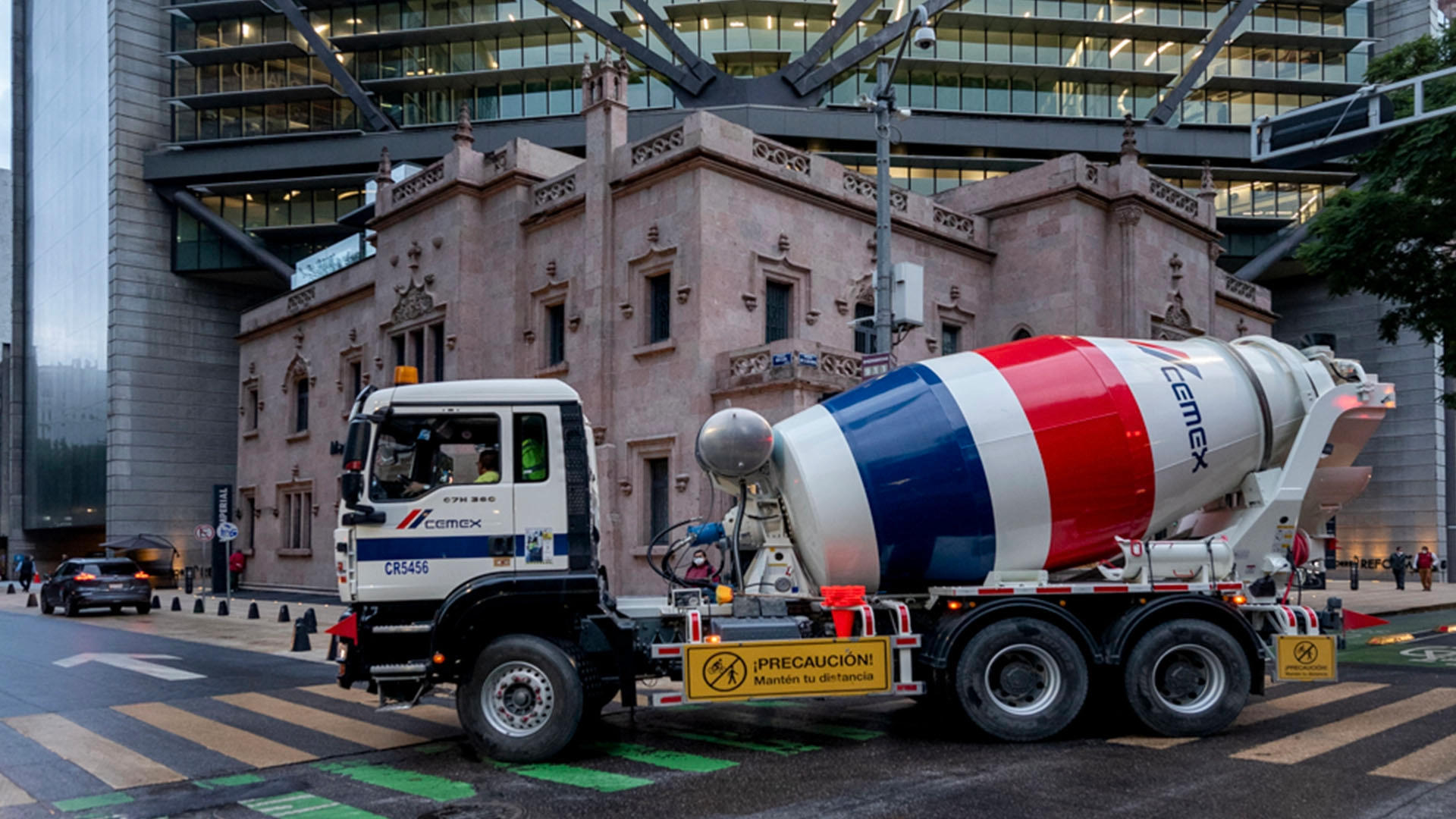
Latin America · Companies The European Commission has formally charged Mexican cement giant Cemex in a Cemex EU cartel charges case, alleging the company conspired with rivals to fix prices of construction chemicals across three major European economies.
The charges, announced July 20, 2026, follow dawn raids conducted in October 2023 and mark a significant escalation in Brussels’ scrutiny of the building-materials supply chain.
What the EU is Alleging The European Commission’s statement of objections accuses Cemex and several other companies of colluding between 2021 and 2022 to artificially raise prices of chemical additives used in cement, concrete, and mortar.
The alleged coordination took place in France, Germany, and Spain, three of the European Union’s largest construction markets.
According to the Commission, the firms exploited cost spikes triggered by the Covid-19 pandemic and Russia’s full-scale invasion of Ukraine.
Investigators claim the companies used press releases distributed through trade associations to signal and coordinate price increases, rather than competing fairly during a period of genuine supply-chain disruption.
The charges target construction chemicals specifically, not cement.
This is an important distinction: Cemex, the world’s third-largest cement producer, is not accused of fixing cement prices in this case.
Other companies charged include Swiss specialty-chemicals group Sika, Germany’s MC Bauchemie, Italy’s Mapei, France’s Chryso, and Master Builders Solutions, along with several trade bodies.
Potential Fines and Next Steps If the Commission ultimately finds Cemex and its co-accused guilty of breaching EU antitrust rules, each company could be fined up to 10% of its global annual turnover.
For Cemex, a multinational with operations spanning the Americas, Europe, Africa, and Asia, that represents a potentially substantial financial hit.
Cemex has confirmed it is cooperating with authorities and providing requested information and testimonies.
The company now has the right to examine the Commission’s evidence and submit a formal reply to the statement of objections.
There is no fixed deadline for the EU to conclude its investigation, and companies can challenge any final decision before European courts.
The charges stem from dawn raids – surprise inspections – conducted by Commission officials in October 2023.
Such raids are a common preliminary step in EU cartel probes, allowing investigators to gather....