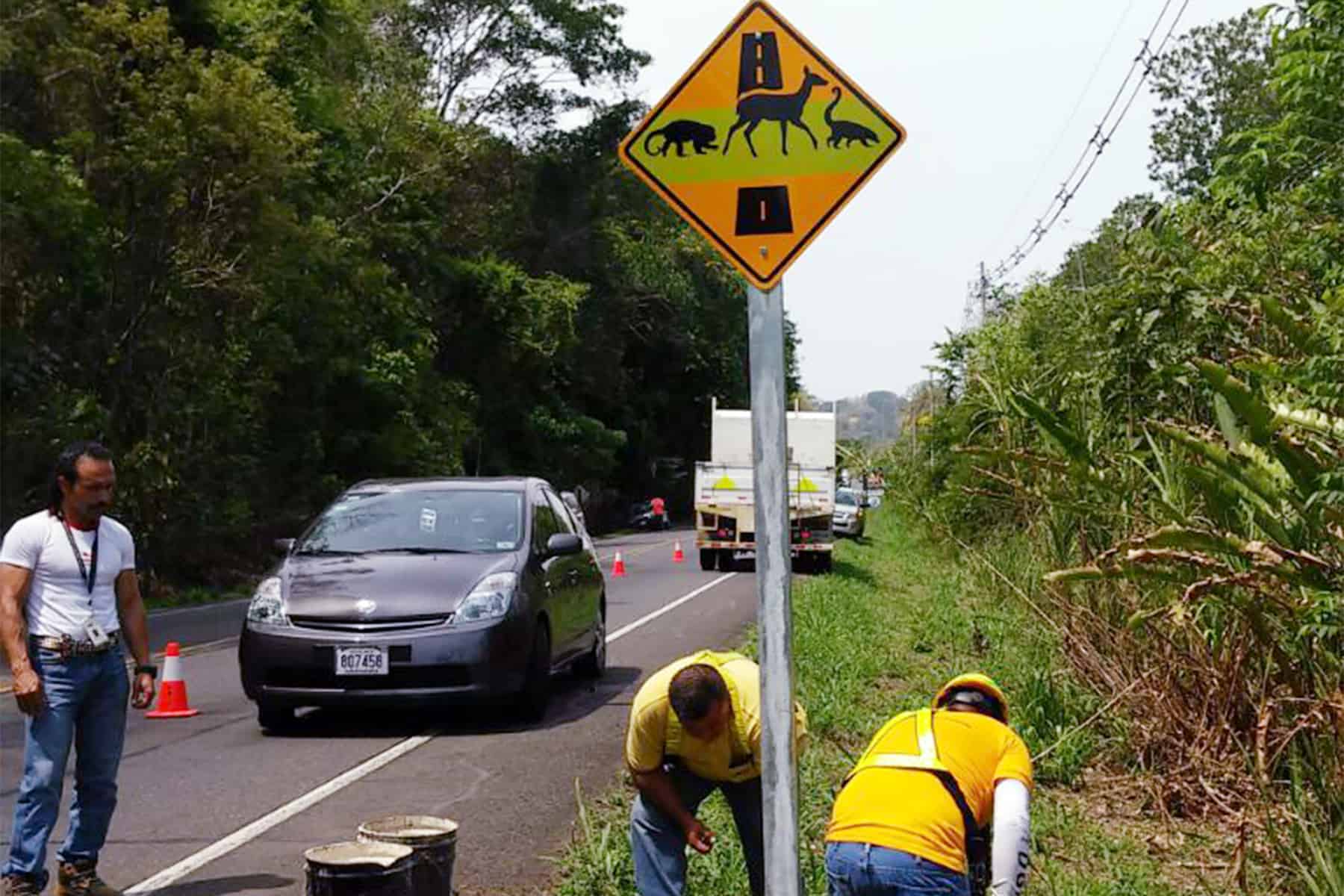
Costa Rica has built a global reputation as one of the planet’s great conservation success stories.
A quarter of its territory is protected.
It reforested aggressively when others were cutting down.
It runs almost entirely on renewable energy.
Millions of tourists fly in every year with one thing on their minds: the wildlife.
The sloths, the monkeys, the jaguars, the poison dart frogs, the tapirs, the toucans.
Biodiversity is not just Costa Rica’s soul; it is its primary economic engine.
And yet, on the roads connecting all of those beautiful places, that same wildlife is being killed at a rate that should alarm anyone who cares about the country’s future.
Researchers estimate that four animals die on Costa Rican highways every single hour.
That is not a rounding error.
That is a systematic, ongoing crisis happening in plain sight, on the same roads that tourists and locals share every day.
Biologists who monitor these routes describe the normalization of it as one of the biggest obstacles to change.
We have grown so accustomed to seeing two or three dead animals on a single journey that it has simply become part of the landscape.
But normalized does not mean acceptable, and the numbers behind the habit reveal the true scale of the problem.
A citizen science initiative tracking roadkill on Costa Rican highways has logged more than 3,400 observations of 306 distinct species since 2013, with possums, sloths, monkeys, snakes, and armadillos among the most frequently reported victims.
Between 2012 and 2022 alone, more than 500 wild cats were struck by vehicles — jaguars, pumas, ocelots, jaguarundis, margays, and oncillas, the vast majority of which could not be saved.
These are not common species that can easily absorb those losses.
Every one of those animals represents a hole....