A remarkable fossil hidden in a museum collection for decades is helping scientists rethink one of the biggest mysteries in early animal evolution.
The discovery of a 500-million-year-old arthropod in eastern Canada suggests that a period once thought to be marked by declining biodiversity may have been far richer and more complex than researchers believed.
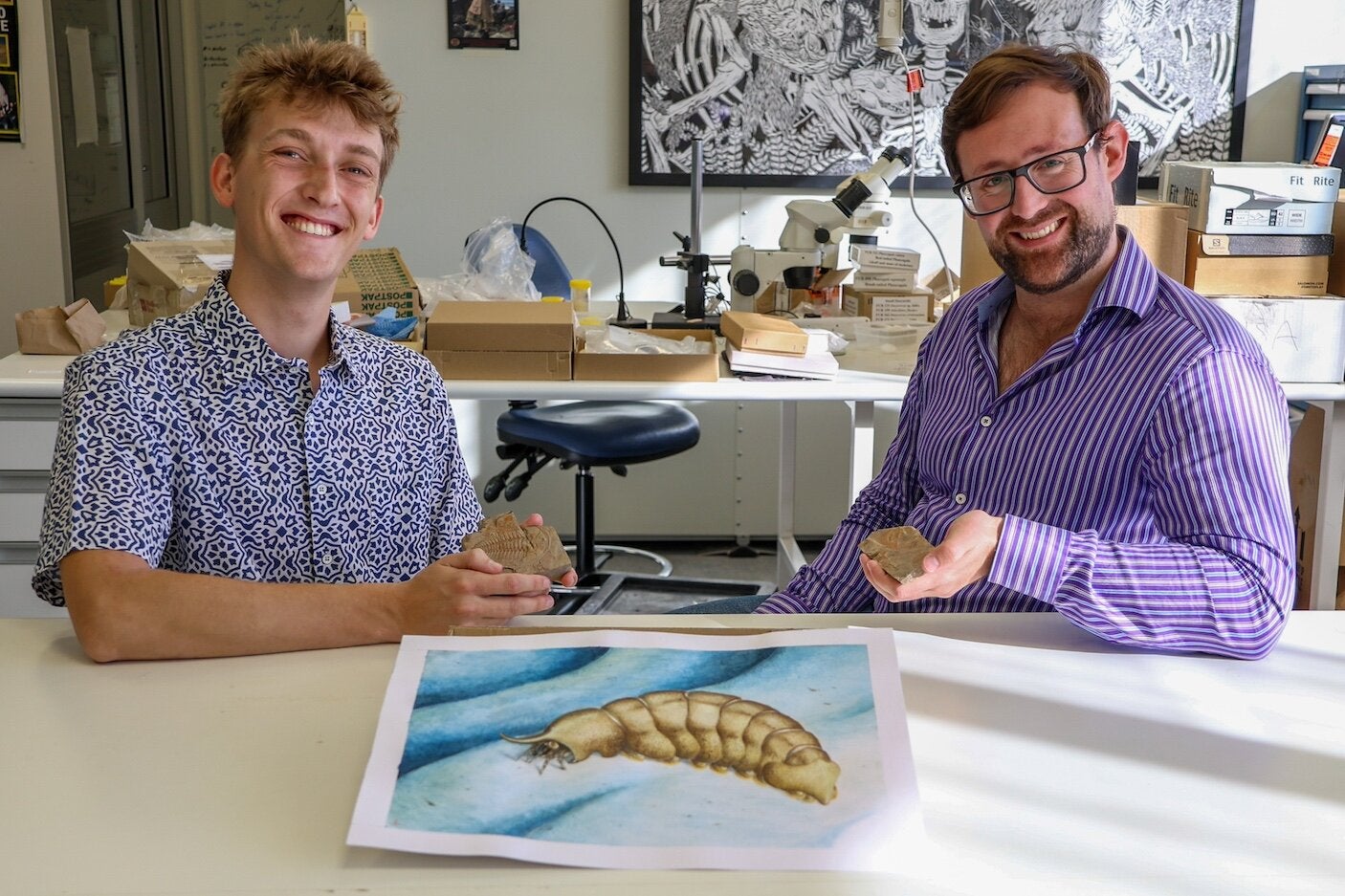
The newly described species, named Magnicornaspis garwoodi, comes from the late Cambrian Period and belongs to a rare group of extinct arthropods known as corcoraniids.
These ancient creatures are considered important relatives of the lineage that eventually gave rise to modern chelicerates, a group that includes spiders, scorpions and horseshoe crabs.
Researchers say the fossil provides valuable evidence from a poorly understood interval known as the Furongian, a period spanning roughly 497 million to 485 million years ago.
For decades, paleontologists have puzzled over why relatively few fossils appeared to come from this time.
The new findings suggest the apparent shortage may not reflect a true collapse in life on Earth.
Instead, it may reveal gaps in where scientists have searched and which rocks they have studied.
The Furongian has often appeared unusual in the fossil record.
Compared with the famous Cambrian Explosion that came before it and the Great Ordovician Biodiversification Event that followed, the interval seemed to contain far fewer fossils and less biological diversity.
Scientists proposed several explanations.
Some suggested changes in ocean chemistry may have harmed marine ecosystems.
Others pointed to cooling temperatures or environmental instability.
Still others wondered whether extinction events had reduced biodiversity worldwide.
“Palaeontologists have wondered whether this time of markedly less diversity of life could be linked to ocean chemistry, cooling climates or environmental instability,” said corresponding author Dr.
Russell Bicknell from Flinders University’s College of Science and Engineering.
“But perhaps we haven’t been looking at the right sedimentary rocks or fossil-bearing deposits to get a clear picture of the kinds of soft-bodied organisms and early anthropods (animals with exoskeletons) which inhabited the planet at that time.” The discovery of Magnicornaspis garwoodi adds weight to that idea.
Rather than supporting a biological downturn, the fossil suggests diverse ecosystems continued to thrive during the late Cambrian.
The story of the fossil began more than 60 years ago.
Researchers originally collected the specimen in 1962 during geological mapping near Québec.
The fossil came from dark shale deposits within the Rivière-du-Loup Formation, a rock unit formed in relatively deep marine environments during the late Cambrian.
After its discovery, the specimen entered the collections of the Smithsonian Institution in Washington, D.C.
There it remained largely unstudied for decades.
Only recently did scientists revisit the fossil using modern analytical techniques.
What they found was surprising.
The specimen represented a completely new genus and species.
Its unusual body shape differed from other known members of the corcoraniid family.
“This highlights one of the most important aspects of palaeontology: major discoveries do not always emerge directly from fieldwork,” said co-author Dr.
Julien Kimmig of the Karlsruhe Institute of Technology.
“Museum collections contain enormous quantities of under-studied material collected during geological surveys and expeditions over the past century.” “Revisiting these collections with modern techniques can fundamentally reshape understanding of ancient ecosystems.” The newly identified animal was relatively small but heavily armored.
Its head shield measured about 4.4 millimeters long and nearly 5 millimeters wide.
The body contained seven articulated segments and ended in a triangular tail shield with a single spine.
The most striking feature was its pair of forward-projecting head spines.
One spine was especially large and prominent, inspiring the name Magnicornaspis, which roughly....