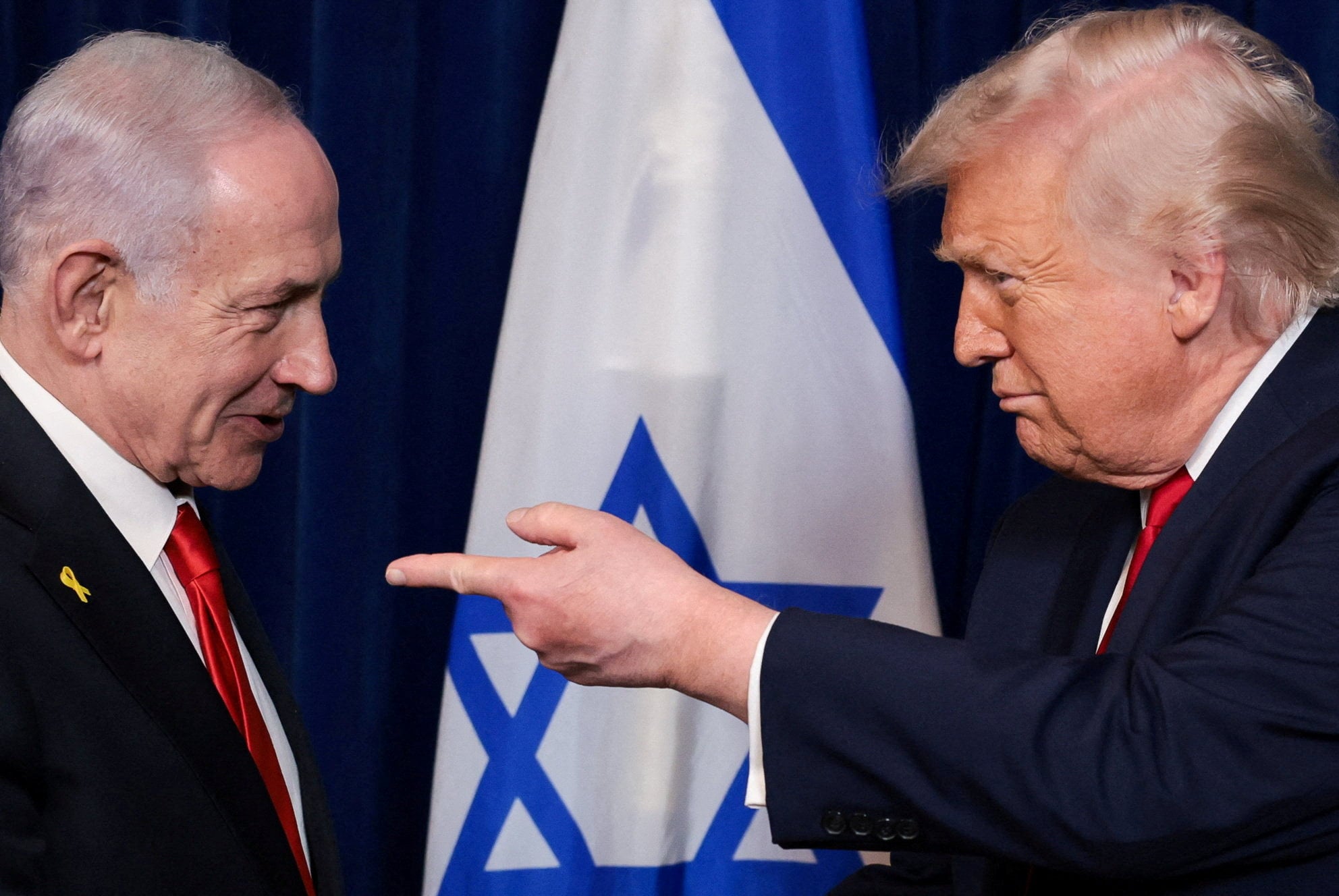
For decades, Israeli Prime Minister Benjamin Netanyahu has preached a mantra of peace and stability in the Middle East through the destruction of Iran’s Islamic Republic.
The obliteration of the ayatollahs, he prophesied, would lead to the normalisation of relations between Israel and the wider Arab-Islamic world – with Israel emerging as the Middle East’s dominant power and indispensable security provider.
But on Saturday, Netanyahu’s dreams looked set to be dashed, after US President Donald Trump’s disclosure on social media that a preliminary peace deal with Tehran has been “largely negotiated”.
The announcement, following calls between Trump and key Arab-Islamic leaders, instantly triggered a war of words on social media platforms between White House advisers and Israel’s top Republican allies.
The framing of the proposed deal as “Iran appeasement” by Senator Ted Cruz is indicative of the pressure Trump is under from the pro-war ultraconservative wing of his party.
Similarly, former secretary of state Mike Pompeo equated the MOU with “pay[ing] the Islamic Revolutionary Guards Corps to build a weapons of mass destruction programme and terrorise the world”.
In a pointed barb, both senior Republicans likened the MOU to the 2015 Iran nuclear deal, negotiated by Barack Obama’s administration, which Trump withdrew the US from three years later, when Pompeo was secretary of state.
The White House’s anti-war faction responded angrily, with Alex Bruesewitz, an external political adviser of Trump, telling Cruz to “stop trying to undermine the president and his administration”.
White House communications director Steve Cheung’s response to Pompeo contained expletives and insults, while deputy assistant on counterterrorism Sebastian Gorka challenged the former CIA chief to either admit to lying or having illegal access to top secret information.
Loss of faith At the heart of this bickering lies Trump’s growing loss of confidence in Netanyahu, according to political scientist Ali Alfoneh, author of Political Succession in the Islamic Republic of Iran.
Netanyahu “managed, twice, to manipulate Trump into fighting Israel’s war with Iran by promising a swift victory, the collapse of the regime in Tehran, and even the partition of Iran through civil war,” said Alfoneh, a senior resident scholar of the Washington-based Arab Gulf States Institute.
“None of these objectives were achieved.” As a result, Trump “no longer appears to trust Netanyahu” – presenting a serious political challenge for the Israeli prime minister.
Netanyahu’s close alignment with Trump had alienated segments of the Democratic Party, “potentially straining Israel’s relations with both major political camps”, Alfoneh warned.
Any agreement would “burnish the credentials of the Iranian government and stave off any possibility of regime change”, said Barbara Slavin, distinguished Middle East fellow at the Washington-based think tank Stimson Centre.
“So Netanyahu will have convinced Trump to go to war only to come up short on all his goals,” Slavin said.
“It’s hard to spin....