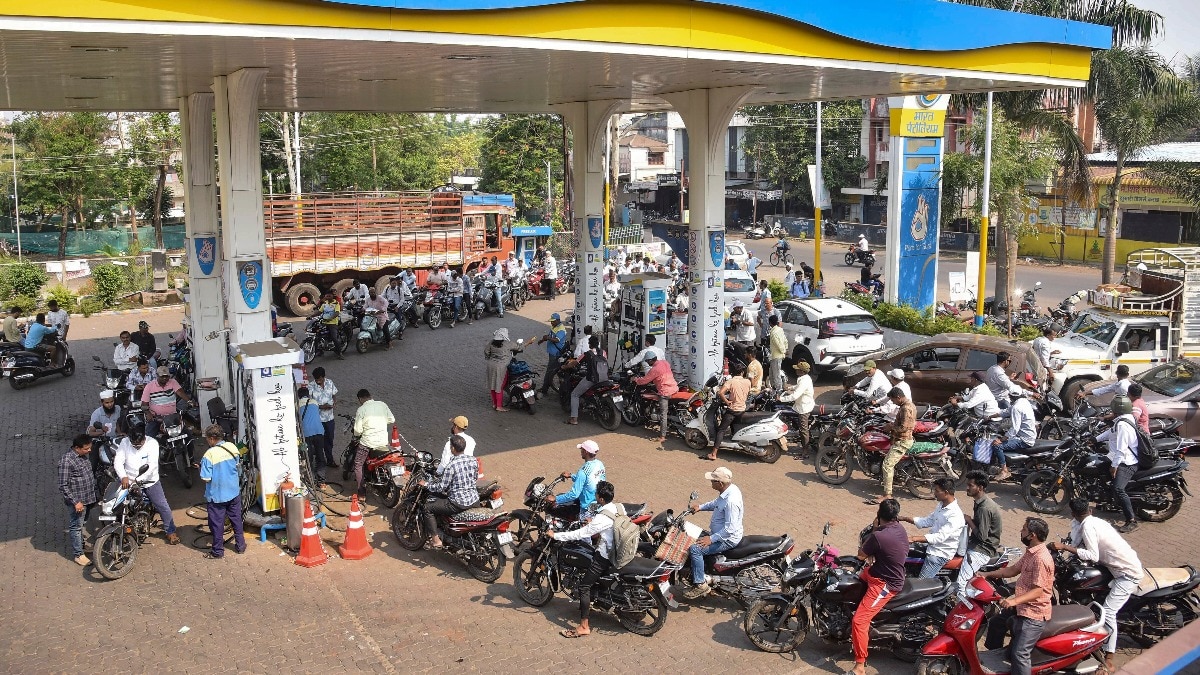
The world is grappling with a fuel crisis triggered by the war in the Middle East, causing a shortage of petrol, diesel, and LPG that is unprecedented.
While India has absorbed the price shocks relatively well and domestic fuel prices have not risen drastically, the situation remains a matter of concern, as there appears to be no end in sight to the war waged by the US and Israel on Iran, which has resulted in the dual blockade of the Strait of Hormuz.As global oil prices rise due to the conflict in the Middle East, Prime Minister Narendra Modi has asked people to save fuel by working from home, holding virtual meetings, and using petrol and diesel judiciously.
These steps can help in the short term, but India's heavy dependence on imported oil is an old problem.For decades, India has been exploring long-term solutions through big pipeline projects.
Many of these ideas, such as the Oman-India Deepwater Pipeline, the India-Sri Lanka oil pipeline, and the TAPI gas pipeline, were first discussed or even agreed upon in the 1990s and early 2000s.
However, they got delayed due to geopolitics, high costs, and other challenges.The latest fuel crisis has brought these old projects back into focus.
With India importing nearly 85-90% of its crude oil, these pipelines are now being seen as important unfinished projects that could finally help the country reduce its vulnerability to global chokepoints.While the PM Modi's appeal, aimed at reducing import dependence and easing pressure on foreign exchange reserves, might be a temporary measure, India requires structural solutions to ensure long-term energy security.
If implemented successfully, these projects could offer a more lasting answer to recurring fuel crises.Importing nearly 85-90% of its crude oil needs, India remains highly exposed to global supply shocks.
Here's a look at the three key pipeline projects in detail that are seen as potential strategic alternatives to volatile sea routes and tanker shipments.1.
OMAN-INDIA DEEPWATER PIPELINES, AN UNDERSEA ROUTEOne of the most ambitious proposals is the Oman-India Deepwater Multipurpose Pipeline (OIDMPP).
Discussions on this project began in the early 1990s.
The 1,600-km pipeline would run along the seabed from Ras Al Jifan in Oman to Porbandar in Gujarat, at depths reaching up to 3,500 metres in sections.Designed primarily to transport natural gas, the pipeline would bypass land borders and politically sensitive regions.
It offers a direct, secure route that could deliver gas at a lower cost than imported LNG, potentially $2-3 cheaper per million British thermal units (BTU).
Estimates suggest the project could cost around $5-6 billion and supply significant volumes of gas over two decades.Notably, Oman is one of India's most important untapped strategic partner in the Gulf.In the current environment of high global energy prices and disrupted shipping lanes, the project is gaining renewed attention.Defence expert and senior journalist Sandeep Unnithan on Monday posted on X, Talks on the 1,600 km Oman India deep-water pipeline project (OIDMPP) have been....