WASHINGTON -- The United States struck Iran’s strategic Qeshm Island on November 2, US officials confirmed, in the latest in a series of previously undisclosed military operations against Iran that have continued even as President Donald Trump plays down the prospect of renewed large-scale fighting.
The strikes come just hours before the November 3 US midterm elections and follow a shift in Trump’s public rhetoric.
After weeks of warning that Washington could resume a major military campaign against Tehran after the vote, the president on Monday ruled out an immediate attack and pointed to the possibility of a diplomatic breakthrough.
Asked whether he was considering striking Iran after the midterms, Trump told reporters, “No.” But administration officials told The Wall Street Journal (WSJ) that the president was still weighing his options, underscoring the contrast between his public assurances and the military operations continuing behind the scenes.
The latest attack was part of a series of limited US strikes carried out secretly in recent weeks, according to the WSJ, which cited US officials.
Some described the operations as defensive, aimed at degrading Iran’s ability to threaten commercial shipping in the Strait of Hormuz.
One US official told the WSJ that the administration deliberately kept the campaign quiet to avoid signaling an intention to resume major combat operations.
Iranian state media outlet IRNA reported explosions on Qeshm Island on November 2.
The Pentagon referred questions to US Central Command, which did not immediately respond to a request for comment from RFE/RL.
A US official said the administration was consistently addressing threats to US forces in the region.
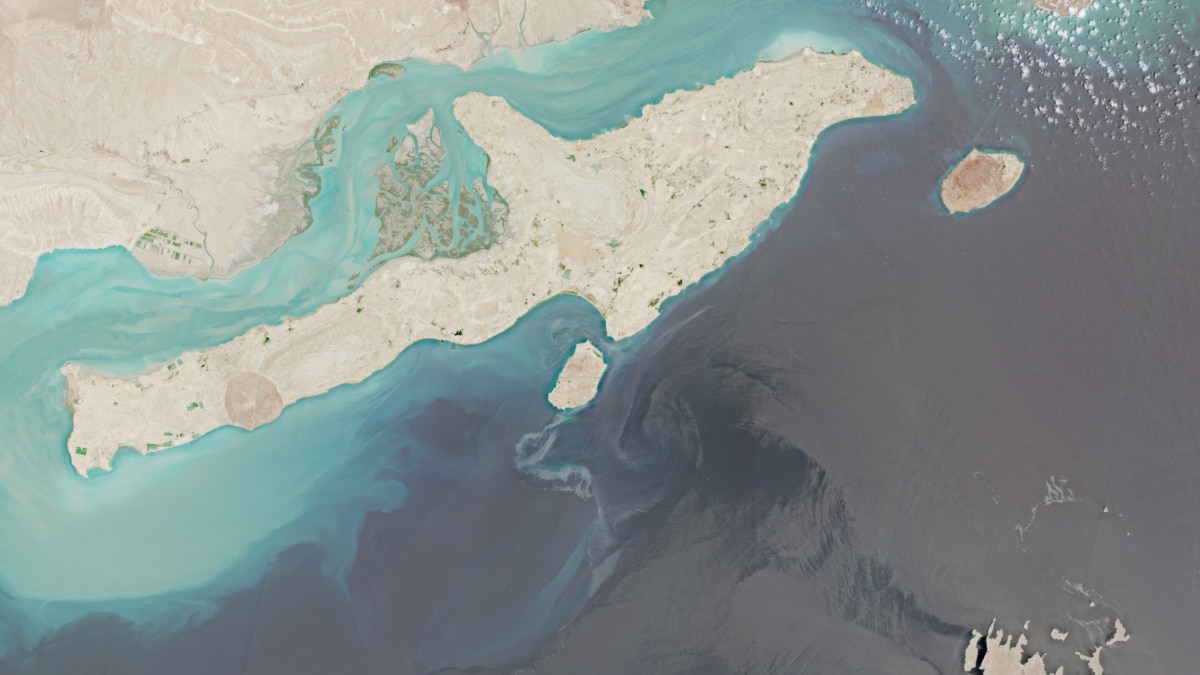
Strategic Island At The Center Of The Strait Qeshm sits at the mouth of the Strait of Hormuz, one of the world's most important maritime routes for energy shipments.
The island is home to a large underground missile facility, a naval base, and a major desalination plant, according to the Wall Street Journal.
It has been targeted by US forces in previous rounds of fighting, and US officials have also discussed the possibility of seizing it.
Jason Brodsky, policy director at the nonprofit organization United Against Nuclear Iran, told RFE/RL that the latest strikes were intended to weaken Tehran’s ability to disrupt shipping rather than necessarily force a change in its political calculations.
“The US is aiming to degrade Iranian capabilities to threaten the Strait of Hormuz,” Brodsky said.
“This is not meant to change Iranian decision-making calculations necessarily, but it does blind and deprive the Iranian regime from harassing commercial ships.
And that’s fundamentally in US national security interests.” The Qeshm operation....