New Delhi [India], October 13: TRST01, the supply chain traceability and Digital Public Infrastructure company, today announced that its TRST01Chain platform and TRST01 EUDR Hub are fully ready to support Indian exporters of coffee, natural rubber and soy in meeting the European Union Deforestation Regulation (EUDR), which applies to large and medium operators from 30 December 2026.
After two postponements, the EUDR application date is now fixed in law through Regulation (EU) 2025/2650, and the European Commission has signalled that no further delay is planned.
Micro and small operators follow on 30 June 2027.
With only weeks remaining, TRST01 is urging India's export ecosystem to move from preparation to proof.
Europe's compliance machinery is switched on The EU has spent 2026 getting its systems ready.
The EUDR Information System, through which every Due Diligence Statement must be filed, reopened at the end of June 2026 after a rebuild.
In July, the European Commission adopted Implementing Regulation (EU) 2026/1565 setting the system's technical rules, along with a delegated act that updates the list of covered products.
One provision, on how statements are routed to national enforcement authorities, takes effect on 15 October 2026.
European buyers are already asking Indian suppliers for plot-level data, not promises.
'Low risk' is not 'no work' India has been benchmarked as a low-risk country under the EU's country classification, which means simplified due diligence for buyers of Indian goods.
It is not an exemption.
Every consignment still needs geolocation of the land where the commodity was grown, proof that the land was not deforested after 31 December 2020, and evidence that production followed local law.
This is where India is exposed.
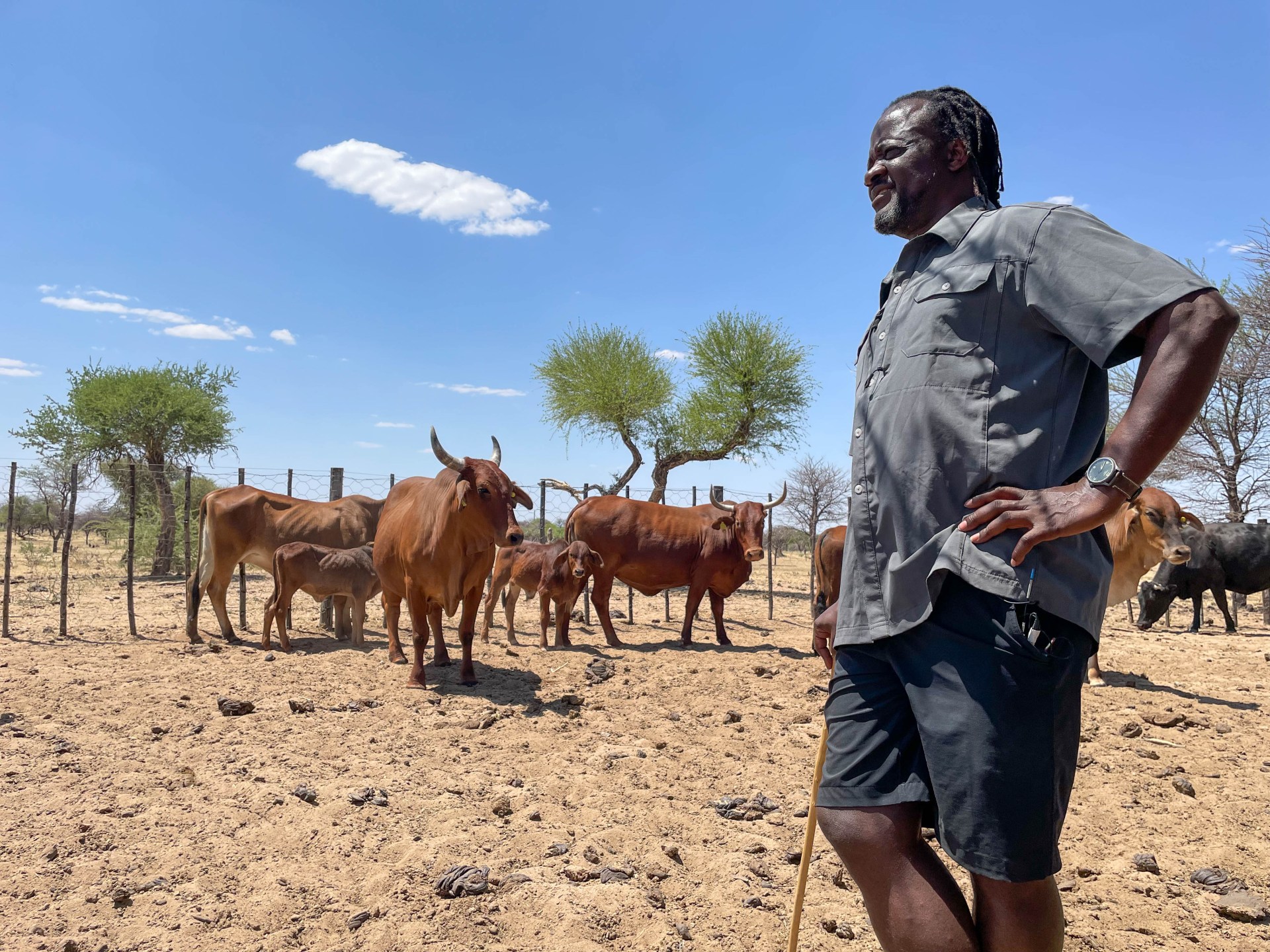
Indian coffee comes from thousands of small growers in Coorg, Chikkamagaluru and Wayanad, and natural rubber from smallholdings across Kerala, Tamil Nadu and the North-East.
Supply chains are fragmented, plot boundaries are rarely mapped as polygons, and supplier records are often on paper.
If Indian suppliers cannot deliver clean, verifiable data, EU buyers will shift orders to origins that can, and market share lost in 2027 will not be easy to win back.
Ready across India's key EUDR commodities Rubber: BSNR puts certified, traceable rubber on the map India is the world's fifth-largest producer and second-largest consumer of natural rubber, and the Rubber Board of India has moved early.
TRST01 powers BSNR, the Board's farm-to-shipment traceability framework, which issues a certificate verifying where the rubber was grown and confirming it meets EUDR requirements.
Every transaction is captured in a verifiable, tamper-proof trail, and certification comes at zero cost to farmers and growers, a first for the Board.
For European tyre makers and other buyers, Indian natural rubber becomes a ready answer rather than a compliance question.
Coffee: Europe's favourite Indian brew goes digital India's coffee exports reached a record USD 2.13 billion in FY 2025-26, up about 17% in value, on volumes of roughly 407,000 tonnes.
Around 70% of India's coffee is exported, and Europe is the anchor market: Italy, Germany and Belgium lead the buyers, and industry estimates put the EU's share of exports at about 60%.
Most Indian coffee is shade-grown under forest-like canopy, which experts say places India better than Brazil or Vietnam to prove 'deforestation-free'.
The Coffee Board is preparing too, with awareness and capacity-building programmes to register growers on....