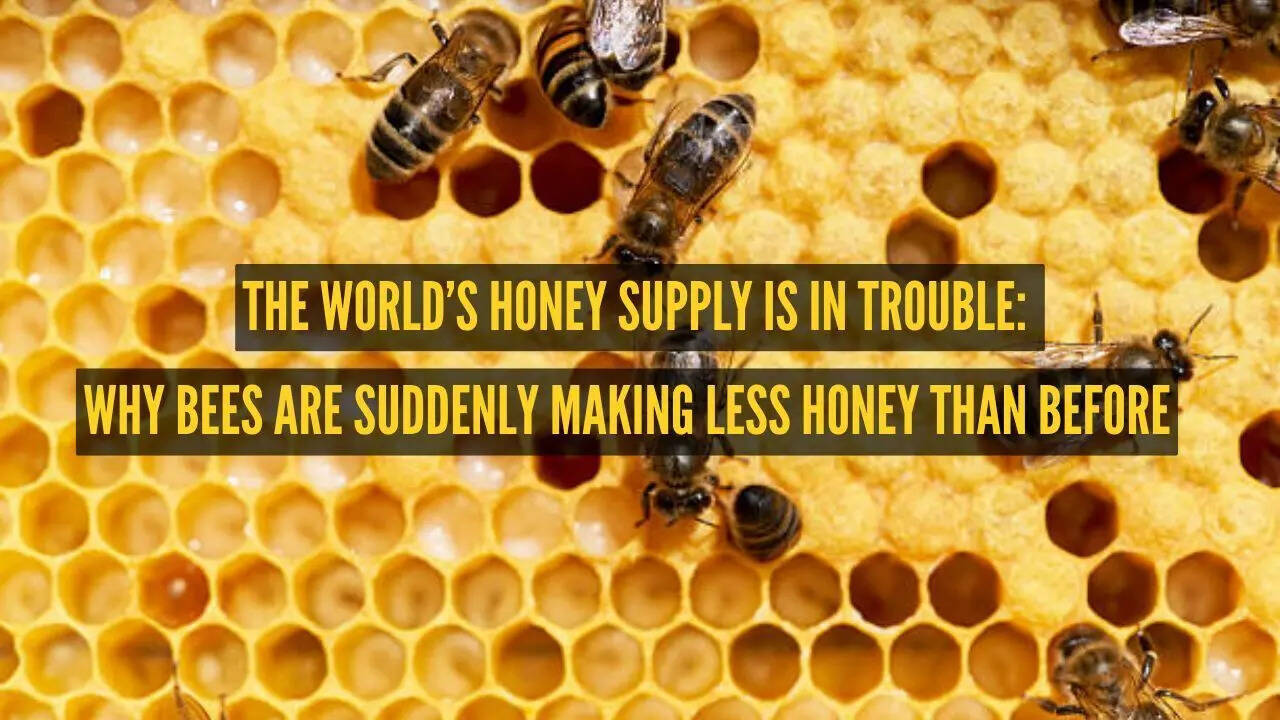
A lemon honey water, some pancakes or a pastry.
This is how many of us begin our mornings.
While all of us may be living different lives, there's one thing common to them: the sweetness of natural honey.
The dollop that we oh so graciously add to our food seems like an undying nature's nectar filling our lives with sweetness and smiles.However, it seems the world will soon lose all its honey.
Every jar of honey that is filled with the bees' hard work is a chemical archive of the flowers they visited and the hard work they pushed through in the season.This year, things went a bit off track for the worse.
Somewhere between the cool nights of February and the heat of March, the flowers opened ahead of schedule.
They held for a week less than they should have and closed before the hives were ready.
The honey that could have come out of this cycle did not.But this time, it is not about the bees dying and how they could be saved.
It's a lot more complicated, serious and worrying.
It's about the timing.
About the ecological clock that keeps the bees and flowers in a synchronous cycle and how its disturbance is not good news.Tick, tick, boomJust like humans, flowers follow a growth period supplemented by ideal conditions.
Temperatures, rainfall, and daylight all align in the right proportions to create the nectar in a narrow window timed with precision to attract the insects it needs.This timing is governed by phenology, or the study of cyclical and seasonal natural phenomena, and it determines everything from when a mustard field turns yellow to when the first bees emerge from their winter torpor.This is a survival mechanism in which animals conserve energy by drastically reducing their heart rate, metabolic rate, and body temperature when the weather is cold and there is food scarcity.For years, this cycle flowed easily.
Flowers bloomed, bees appeared, nectar flowed and honey was ready.
But now, climate change has entered the chat.
Research published in Ecological Monographs in 2025 found that while individual plant and pollinator species are advancing their phenology at broadly similar rates in response to....