At least seven Chinese universities that support the country's armed forces and defense industry are seeking access to Nvidia Corp.'s H200 chips, the most powerful artificial intelligence processors ever allowed by the US to be sold in China, according to a review of procurement records.Two of the institutions that have expressed interest in the H200 chips - Beihang University and Northwestern Polytechnical University - rank among China's "Seven Sons of National Defense," an elite group dedicated to aiding the People's Liberation Army.
Both schools have been blacklisted by the US Commerce Department owing to their work advancing China's military.Records reviewed by Bloomberg News show that Beihang's School of Cyber Science and Technology, which says it has "national defense characteristics and aerospace advantages," is pursuing a lease to use the Nvidia chips.
NWPU's School of Cyberspace Security is also seeking to rent access to H200s, according to the records.
The school says it carries out important national cyber tasks, has a national defense innovation team, and that many graduates go on to serve in military units.Bloomberg also identified more than 25 Chinese universities and labs that collaborate with the country's military and defense industry that are either already using or seeking to obtain older generation Nvidia chips, according to records dating back to 2011.
Six of the universities are on the Commerce Department's blacklist due to an agency determination that their work with the PLA - including developing missiles and nuclear technology - threatens US national security.Several blacklisted entities say on their websites that they are already using the older generation Nvidia chips.
It's unclear whether any of the schools succeeded in obtaining access to the newer H200 chips or what specifically they would do with them if they did.
The Bloomberg review didn't turn up any evidence of wrongdoing, such as violations of US export controls, or indications the universities were seeking to access large numbers of chips.Authorities in China so far have blocked the country's AI companies from buying H200s, owing in part to concerns that a flood of American-designed AI chips would hinder the government's long-held goal of developing an indigenous chip industry.
Bloomberg's findings show that hasn't stopped China's military-linked institutions from exploring ways to use Nvidia's products anyway, signaling the chips' advanced features hold enduring appeal.The data also highlight concerns by US lawmakers that Nvidia's technology - which has powered the AI boom and made it the world's most valuable company - could end up potentially benefiting China's armed forces as well, a prospect the company has repeatedly dismissed.An Nvidia spokesperson said it would be "silly" to think that the Chinese military would rely on "a few dozen second-hand GPUs.""China has more than enough domestic chips for all of its military applications, with millions to spare," the Nvidia spokesperson said.
"Just like it would be nonsensical for the American military to use Chinese technology, it makes no sense for the Chinese military to depend on American technology."A spokesperson for the Chinese Embassy in Washington said that "China's position regarding US chip exports to China has been consistent: we advocate that China and the United States achieve mutual benefit and win-win outcomes through cooperation, and we oppose the politicisation, instrumentalisation, and weaponisation of technological and economic issues."The Chinese universities referenced in this article didn't respond to requests for comment.
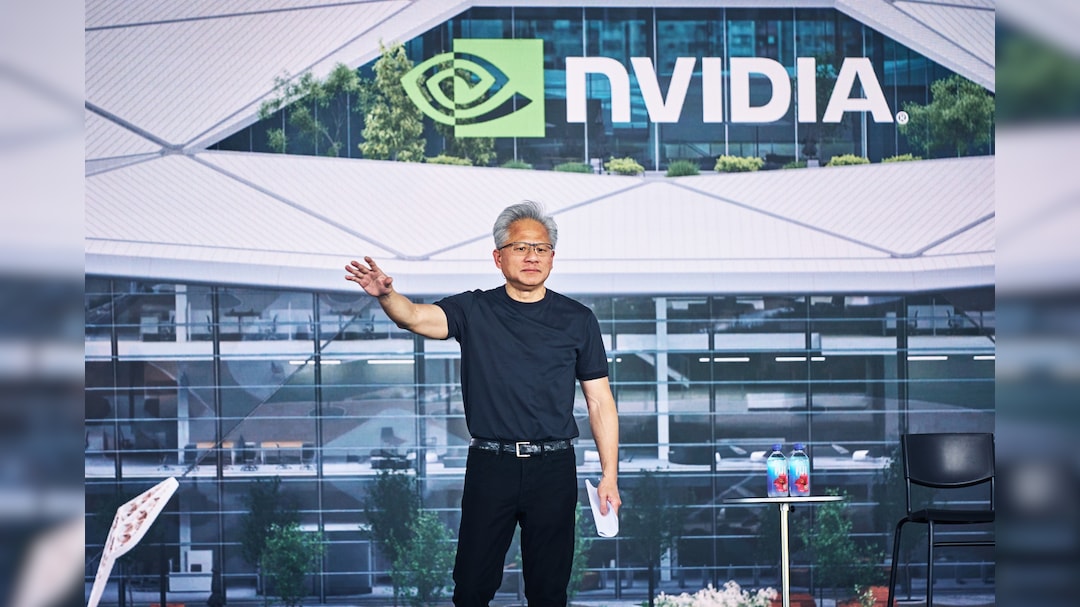
Neither the White House nor the Commerce Department commented.Chinese universities with military ties are pursuing Nvidia's H200 AI chipsPhoto Credit: (Photo: Bloomberg)The institutions linked to China's armed forces pursued Nvidia chips in a variety of ways, according to the documents reviewed by Bloomberg.
In some cases, they've tried to buy them through third-party brokers.
In others, they've sought contracts to rent the chips' computing power.
The earliest documentation Bloomberg was able to identify showing a Chinese military-linked university seeking access to H200 chips was dated June 2025, with the efforts continuing this year, the records show.In many cases, the universities and labs sought access to relatively small quantities of chips such as a single server with eight Nvidia graphics processing units - the high-speed processors used in AI.
Those amounts are better suited for academic work and a fraction of what top Chinese AI companies like Alibaba Group Holding Ltd.
or Baidu Inc.
would need for commercial purposes."That's research lab-scale, and much smaller than what hyperscalers buy and use for training the most advanced frontier AI models," said Michael Deng, a technology analyst at Bloomberg Economics."But a server like that is enough to take one of China's leading open-weight AI models and adapt it for military applications like autonomous weapons development or cyber operations," Deng said.
"That work would run significantly faster on H200s compared to domestic Chinese chips."Efforts by PLA-tied entities to access Nvidia's sought-after chips underscore the pressure the US will face in keeping sophisticated American technology away from China's military following President Donald Trump's decision to allow H200 sales to vetted Chinese customers.
The move, carried out after an extensive lobbying campaign by Nvidia Chief Executive Officer Jensen Huang, marked a significant easing of US export restrictions aimed at reining in Beijing's AI ambitions.Huang has long rejected warnings from US lawmakers and advocates in Washington....