A girl’s first period should not arrive as a humiliation.
It should not begin with panic in a classroom, a sweater tied tightly around the waist, or the terror of a stain spreading across a school uniform.
It should not be greeted by silence, shame and the sudden discovery that the world has rules for her body that nobody thought to explain.
And yet, for too many girls in Nigeria, this is exactly how menstruation begins: not as a fact of life, but as a private ordeal.
I know something about that fear.
I have spoken publicly about hiding my first period out of fear.
It is a memory that has stayed with me for years, not because menstruation is shameful, but because the shame around it was made to feel natural.
It was inherited, rehearsed and enforced.
We recently asked a simple question through our Menstrual Hygiene Day campaign: My First Period: What Could Have Been Different? The answer is painful in its simplicity.
Almost everything.
Ahead of Menstrual Hygiene Day, Nigeria must stop speaking about menstruation as though it belongs only in whispers.
Menstrual health is not a side issue.
It is not an annual talking point to be dusted off every May and forgotten by June.
It sits at the centre of dignity, education, public health and equal citizenship.
A country that claims to care about girls cannot remain indifferent to the monthly realities that push them out of class, out of confidence and, sometimes, out of opportunity.
The evidence is too stark to ignore.
A recent assessment of menstrual health and hygiene in Nigeria found that 26 per cent of girls did not know about menstruation before their first period.
Only 19 per cent received menstrual health education in school.
Around 30 per cent reported that their schools lacked private latrines or spaces where girls could change menstrual materials.
Only nine per cent reported the availability of bins for menstrual waste in girls’ toilets.
A quarter of adolescent girls and women aged 15 to 49 said they missed work or school during menstruation.
This is not a marginal discomfort.
It is structural exclusion, repeated every month, on a national scale.
Then there is the cruelty of cost, in parts of northeastern Nigeria, 62 per cent of women and girls reported lacking the money to buy menstrual materials during their last period.
The same assessment revealed a brutal inequality in access: 85 per cent of women in Lagos said they had what they needed to manage menstruation, while only 37 per cent said the same in Kaduna.
We should sit with that disparity.
It tells us that menstrual dignity in Nigeria is still being rationed by geography and income.
For millions of girls, a period is not merely a cycle.
It is a monthly negotiation with poverty.
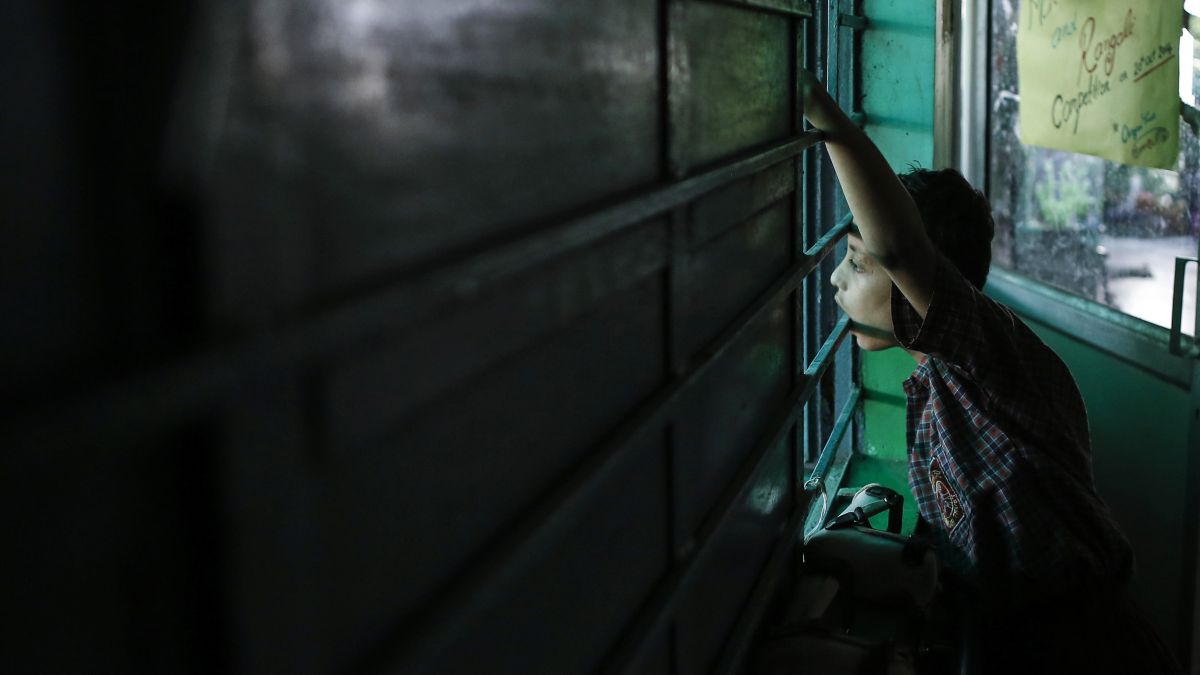
What does that negotiation look like in real life? It looks like girls staying home because they are afraid of ridicule.
It looks like improvised materials used in desperation because proper products are unaffordable.
It looks....
)