Borough: Coyoacán Established: 1521, as Villa Coyoacán Location: 10 km south of the Angel de la Independencia Pre-Columbian inhabitants: Colhuas, Tepanecs and Mexica Who lives here The Historic Center of Coyoacán comprises several smaller neighborhoods, including Villa Coyoacán, Del Carmen, Santa Catarina and La Concepción.
Its bohemian lifestyle attracts young families and artists, while its proximity to UNAM makes it a hub for students.
According to government data, 23% of the borough’s inhabitants are between the ages of 25 and 49.
There is a notable mix of newcomers and families that have lived here for generations, adding to the area’s eclectic feel.
A litany of colorful characters have lived in Coyoacán’s Historic Center, notably Frida Kahlo, León Trotsky, Octavio Paz and Rufino Tamayo — as well as at least three Mexico News Daily staff members.
A brief history of Coyoacán The Colhuas of Culhuacan transformed the future Coyoacán into an urban center, settling here in the 7th century.
In the 15th century the Tepanecs of Azcapotzalco arrived, displacing the Colhuas and establishing the area as a center of trade, agriculture and commerce.
At some point, the settlement acquired its current Nahuatl name, which is most often translated as “place of coyotes.” Coyoacán’s strategic position on Lake Texcoco caught the attention of the Mexica, who soon seized the area from the Tepanecs.
Plazas, residential zones and temples were constructed to the chagrin of the conquered Tepanecs, the majority of whom detested the Mexica.
In 1521, Hernán Córtes and his allies launched their campaign against the Mexica Empire, they chose Coyoacán as their headquarters, establishing the town of Villa Coyoacán.
A strategic location, abundant agricultural resources and local support made the cultural hub an ideal place to become the first capital of New Spain.
Coyocán remained its own municipality until 1857, when it was officially incorporated into the Federal District.
It retained its small-town and semi-rural character until sometime in the late 19th and early 20th centuries, when it was swallowed up by the urban sprawl of what is now Mexico City.
The borough of Coyoacán, taking its name from the ancient town, was designated in 1928, and is still the physical heart of Mexico City, sitting dead in the center of the metropolis.
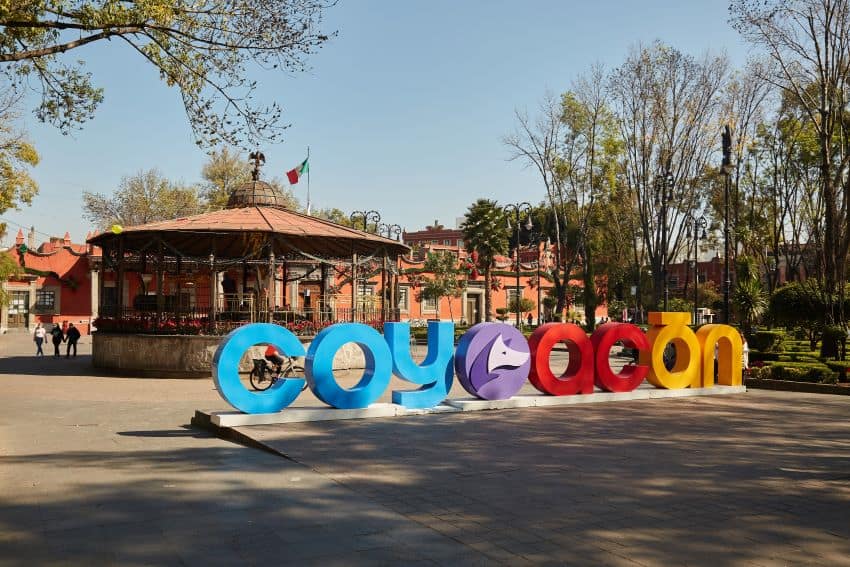
A guide to Coyoacán today Today, the quaint Barrio Mágico is known for its cobblestone streets, colonial architecture and vibrant cultural scene.
The weekends are especially lively.
Expect streets lined with food carts selling everything from churros to esquites, live music in Plaza de La Conchita and various amusement park-style rides for the little ones.
Don’t miss the neighborhood dance party on Sunday evenings at the Jardin del Arte Allende.
The Saturday art market in Plaza Allende is smaller than its more famous cousin in San Ángel, but still worth checking out if you find yourself in the area.
Coyoacán is great if: You love Spanish colonial architecture, colorful facades, traditional festivals and an authentically Mexican community.
What to do in Coyoacán Frida Kahlo Museum: Also known as the Casa Azul, this is the former home of Mexico’s most iconic female artist.
Reservations must be made....