Japan is hoping further US-Iran talks will ease tensions in the Middle East and help reopen the Strait of Hormuz permanently, but there is also mounting anxiety over what a failure could mean for the country as summer approaches.
On Friday, Iran said it would reopen the strait for commercial shipping following a ceasefire agreement in Lebanon, while US President Donald Trump added that a US naval blockade of Iran’s ports would remain until a deal with Tehran was struck.
The fear in Japan, however, is that any further disruption to energy shipments through the strait, combined with an unusually early spell of hot weather, could leave the country facing power shortages at the worst possible moment.
In the bleakest scenario, that could force the government to introduce planned power outages, ask offices, schools and shops to shorten their hours, and cut some train and flight services.
The concern for Japan is not simply oil.
While Tokyo says it has ample crude reserves, analysts warn the more immediate vulnerability is liquefied natural gas (LNG), which is used to generate electricity in Japan’s major cities and is harder to store in large volumes.
That matters more as temperatures rise and demand for air conditioning begins to climb.
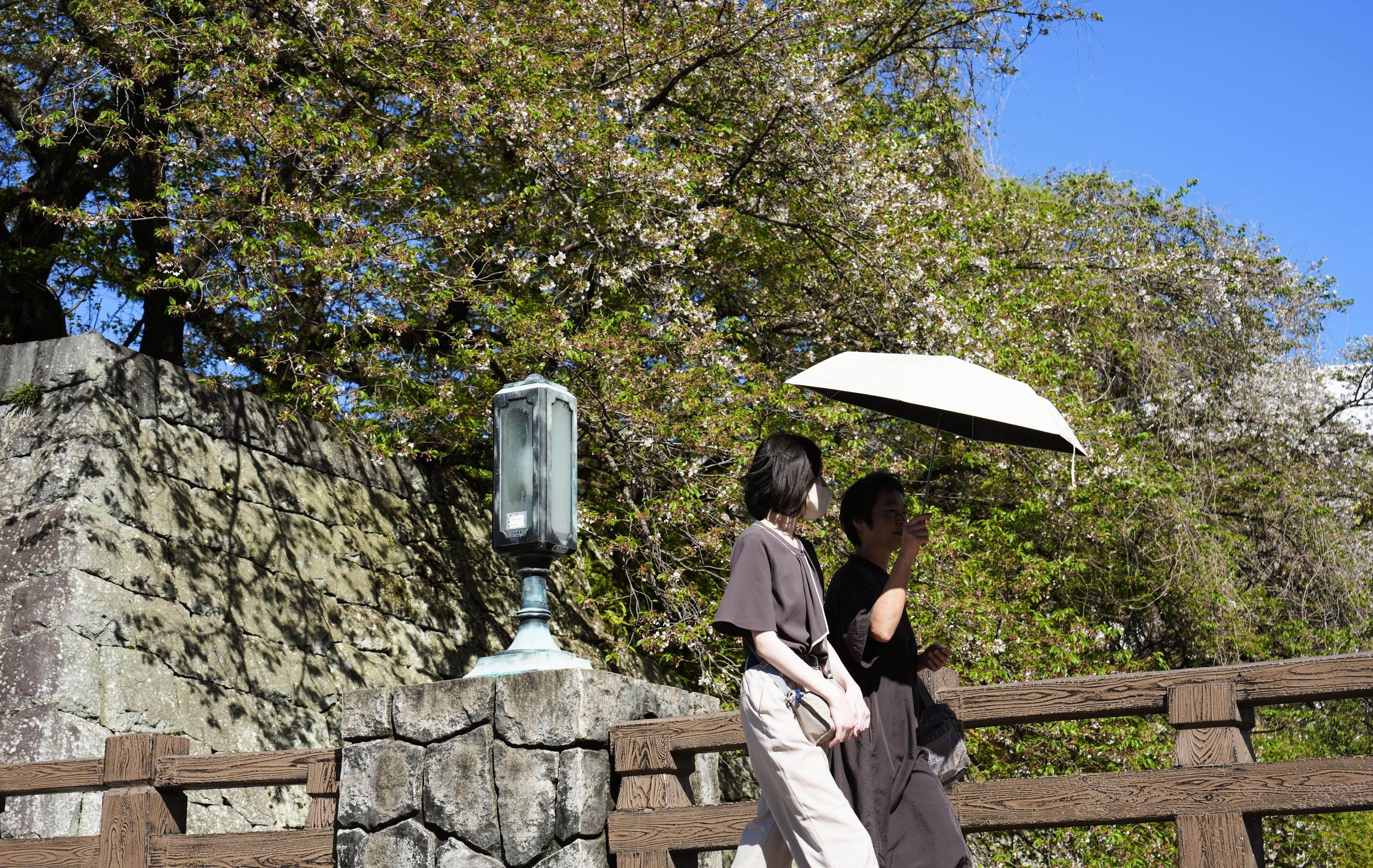
On Friday, the Japan Meteorological Agency issued a weather alert covering virtually the entire country, warning that temperatures from April 22 would be “considerably higher” than the average for the month.
Temperatures could be as much as 2.6 degrees above normal, the agency said, while cautioning about avalanches in areas still with snow and urging farmers to take precautions to protect crops.
High temperatures this early in the year are a harbinger of another record-breaking summer, according to climate experts.
In its outlook for the summer months, released in February, the agency said 2025 was the hottest year on record, with temperatures between June and August more than 2.3 degrees above the 30-year average.
A temperature of 41.8 degrees Celsius (107.24 degrees Fahrenheit) was reported in the city of Isesaki, in Gunma prefecture, on August 5 – the highest ever in Japan – while 30 locations across 13 prefectures reported highs above 40 degrees.
Analysts warn those records could be broken again this year, and that energy shortages may exacerbate the situation, such as by limiting air conditioner use.
Author and journalist Jun Yamada has cautioned in a Yahoo News opinion article published on Thursday that Japan faces a “hellish summer” and what may become the “greatest crisis since the end of World War II”.
Even if the US and Iran reach an agreement to halt the conflict, Yamada says bottlenecks, backlogs and depleted reserves mean severe disruptions to the flow of fuel from the Middle East will persist, along with other complications.
“Oil shortages and soaring prices, a widening budget deficit, an unstoppable depreciation of the yen, inflation [or rather, stagflation], rising interest rates, falling stock prices – it’s clear that we’re facing....