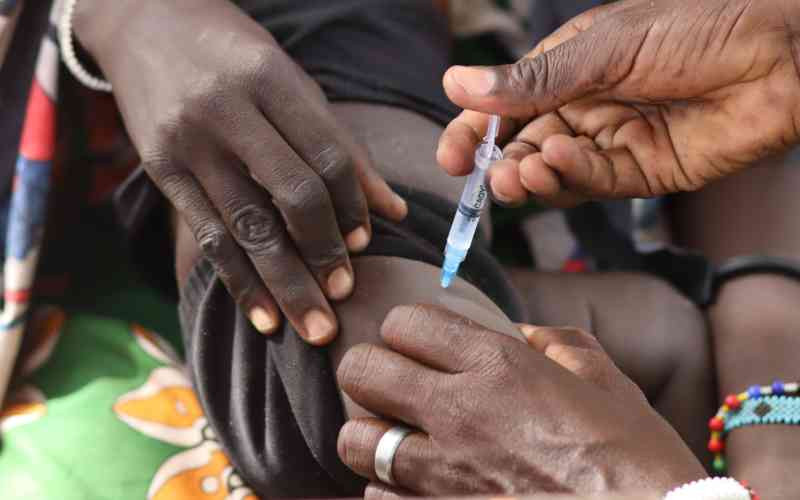
Vaccines are among the most powerful public health tools ever developed.
Over the past half-century, they have transformed human health, saving millions of lives.
Fewer children now die from preventable illnesses, fewer outbreaks devastate communities, and fewer health systems are overwhelmed by diseases that are already preventable.
This year’s theme, For every generation, vaccines work, is especially relevant for Kenya and Africa.
Immunisation remains one of the most effective and cost-efficient ways to save lives, prevent outbreaks, and strengthen communities, yet it is still underutilised in many settings.
Globally, vaccines prevent an estimated 3.5 to 5 million deaths every year.
They protect children from diseases that once claimed millions of lives and also shield adolescents, adults, pregnant women, and older people from severe illness and disability.
Across Africa, however, the immunisation story remains one of incomplete progress.
According to the Africa CDC, DTP3 coverage in Africa stood at 76 per cent in 2024, below the 90 per cent target under Immunisation Agenda 2030.
About 7.8 million children missed even the first dose of the diphtheria, tetanus, and pertussis vaccine.
The World Health Organisation (WHO) warns that one in five children in Africa remains under-immunised.
Kenya has made progress, but gaps remain.
WHO and the United Nations Children’s Fund (UNICEF) estimate that DTP3 coverage reached 93 per cent in 2023, an encouraging figure.
However, coverage for other essential vaccines is lower.
The second dose of the measles-containing vaccine stood at 76 per cent, well below the 95 per cent level needed to prevent outbreaks.
Recent vaccination efforts highlight both progress....