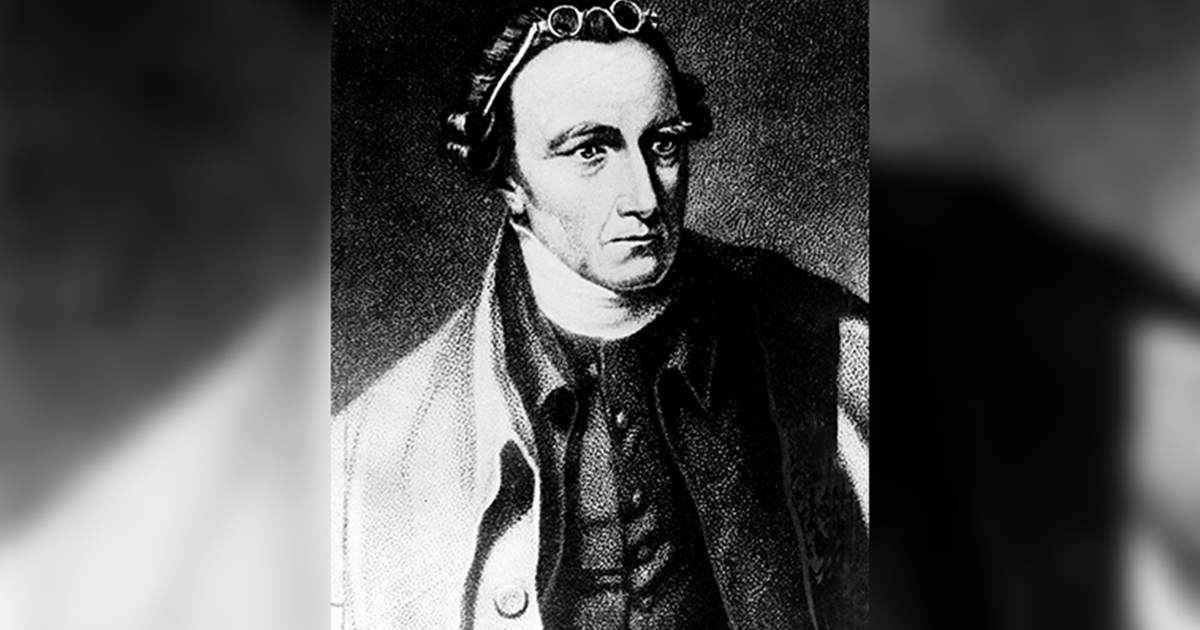
“Gentlemen may cry, ‘peace, peace,’ but there is no peace.
The war is actually begun! The next gale that sweeps from the north will bring to our ears the clash of resounding arms.
Our brethren are already in the field.
Why stand we here idle? What is it that gentlemen wish? What would they have? Is life so dear, and peace so sweet, as to be purchased at the price of chains and slavery? Forbid it, Almighty God.
I know not what course others may take, but as for me, give me liberty, or give me death!” – Patrick Henry, 1775 With these stirring words, the great Patrick Henry tried to move the 13 American colonies to action against England.
Henry didn’t do it by himself, of course, but his words live on in American history as one of the battle cries that led America to independence.
America was born.
What did our Founders create? Let’s look further at this issue of states’ rights versus national government power.
After the Independence War, the 13 states wrote a Constitution, surrendering some of their powers to a national government, powers they thought could be handled better collectively than individually.
For example, they didn’t want a single state starting a war with some country and perhaps dragging the rest of the states in with it.
But the states, in that Constitution of 1789, jealously guarded their powers — they delegated very few powers to that united government, and then, just to be sure, wrote a Bill of Rights telling that national government what it could not do.
Even then, Patrick Henry didn’t like this Constitution.
He thought it gave the national government too much power.
He did not trust government, any government, but especially a national one.
That was the “slavery” he feared — not individual, chattel slavery.
Let me emphasize this remarkable thinking in the mind of Henry and America’s Founders: “Is life so dear, and peace so sweet, as to be purchased at the price of chains and slavery?” Our Founding Fathers believed that submission to a tyrannical government was slavery.
To Patrick Henry, if government has all power, and gives and takes every citizen’s “rights” (as per Virginia Sen.
Tom Kaine), that’s not freedom.
That’s slavery.
But the tsunami wave of history was against Mr.
Henry and those who feared a too-powerful national government.
Understanding history is critical to understanding why national governments, everywhere, are now dominant.
Nationalism had been a growing phenomenon over the previous few hundred years, and today has become the accepted philosophy — the “zeitgeist” — for governments and people worldwide.
There were myriad “nationalist” movements in the 19th and 20th centuries, and they affected American thinking as well.
They weren’t, however, overpowering in 1776, which is why our Founders wrote the Constitution they did, i.e., strictly limiting the power of the national government and putting most powers in the hands of the states and people.....