Russian aluminium producer Rusal and Ghana’s state-owned GIADEC have agreed to develop bauxite mining of up to 5 million tonnes a year and a 1.2 million-tonne alumina refinery at Nyinahin.
The capacities are plans rather than production, and the investment value and timeline have not been disclosed.
Ghana holds some of the world’s largest bauxite reserves but has no known domestic alumina refining capacity.
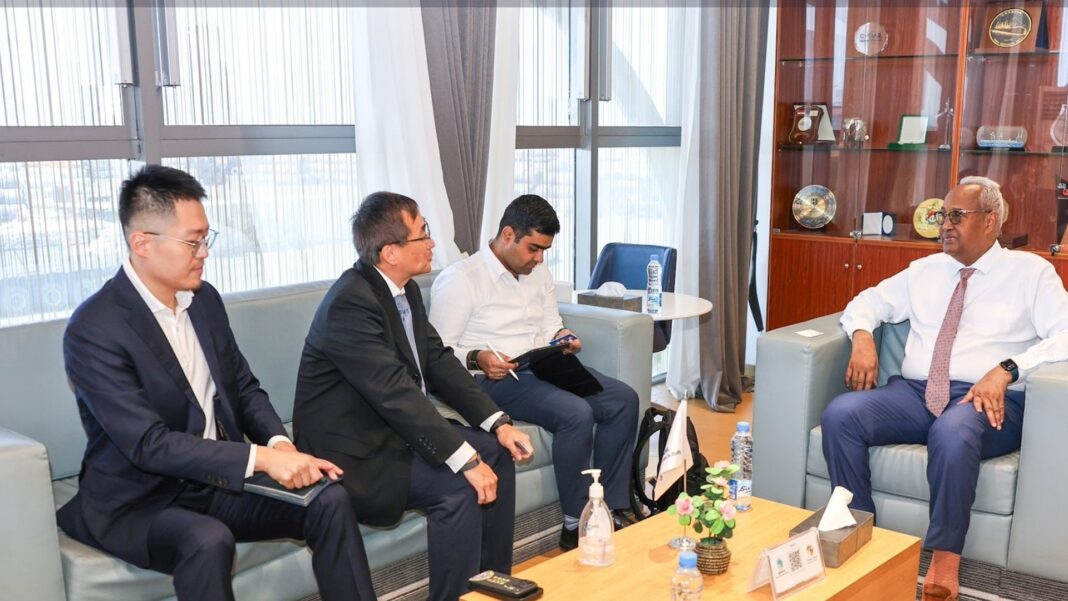
On 29 October 2026, during a Russia–Africa forum in Moscow, Russian aluminium producer Rusal and the Ghana Integrated Aluminium Development Corporation (GIADEC), the state-owned body leading Ghana’s aluminium strategy, agreed to develop bauxite mining and alumina refining projects through two joint ventures.
Rusal will hold majority stakes in both, while Ghana will hold minority stakes, including a legally protected non-dilutable 10% share.
The plan targets annual bauxite production of up to 5 million tonnes and alumina refining capacity of 1.2 million tonnes at the Nyinahin deposit in Ghana’s Ashanti Region.
According to RUSAL, the designated development area contains more than 100 million tonnes of bauxite resources.
Together, the proposed facilities represent a significant step towards developing Ghana’s domestic aluminium value chain, with the potential to support mineral processing, industrial investment and related infrastructure development.
Deal Details: Two Joint Ventures Target a Mine and a Refinery The ventures are Nyinahini Bauxite, which will develop and operate the mine, and Ghana Alumina Company, which will build and run the refinery.
The refinery is planned as the second phase of the project, will be fed by Nyinahini bauxite and will use natural gas as its energy source.
The ventures will hold rights to explore, mine and process bauxite as part of Ghana’s integrated aluminium industry plan.
On simple arithmetic, producing 1.2 million tonnes of alumina requires roughly 3.0 to 4.8 million tonnes of bauxite, using the commonly cited ratio of 2.5 to 4 tonnes of bauxite per tonne of alumina.
A mine of 5 million tonnes a year could therefore supply the refinery and leave a surplus for sale.
GIADEC Chief Executive Reindorf Twumasi Ankrah has said the projects fit the corporation’s goal of building a fully integrated aluminium industry that processes bauxite in Ghana.
He also cited expected investment, jobs and improvements to rail and port infrastructure.
Mining companies in Ghana generally face a 5% mineral royalty and a 35% corporate income tax, subject to the fiscal terms agreed for each project.
Ghana’s Bauxite Resources and Push for Domestic Processing Ghana holds roughly 900 million tonnes of bauxite, among the seventh-largest reserves in the world.
GIADEC estimates put Nyinahin at about 700 million tonnes, Kyebi at 160 million tonnes and Awaso at 60 million tonnes.
A 2023 resource estimate for three hills at Nyinahin found at least 375 million tonnes, about 50% above the historical estimate of 250 million tonnes.
The 100 million tonnes cited for the new development area therefore appears to be a portion of a much larger deposit.
Ghana has exported bauxite for more than 80 years, mainly from Awaso, and the Volta Aluminium Company (VALCO) smelter imports alumina for its operations.
A domestic refinery could reduce that dependence and create export earnings from surplus alumina.
The Awaso operator, Ghana Bauxite Company, shipped a record 1.8 million tonnes in 2024.
On simple arithmetic, a 5 million-tonne mine at Nyinahin would be nearly three times that volume.
Can Ghana Reduce RUSAL’s Dependence on External Alumina Suppliers? RUSAL is the world’s largest aluminium producer outside China.
In 2022, it lost access to approximately 3.4 million tonnes of annual alumina supplies associated with Ukraine and Australia, equivalent to around 40% of its alumina requirements.
The disruption increased the importance of securing reliable raw-material sources.
In 2025, RUSAL produced 6.858 million tonnes of alumina, representing 4.7% of global output and covering approximately 85% of its requirements.
Its seven bauxite mining facilities produced 18.453 million tonnes, meeting about 88% of its refineries’ bauxite needs.
Its African bauxite operations include the Kindia and Dian-Dian facilities and the Friguia complex in Guinea.