In a few decades, migration will be literally the only thing growing our population.
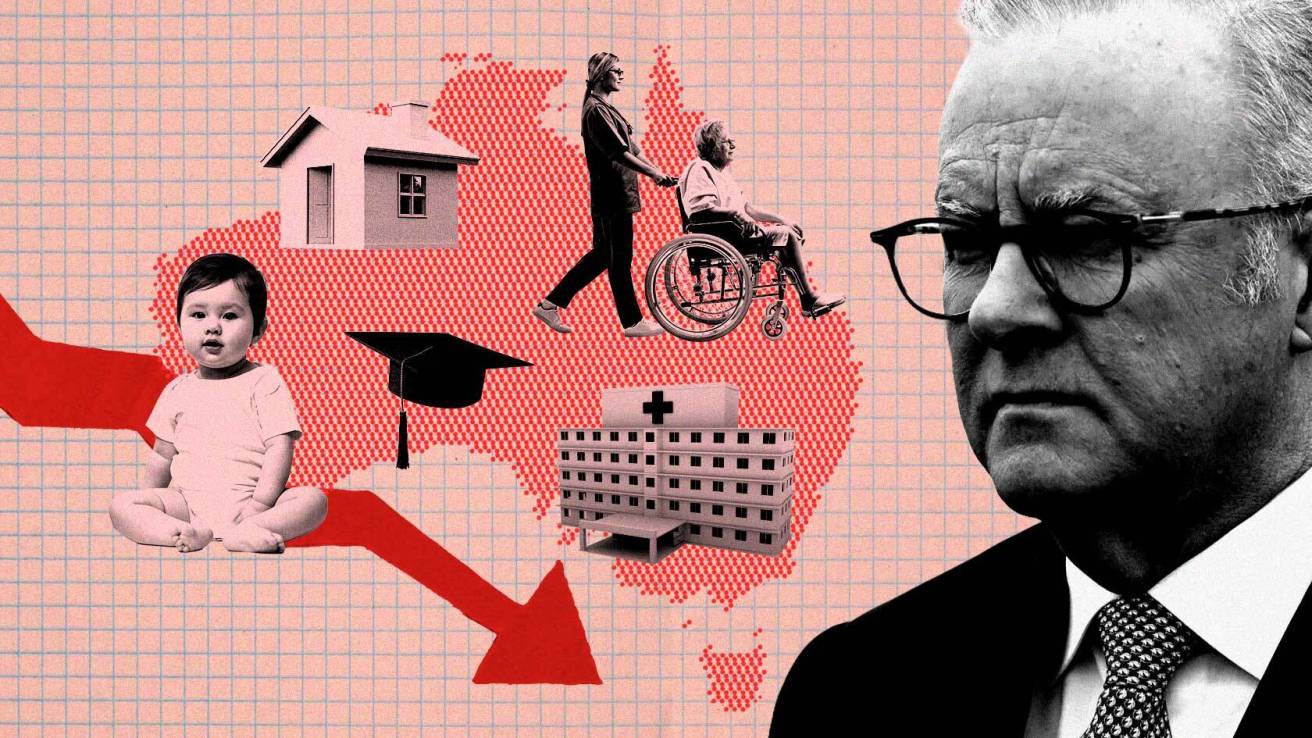
This is one of the key findings of the government’s latest intergenerational report, which projects the outlook for the Australian economy and budget to 2065–66.
A key headline you may have seen is that deaths are set to overtake births, leaving immigration as the chief way we can increase our population.
Will Australia have enough migrants? It sounds like an absurd question for anyone who remembers the 20th century.
But the next part of the 21st century will be different, with the current politics of migrant fear and migrant-blaming careening towards a new global demographic reality where migrants will be scarce, vital and in hot demand.
Alongside productivity (improving the amount of useful outputs from fewer inputs) and participation (the share of people who work), increasing population is one of three tools we can use to grow the economy.
Much depends on the assumption that we can have the migrants we want.
History suggests we can; we have always been a desirable destination.
But is that enough? Rich and poor countries alike have seen falling fertility rates — the number of children per woman over their lifetime — with only two countries having seen notable rises since the year 2000: Uzbekistan and Kazakhstan.
Those two are strange exceptions that have seen major cultural change since the collapse of the Soviet Union (the Russians left and the remaining locals celebrated by procreating).
Even the poorest countries have falling fertility.
Angola’s fertility rate is five, but it was almost eight in the 1990s.
Falling fertility is not minor, not temporary and not local; it’s a major global phenomenon.
The world’s population is going to stop growing this century, and the timing of the peak keeps getting brought closer.
Most recently it was wound back from 2100 to 2084, but that depends on fertility rate assumptions that are already outdated.
Australia is small and brings in only a few hundred thousand migrants....