BAKU, Azerbaijan, October 8.
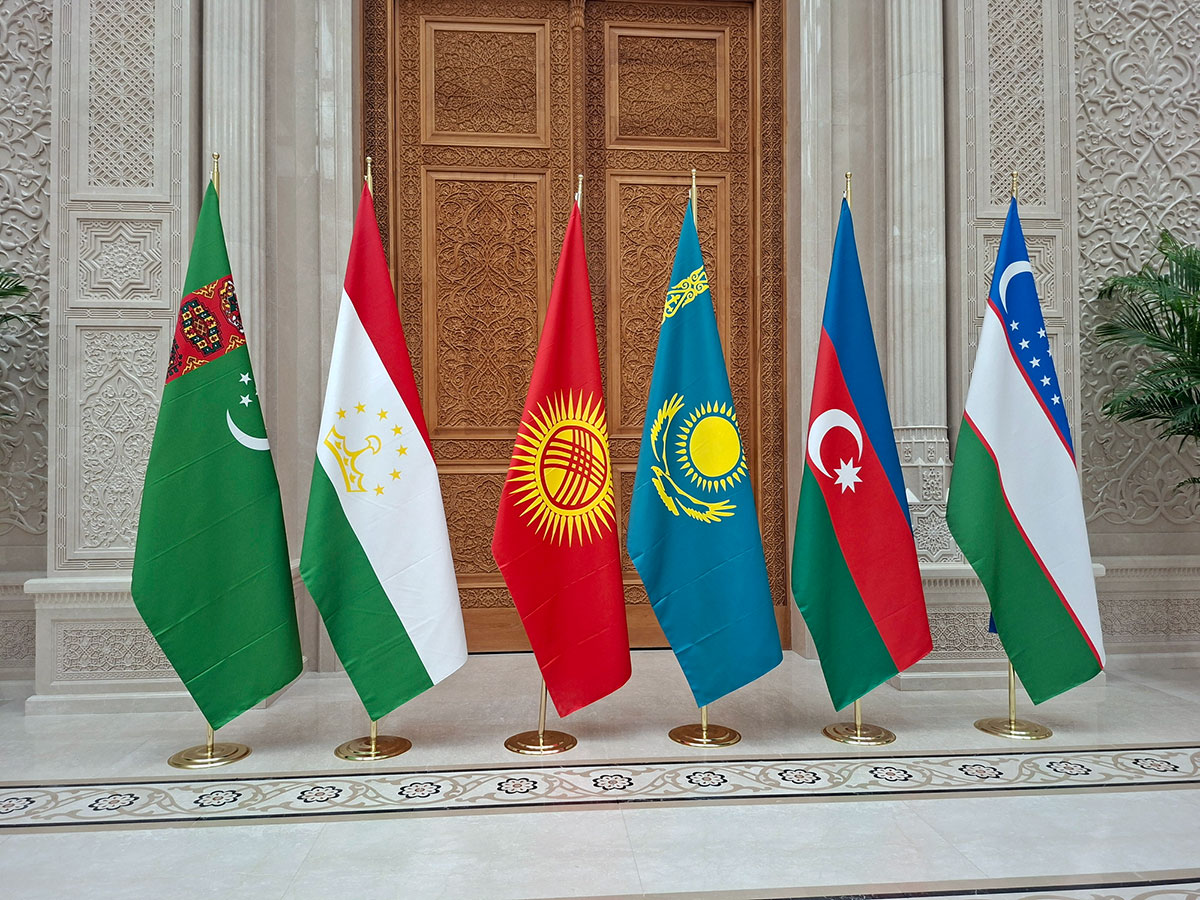
The National Tourism Zone of Avaza in Turkmenistan will host the next Consultative Meeting of the Heads of State of Central Asia and Azerbaijan on October 8.
For Baku, the meeting comes at a time of noticeably deepening ties between the South Caucasus and Central Asia.
The decision taken in Tashkent in 2025 to grant Azerbaijan full membership in the Consultative Meeting of the Heads of State of Central Asia was a natural reflection of processes that have gradually been reshaping the architecture of regional cooperation in recent years.
Azerbaijan's historical, cultural and economic ties with Central Asian countries have gained a stronger institutional foundation, evolving from bilateral and situational cooperation into a broader regional partnership.
This is particularly important amid a changing geopolitical and economic environment.
Central Asia and the South Caucasus are increasingly viewed not as separate spaces, but as interconnected regions capable of jointly creating new trade routes, energy links and logistics chains between East and West.
From historical ties to strategic connectivity Azerbaijan and the Central Asian states have traditionally maintained close historical and cultural relations.
However, the current stage is characterized by the increasingly concrete economic and infrastructure content of these ties.
Cooperation covers energy, oil and gas, renewable energy, transport, trade and investment.
Central Asian countries are also actively involved in the reconstruction of Karabakh, while regular mutual visits and the signing of new documents are gradually elevating bilateral relations to a higher level.
Notably, bilateral trade between Azerbaijan and the Central Asian countries reached $1.8 billion in 2025.
Although imports from the region still account for the bulk of trade, Azerbaijani non-oil and gas products are also gradually strengthening their positions in Central Asian markets.
In particular, exports of such products to Kazakhstan and Uzbekistan increased by more than 5% year-on-year.
Positive dynamics continued in 2026, with trade turnover between Azerbaijan and Central Asian countries reaching about $425 million in the first six months.
Thus, the relationship is no longer simply about expanding trade.
A deeper economic interdependence is taking shape, with transport infrastructure becoming one of the main tools for further convergence.
Azerbaijan and Central Asia as a single transport Transport and connectivity can now become the main link between Central Asia and the South Caucasus.
Thanks to its geographical position, Azerbaijan effectively serves as one of the key links connecting Central Asian markets with Türkiye and European destinations.
For Central Asian countries, this means broader access to global markets, while for Azerbaijan it means greater transit potential and a stronger role in the emerging Eurasian logistics architecture.
It is no coincidence that Azerbaijani President Ilham Aliyev said on October 2 at the 8th congress of the New Azerbaijan Party that the volume of transit cargo through the country is expected to reach 16 million tons in 2026.
The president set a medium-term target of increasing this figure to 30 million tons.
These figures reflect a much broader process.
The Middle Corridor is gradually moving beyond its perception as simply an alternative cargo route and becoming the foundation of a new system of trade and economic links between Asia and Europe.
The World Bank emphasizes that the next stage in the development of the Trans-Caspian International Transport Route requires not only infrastructure construction, but also deep integration of railways, ports, customs authorities, logistics operators and border services.
This also involves digitalization, harmonization of procedures and greater predictability of transportation.
This is where the interests of Azerbaijan and Central Asia largely coincide.
The countries of the region are interested in expanding alternative routes for their trade, while Azerbaijan is interested in increasing transit flows through its territory and further developing its port, railway and logistics infrastructure.
At the same time, the prospects of the Middle Corridor cannot be assessed solely in terms of cargo volumes.
Its full development could....