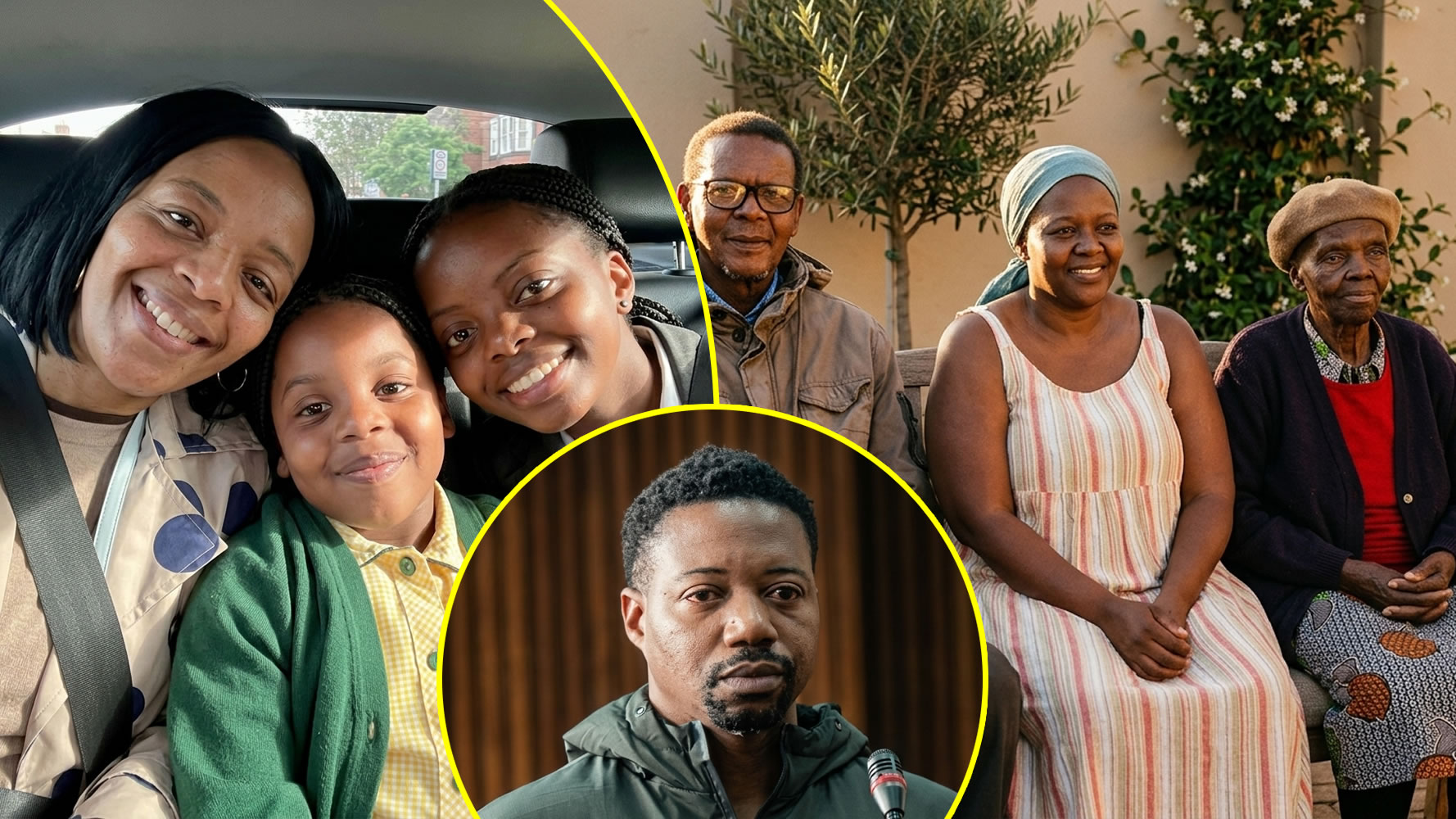
BLOOD AND BETRAYAL: THE BITTER BURIAL BATTLE OVER THE UK TRIPLE MURDER BULAWAYO – In the quiet, dusty streets of Gwabalanda, a high-density suburb in Bulawayo, the air is thick with a grief so profound it has curdled into a cold, hard resolve.
Behind the gates of the Khumalo family home, a tragedy that began thousands of miles away in the leafy English village of Great Denham has reached a bitter impasse.
It is here that the final remains of Nothabo Zandile Khumalo and her two young daughters, Natalie and Nala, are expected to eventually rest.
But before the first spade of earth can be turned, a fierce domestic war has erupted over who has the right to mourn them.
The conflict reached a breaking point last weekend when a delegation from the Tshuma family—the kin of the man accused of the brutal triple slaying—arrived at the Khumalo residence.
They came seeking to discuss funeral arrangements and, audaciously, to request that the burial proceedings be handled at their family home in Waterford.
They were not met with the traditional Zimbabwean hospitality of Ubuntu.
Instead, they were sent packing in a scene of raw, unfiltered anger.
“The Tshuma family where Nothabo was married sent a delegation to our home in Gwabalanda last weekend to talk to us about the tragedy that befall us and discuss issues surrounding the murders, including funeral and burial arrangements,” a Khumalo family member revealed, still visibly shaken by the encounter.
“Our family rejected their moves and sent them packing mainly because; first, the families were not in talking terms anyway, second they had not even sent a condolence message to us and third, they had not apologised for the murder of our beloved daughter and grandchildren by their son.” The rejection was absolute.
To the Khumalos, the arrival of the in-laws was not an act of contrition, but a crowning insult to a series of horrific events that have left their family tree violently pruned.
“They came last weekend and there was a brief meeting out of respect or Ubuntu, but then we firmly yet politely them to go away because we were not happy with what has been happening; our relationship was already broken down and bad, now the murders and the way they handled the whole situation made things worse,” the source added.
“It was insensitive and disrespectful to come and ask that the funeral and burial arrangements must be handled by them given the situation and under these circumstances.
They can’t be the ones burying our daughter and grandchildren.
We won’t allow that.” The Horror in Great Denham To understand the depth of this animosity, one must look back to the morning of July 3, 2026, in the United Kingdom.
In the affluent Bedfordshire village of Great Denham, neighbours lived in the kind of quiet security that £1.3 million homes usually provide.
But inside the residence of Ndodana Mkhanyisi Tshuma and Nothabo Zandile Khumalo, a darkness had been festering.
Tshuma, a 45-year-old British citizen of Zimbabwean heritage known to many as “Mark,” was a successful businessman on paper.
He operated Nexus Trove Holdings, a property firm with assets reportedly exceeding £1 million.
Yet, beneath the veneer of professional success lay an environment described by friends and relatives as one of “intense coercive control and toxicity.” The couple was in the midst of a bitter separation, a process that criminologists often identify as the primary catalyst for domestic “family annihilation.” On that fateful Wednesday, the toxicity turned fatal.
Nothabo, 42, and her daughters—15-year-old Natalie and 5-year-old Nala—were murdered.
Post-mortem examinations later conducted by British authorities would confirm a harrowing detail: all three victims died from blunt force trauma.
They were not just killed; they were beaten to death in their own sanctuary.
The discovery was only made days later, on July 6, after concerned neighbours noticed the family’s unusual absence.
By then, the man responsible was already thousands of miles away.
A Fugitive’s Flight The timeline of Ndodana Tshuma’s movements suggests a man who acted with cold, calculated precision before the weight of his actions seemingly drove him to the brink of self-destruction.
On July 4, less than twenty-four hours after the murders, Tshuma fled the UK.
He boarded a flight from London Heathrow to Johannesburg, South Africa, via Dubai, using his British passport.
He arrived in Johannesburg on July 5 and immediately vanished into the sprawling urban landscape.
For two days, he stayed at a high-end hotel in Sandton under a pseudonym, watching from afar as the news of his brutality began to saturate international media.
When the story broke on Monday, July 6, Tshuma checked out and retreated to a family property in Kensington.
It was during this period of hiding that Tshuma allegedly sought a final, permanent escape.....