Let me take you back to 1983.
A year of turning points and exclamation marks in pop culture, history and sports.
Michael Jackon’s "Thriller" 13-minute music video premiered, thus creating a global reaction that would forever change the way we saw the genre, the Philadelphia 76ers won the NBA championship with a sweep over the Los Angeles Lakers, remaining as the last time they became champions, and Dr.
Sally Ride became the first American woman to fly in space, marking an important trailblazing juncture for women who aimed to reach the stars.
And Aston Villa Football Club, my lifelong club, faced Barcelona in the European Super Cup.
Villa had lifted the European Cup the previous year after beating Bayern Munich.
They then faced Barcelona, winners of the European Cup Winners’ Cup.
It was a two-legged affair and a certain Diego Maradona, who had just joined Barça, did not play due to contracting hepatitis, which sidelined him until March.
In the second leg, trailing 1-0 after the first leg at Camp Nou, Aston Villa ended up winning 3-0 in front of a boisterous Villa Park.
Back then, the fans were practically breathing on the players and the energy was intoxicating.
Especially when blonde-haired Gary Shaw (a Villa legend who sadly passed away in 2024) scored the opener.
It was a tumultuous match with controversy as tackles flew in like rain as the end of the match gave us seven yellow cards and two red cards.
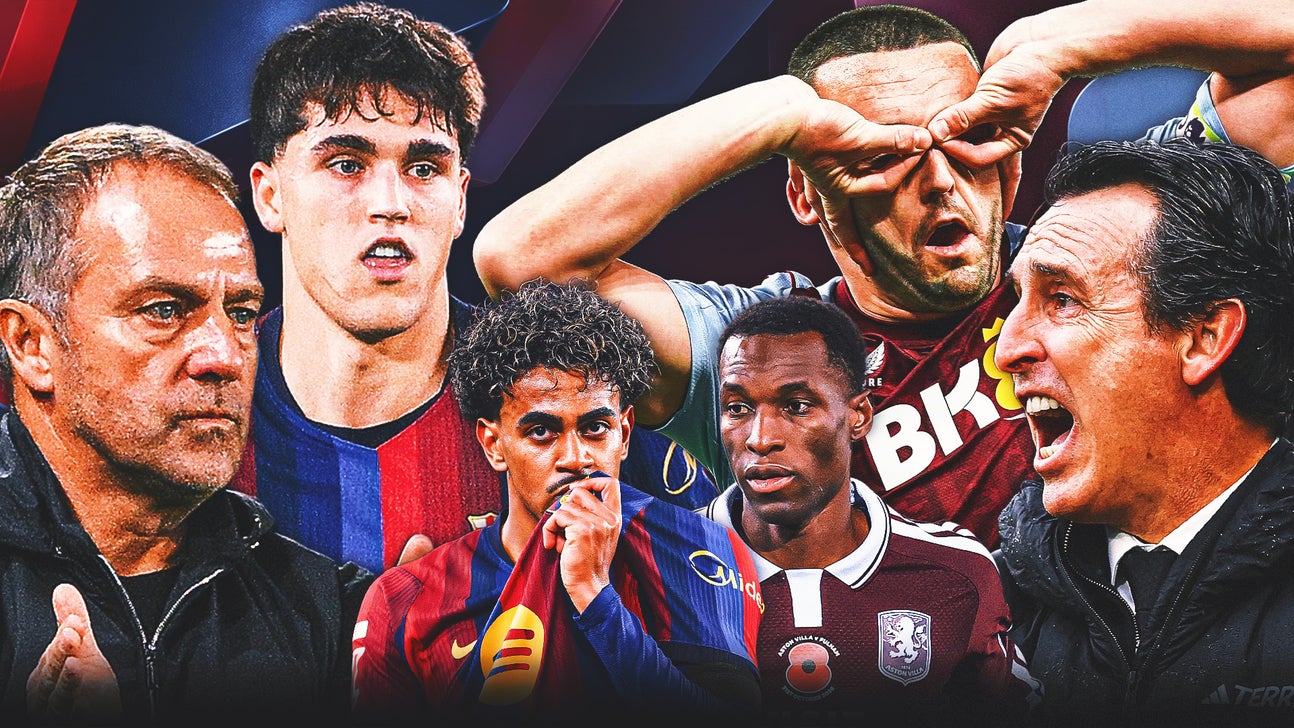
Aston Villa and Barcelona reunite on Tuesday in Champions League group-stage action, and a lot has happened since that 1983 clash.
Through the years, Aston Villa has experienced relegation, near-bankruptcy and a longing search for an identity.
A contrast to the pitch successes of mighty Barcelona — who has won two European trebles, the magic of Lionel Messi, and a current resurgence of domestic dominance thanks to manager Hansi Flick and the continuous graduating stories of La Masía, led by, of course, the prodigious genius of Lamine Yamal.
But the growth of Aston Villa has been something quite to behold and so this is also about Unai Emery, a man who in four years has created one of the most inspiring projects since arriving at Aston Villa’s Bodymoor Heath training ground in November 2022.
When Emery arrived at Villa from Villarreal, the midlands club was three points above relegation and searching for a personality and sense of belief that had almost disappeared after Steven Gerrard’s tenure.
And since then, it is a club that has seen European football every season (including two Champions League campaigns) and a Europa League trophy—the first since that aforementioned night in 1983 and the first piece of silverware since 1996.
With a rejuvenated squad that includes arrivals such as midfielder Johan Manzambi, goalkeeper Zion Suzuki, midfielder João Gomes and forward Ibrahim Mbaye.
Villa seem younger and more dynamic, especially with Nico Jackson – the Senegalese striker who came from Chelsea and is on fire right now with eight goals (three in the Champions League).
And this is quite the task to achieve after a summer that said goodbye to key players such as forward Ollie Watkins, defender Ezri Konsa and midfield duo Morgan Rogers and Youri....