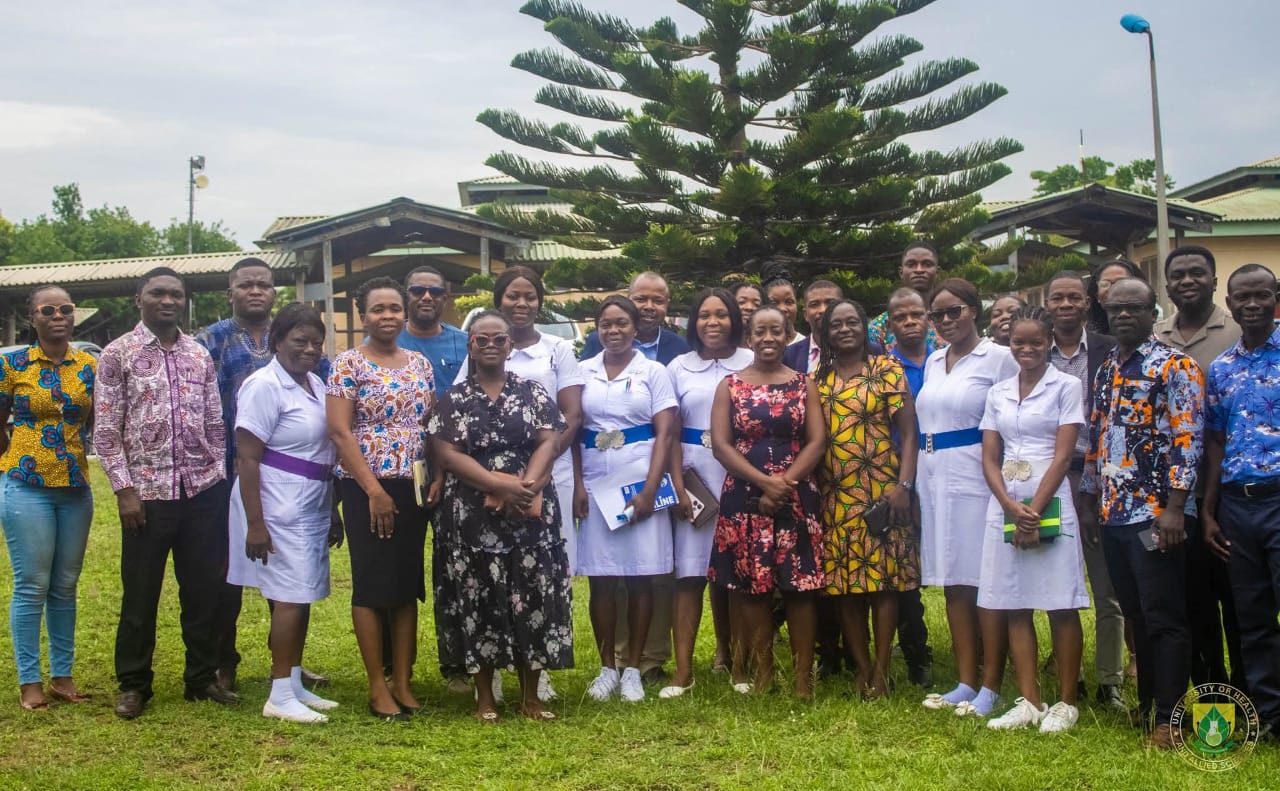
The University of Health and Allied Sciences (UHAS) has unveiled a pioneering three-year research initiative at the Ho Teaching Hospital (HTH), aimed at tackling neonatal infections and the escalating threat of antimicrobial resistance (AMR).
The project is supported by the International Centre for Antimicrobial Resistance Solutions (ICARS) under its Global Research Programme.
Titled "Enhancing Infection Prevention and Rational Antibiotic Use for Neonatal Infection in Four Health Facilities in the Volta Region,” the initiative seeks to reduce neonatal deaths caused by drug-resistant infections while reinforcing Ghana’s national fight against AMR.
The research would be implemented across four facilities: the Ho Teaching Hospital, the Volta Regional Hospital (Hohoe), Margaret Marquart Catholic Hospital (Kpando) and the Keta Municipal Hospital.
These sites were strategically chosen to represent different levels of healthcare delivery, ensuring context-specific evidence generation.
The project is organised into four key work packages: Infection Prevention, Antimicrobial Stewardship, Behavioural Science and Economic Evaluation, with an additional emphasis on Regulation and Policy to ensure findings inform national health strategies.
The Director of the Centre for Malaria Research at UHAS Institute of Health Research (IHR), Dr Matilda Aberese-Ako, emphasized that while effective interventions exist, their success depends on tailoring them to local contexts.