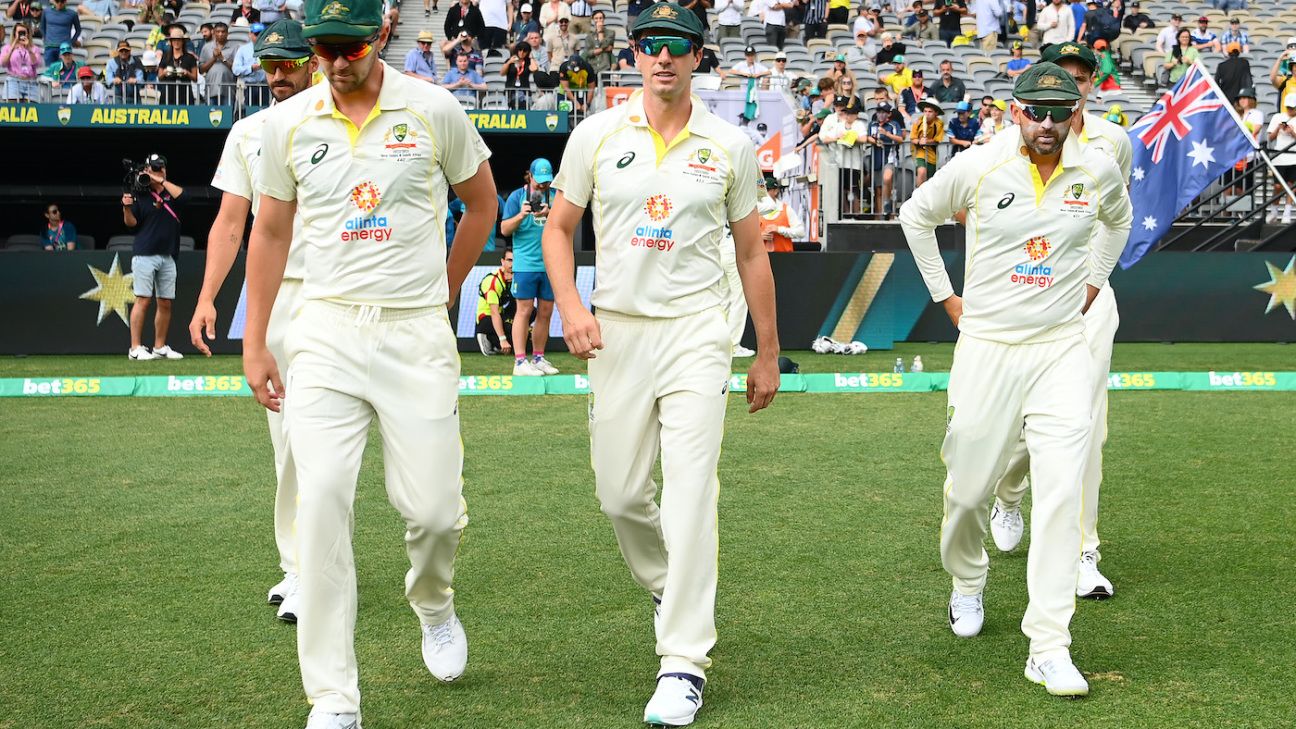
Dakuku Peterside The final whistle has sounded, the floodlights have dimmed, and the curtain has fallen on yet another FIFA World Cup.
On the grandest stage of football, Spain has emerged as worthy champions, enthralling billions with skill, resilience, and the timeless beauty of the round-leather game.
Yet, beyond the celebrations and heartbreak on the pitch lies another story—one of nations absent from the spectacle and diminished by that absence.
Nigeria is among them.
With the euphoria now fading, this is the moment for sober reflection: to ask how a country of over 200 million people, blessed with immense footballing talent, human resources and a good dose of resilience continues to watch the world’s biggest sporting festival from the sidelines; what this persistent failure reveals about the state of our economy and governance; and why our absence is far more than a footballing disappointment—it is a metaphor for a nation steadily losing its place on the global stage.
Nigeria has never lacked talent.
That much is clear across football, music, technology, literature, medicine, academia, business and the creative industries.
Nigerians excel worldwide, often in highly competitive environments.
The difficulty has always been less about discovering ability than organising it.
We produce brilliance but too often fail to build the systems that sustain it.
Football exposes this contradiction with painful clarity.
A gifted player can win a match; only a robust system can build a winning football culture.
Nations that perform consistently in most World Cups invest patiently in youth academies, school sports, coaching education, sports science, medical support, data analysis, transparent administration and long-term planning.
They understand that football is not merely a game of passion.
It is an industry of structure.
Nigeria has too often relied on individual brilliance to compensate for institutional weakness.
That approach may produce unforgettable moments, but it rarely produces sustained competitiveness.
It also mirrors the wider economy and points to policy failures: natural resources without sufficient value-addition, large markets without sufficient productivity, energetic citizens without enabling systems, ambitious plans without disciplined continuity.
The economic cost of World Cup absence is not limited to prize money.
Yes, participation brings direct financial rewards.
But the larger value lies in the multiplier effects: sponsorship, merchandising, media spending, hospitality, tourism, advertising, broadcasting rights, player visibility and national branding.
The World Cup is one of the most powerful platforms for projecting a country’s image.
It places a nation before global audiences, investors, tourists, brands and diaspora communities.
When Nigeria misses that stage, it forfeits more than football matches.
It loses a moment of commercial energy, national visibility and emotional connection.
The country loses an opportunity to strengthen its soft power.
In today’s world, national image is not decorative; it has economic value.
It affects tourism, exports, investor confidence, international influence and policy credibility.
The real failure, however, does not begin on match day.
It begins in the years before the match, in the neglected foundations that eventually show up as poor outcomes.
In football, as in economic management, collapse is rarely sudden; it is often the final expression of accumulated disorder.
Nigeria’s football history is marked by familiar cycles: coaching instability, administrative disputes, inconsistent youth development, underfunded grassroots programmes, declining school sports and planning that becomes urgent only after qualification campaigns have gone wrong.
These are not isolated sporting problems.
They resemble the wider national habit of short-termism and weak policy execution.
Development plans change with political transitions.
Infrastructure projects are abandoned midway.
Regulatory uncertainty discourages investors.
Public institutions struggle with continuity.
Too much depends on personalities; too little is protected by systems.
This is where football becomes a lesson in development economics.
Economists distinguish between endowment and productivity.
A country does not become prosperous simply because it has oil, land, minerals, population or talent.
It prospers when it organises those assets efficiently.
Raw potential must be refined into value.
The same is true of football.
A talented child kicking a ball in a street or school field may possess extraordinary promise, but without scouting, coaching, nutrition, education, medical support and competitive pathways, that promise may never mature.
Nigeria’s grassroots football system remains too fragmented.
Many academies depend on private sacrifice.
School competitions, once a vital pipeline for discovering young talent, have weakened in many parts of the country.
Local leagues lack consistent organisation and financing.
Scouts and coaches operate without adequate institutional backing.
In such a system, a few stars will still emerge....