The ongoing debate surrounding the appointment of Dr.
Lawrence Muganga as State Minister for Internal Affairs has gone beyond constitutional interpretation and entered the deeper terrain of identity, belonging, and perceptions of fairness in Uganda’s public life.
Since President Yoweri Kaguta Museveni unveiled his 2026–2031 cabinet, scrutiny of several appointees alleged to hold dual citizenship has triggered intense public discussion.
While legal provisions governing eligibility for ministerial office are clear and must be respected, the pattern of public focus has raised broader questions about consistency, equality before the law, and whether certain individuals are subjected to more intense scrutiny than others.
At the center of this conversation is Dr.
Muganga, Vice Chancellor of Victoria University and a well-known academic and advocate for educational reform.
A petition challenging his eligibility has cited provisions of the Uganda Citizenship and Immigration Control (Amendment) Act, 2009, which restrict dual citizens from holding certain ministerial positions.
However, supporters argue that the debate has increasingly shifted from law to identity politics, with attention disproportionately directed at Dr.
Muganga compared to other appointees reportedly facing similar citizenship verification processes.
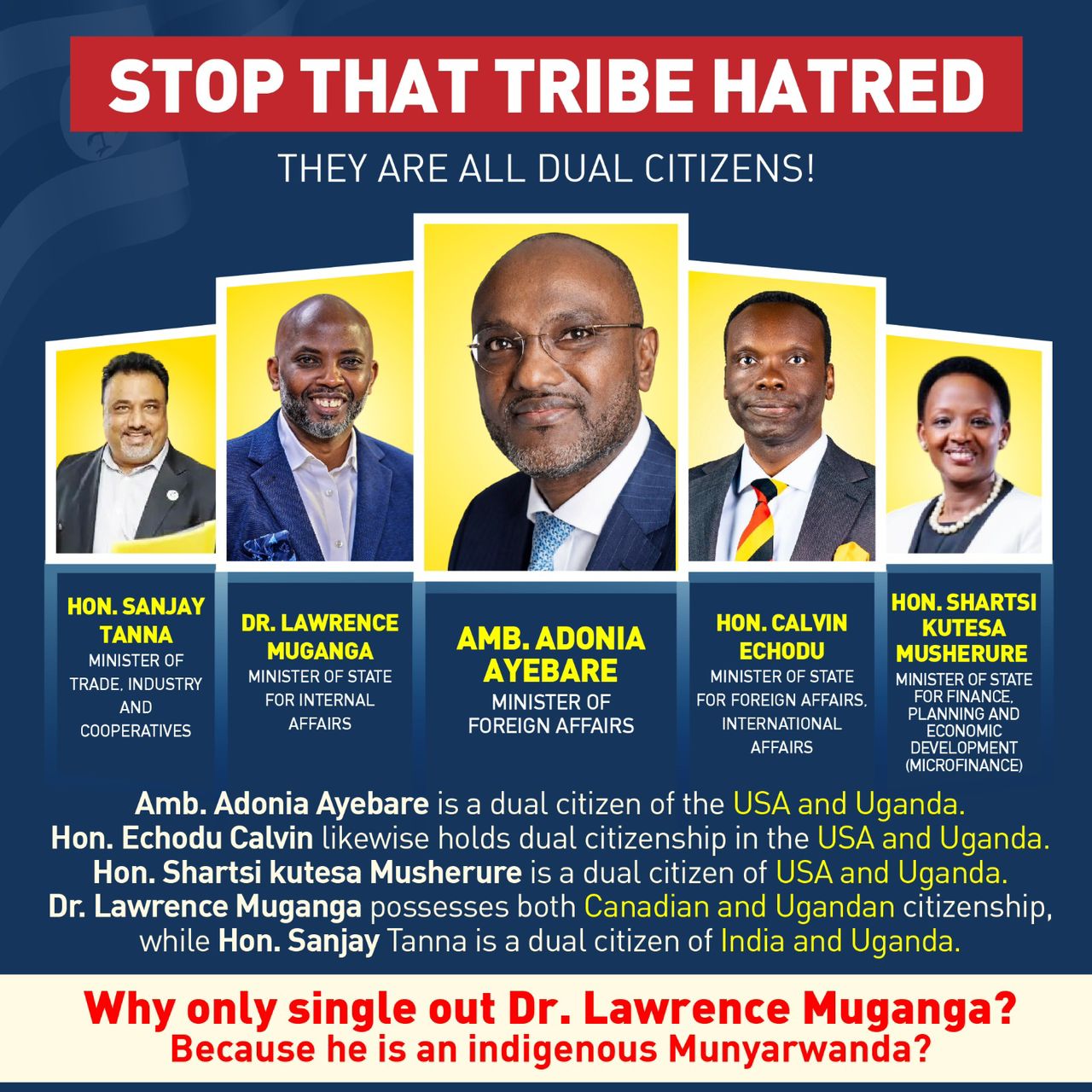
Reports indicate that the President directed the Directorate of Citizenship and Immigration Control to verify the status of multiple cabinet nominees, including Amb.
Adonia Ayebare, Hon.
Calvin Echodu, Dr.
Muganga, and Hon.
Sanjay Tanna.
Yet public outrage and online debate have largely concentrated on one individual, raising questions about selective scrutiny.
A Long-Standing Debate on Citizenship and Identity For years, Council for Abavandimwe leader Frank Gashumba has publicly raised concerns about what he describes as ethnic profiling and victimization of Ugandans of Rwandan descent in the issuance of national identity documents and passports.
He has previously argued that some Ugandans of Banyarwanda heritage—despite being born, raised, and fully integrated within Uganda—often face additional verification processes when applying for national documentation.
These concerns prompted him to call on President Yoweri Kaguta Museveni to issue clearer administrative guidance to ensure uniform and fair issuance of identity documents.
To supporters of Dr.
Lawrence Muganga, the current scrutiny surrounding his ministerial appointment is viewed as part of this broader historical concern.
They argue that his personal background is well documented—his birthplace, upbringing, education, and professional record are not in dispute—and therefore the intensity of focus on his ancestry raises questions about fairness.
From this perspective, the concern is not merely....