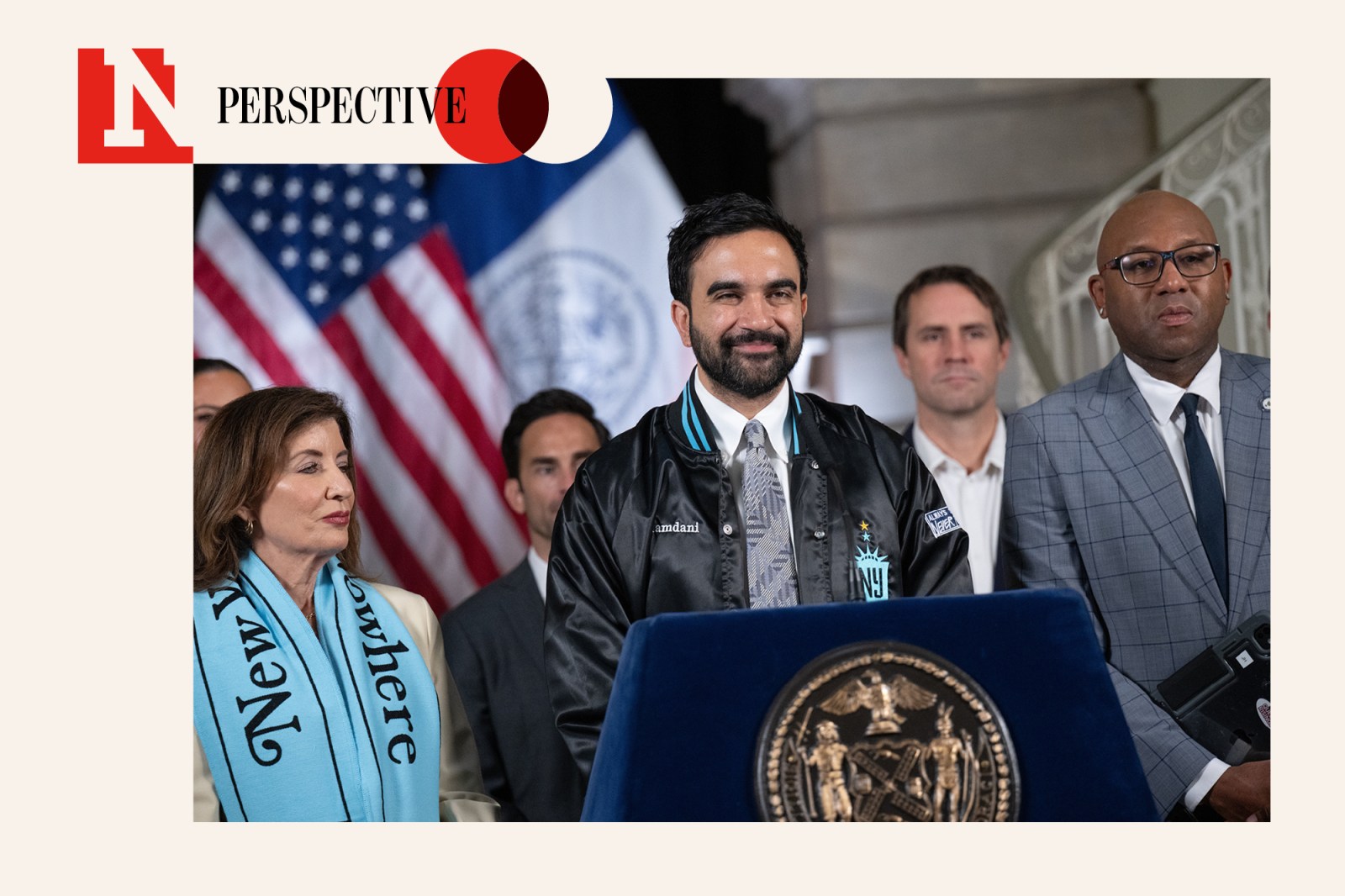
New York's Democratic Socialist Mayor Zohran Mamdani’s push to determine whether city lawyers can act on the International Criminal Court’s warrant for Israeli Prime Minister Benjamin Netanyahu has turned a symbolic arrest question into a larger experiment: whether a mayor can use City Hall as a parallel arena for foreign policy.
Mamdani, responding to questions about Netanyahu’s possible trip to New York for September’s United Nations General Assembly, said the Israeli leader “belongs in The Hague” and called him a “war criminal” over the ICC case.
But the significance of a significant move extends beyond Netanyahu.
Mamdani is repurposing the very institutions that make New York a global city—the police coordination surrounding the United Nations, the Mayor’s Office for International Affairs, diplomatic protocol, immigrant outreach and the city’s international networks—toward a more confrontational role in global politics.
City Hall is not a foreign ministry and a mayor does not set U.S.
foreign policy, but Mamdani is testing whether New York’s municipal power can function as a counterweight to Washington’s diplomatic approach, turning local government into a new battleground over international law, Gaza politics and the Democratic Party’s divisions over Israel.
The Arrest Review Mamdani has tried to keep the arrest claim inside legal limits.
He told The New York Times that “Whatever the law allows me to do in New York City, that’s what we will do,” while saying he would not write new laws for Netanyahu.
A serious move would involve substantial legal obstacles: The United States isn't a party to the Rome Statute that created the ICC and federal law restricts state and local governments from cooperating with ICC requests.
There's more: the U.N.
headquarters agreement also limits the ability of federal, state and local authorities to interfere with the movement of certain representatives traveling to and from the U.N.
“Because ICC warrants depend on national governments for enforcement, their political weight basically determines their enforceability," Anjali Dayal, an associate professor of international politics at Fordham University, said to Newsweek.
Those constraints put Mamdani’s approach at the center of a larger clash: whether a city government can use its own institutions to pursue an international agenda when foreign policy remains the domain of the federal government.
New York Already Has a Diplomatic Machine Mamdani did not build a foreign-policy apparatus from scratch.
He inherited a city government with an unusually deep international footprint.
New York’s Mayor’s Office for International Affairs, for example, advises city agencies on diplomatic and consular matters, responds to requests from foreign governments, the United Nations and the State Department, and coordinates with the NYPD, federal agencies and U.N.
officials on security during the annual General Assembly.
That existing infrastructure gives any New York mayor a level of international access that most local officials do not have.
The city is also home to U.N.
headquarters, the world’s largest diplomatic corps and a population with deep ties abroad.
That all spells out that foreign affairs are already part of municipal governance before any mayor decides to turn them into a political project.
Mamdani’s shift lies in how he uses that inherited machinery.
In February, he appointed Ana María Archila as commissioner for international affairs, describing New York as a city that “has always belonged to the world.” The administration has emphasized relationships not only with diplomatic missions and governments, but also with movements focused on issues such as inequality, climate change and democratic backsliding.
Archila herself said she hoped to build relationships with “diplomatic missions, governments and movements working to tackle the challenges of inequality, climate change and democratic backsliding,” an unusually expansive vision for an office traditionally associated with protocol and city diplomacy.
That is the foundation of Mamdani’s broader experiment: turning City Hall from a facilitator of diplomacy into a political actor on the world stage.
Democratic Politics Mamdani’s move comes as the Democratic Party....