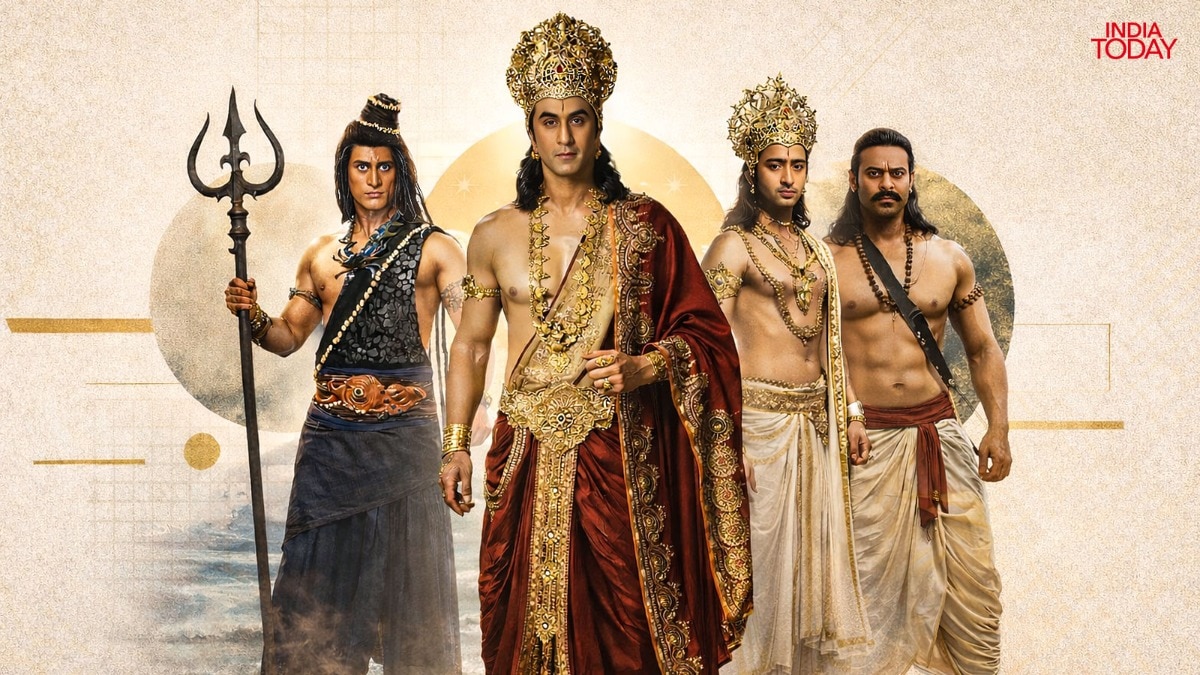
The first glimpse of Ranbir Kapoor's appearance as Lord Rama from Ramayana Part 1 is out, and the fans are excited about the ambitious film.
Many on social media, however, have a problem – they feel the on-screen epic's hero is too western in physique for an Indian God.
The debate had also risen when Prabhas appeared in the same role in Adipurush (2023).The conversation seems to arise every time Ramayana or Mahabharata is adapted for the screen lately.
The picture has frequently been: Lord Rama in the forest exile, not just serene and graceful as in traditional art, but with sharply chiselled abs, broad shoulders and a vascular, gym-honed physique as he draws his bow in slow motion.
Or the Pandavas and Kauravas swaggering across the battlefield like fitness models in designer armour.Our gods have been turned into Greek Gods for the screen, and the transformation is everywhere — across Hindi and regional TV soaps, films and OTT shows.
In short, wherever filmmakers are adapting the epics.How superhero template is reshaping Ramayana adaptationsAfter Ramanand Sagar's Ramayana and BR Chopra's Mahabharata in the Doordarshan days, newer shows and films based on these epics have made male divinity and warrior characters look like they have just stepped out of the gym: Toned bodies and glowing skin, optimised for dramatic slow-motion sequences.What began as action-oriented portrayals has extended to the divine: Hanuman exhibits superhero agility, Rama draws his bow with model-like poise, and Shiva is depicted with muscular strength.South Indian folklore films such as HanuMan and Mirai have further advanced this trend, blending mysticism with VFX spectacle where divine figures appear more visually spectacular than battle-ready.This trend mirrors a Hollywood cinematic pattern where gods and deities are idealised as athletic supermodels.
A character like Chris Hemsworth’s Thor embodies the sculpted template Hollywood has favoured for decades.
In contrast, older Western Biblical epics like Ben-Hur or The Ten Commandments conveyed strength and moral gravitas through presence and stature, without the....