The furnaces are cold, the factory floor deserted, and twisted metal litters the grounds of Kamet Steel, a vast industrial complex that once helped power Ukraine’s economy but closed after a Russian attack.
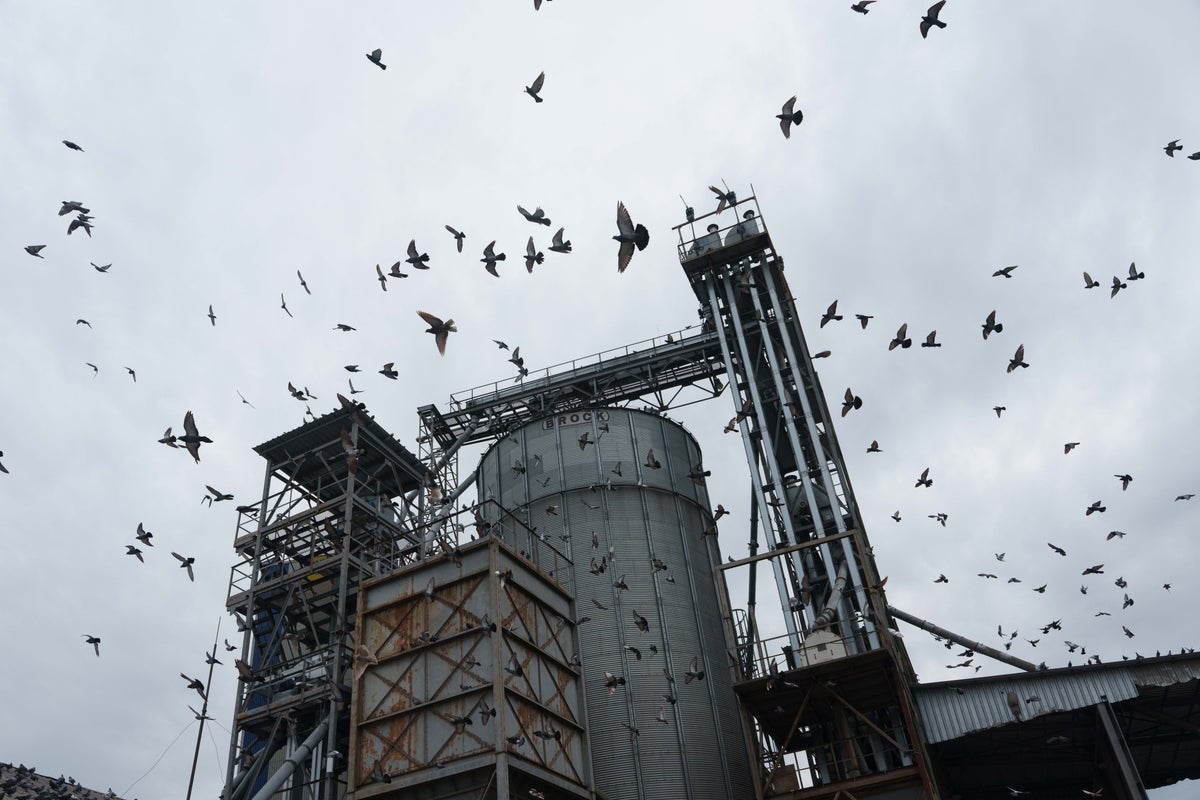
Across the country, grain — a key export — piles up in fields and silos as farmers struggle to find routes safe from airstrikes and wait for prices to rise.
Russia’s intensified air campaign is slowly strangling Ukraine’s economy, targeting industrial and energy plants and the logistics networks, railways and export routes that keep it afloat.
The near-daily strikes with ballistic missiles and jet-powered drones disrupt production and drive up transport costs.
As a result, Ukraine’s government faces a deepening cash crunch as the air war chokes its revenue from steel, agriculture and other key sources.
The damage ripples across interconnected sectors just as Kyiv faces uncertainty over future U.S.
Ukraine’s central bank last week forecast a 0.4% economic contraction in 2026, reversing its previous projection of 1.8% growth, due to the attacks and a surge in global energy prices.
Andriy Pyshnyy said the bank had also raised its inflation forecast to 12.5%, from 10% in July.
Ukraine spends some 40% of its gross domestic product on defense — far beyond what it can cover alone, notes Torbjörn Becker, director of the Stockholm Institute of Transition Economics.
Raising taxes only would bring in a fraction of what is needed.
Ukraine’s steel industry, a pillar of the economy, grinds to a halt Missile strikes have halted steel production across Metinvest Group, the country’s mining and metals giant.
Kamet Steel, in the industrial city of Kamianske, accounted for more than a quarter of Ukraine’s steel output in 2025.
The complex employed thousands producing steel and pig iron for domestic construction.
It also supplied semi-finished steel to Metinvest’s facility in Bulgaria for the market there and elsewhere in Europe.
But five ballistic missiles struck the site on Sept.
Its closure has hurt Ukraine’s industrial economy, affecting construction, mining, engineering, energy and logistics.
Ukrzaliznytsia, the national railway operator, relies heavily on steel transport and other freight revenue.
Businesses that rely on the plant could lose jobs and face bankruptcy, said Oleksandr Tretyakov, Kamet Steel’s CEO.
European Union trade restrictions could hinder recovery by narrowing the market for Ukrainian steel exports, he said.
“This is the worst situation since the Second World War,” Tretyakov said, noting that steel once accounted for about 6% of Ukraine’s GDP.
“It did,” he said.
“Right now, it’s zero.” Grain is trapped behind export bottlenecks Agriculture accounts for up to 60% of Ukraine’s foreign currency earnings, making it critical to the wartime economy.
But Russian attacks on Black Sea shipping have sharply reduced traffic through Ukraine’s deep-water ports just as farmers need cash to prepare for the next planting season.
Ukraine’s Black Sea trade has collapsed with attacks on ports, vessels and logistics infrastructure, according to maritime data and analytics company Lloyd’s List Intelligence.
There were only 21 ship arrivals at Black Sea ports in August, down about 90% from a year earlier.
Soaring insurance premiums and the constant threat of Russian strikes deter shipowners.
Dozens of....