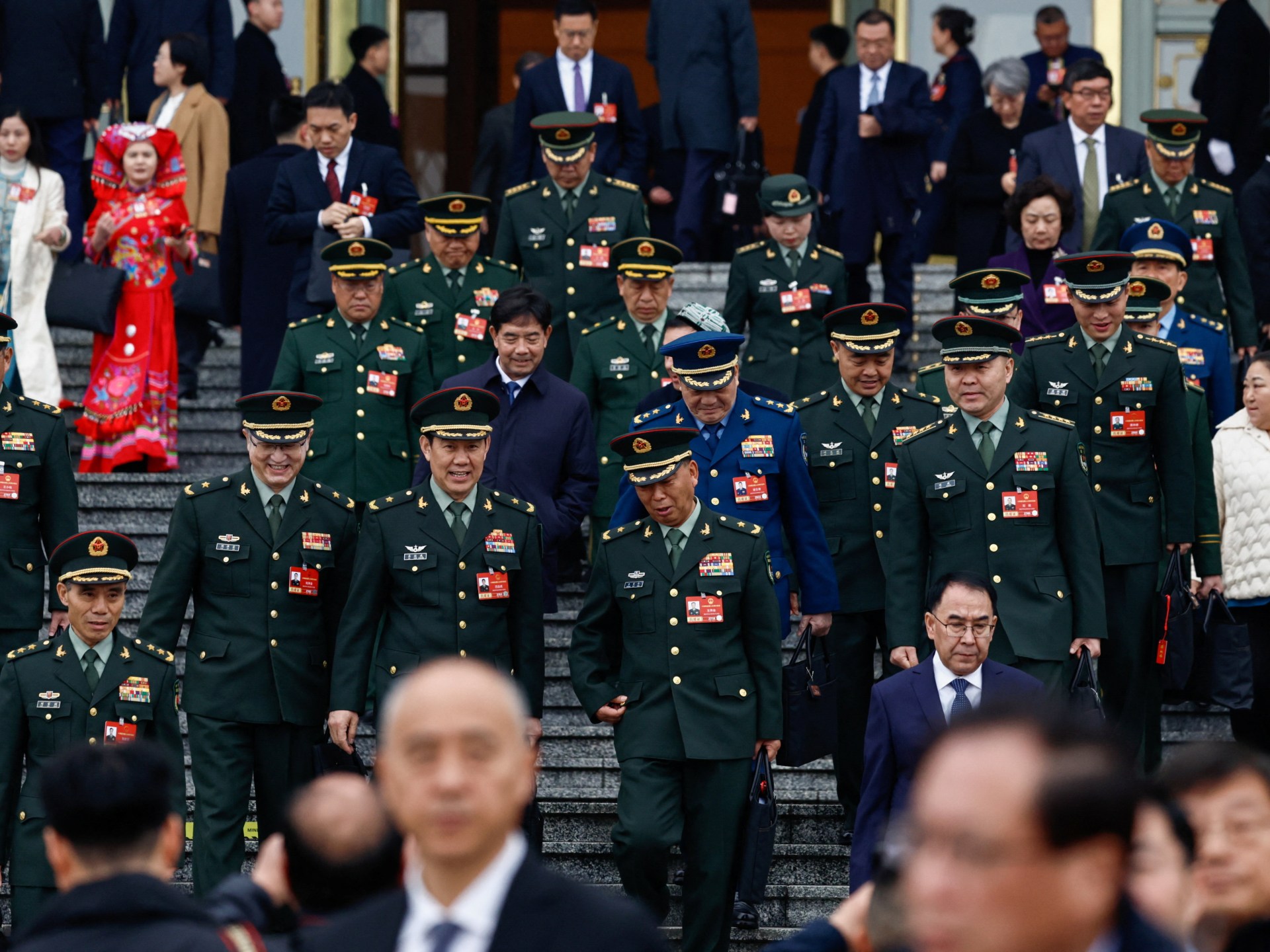
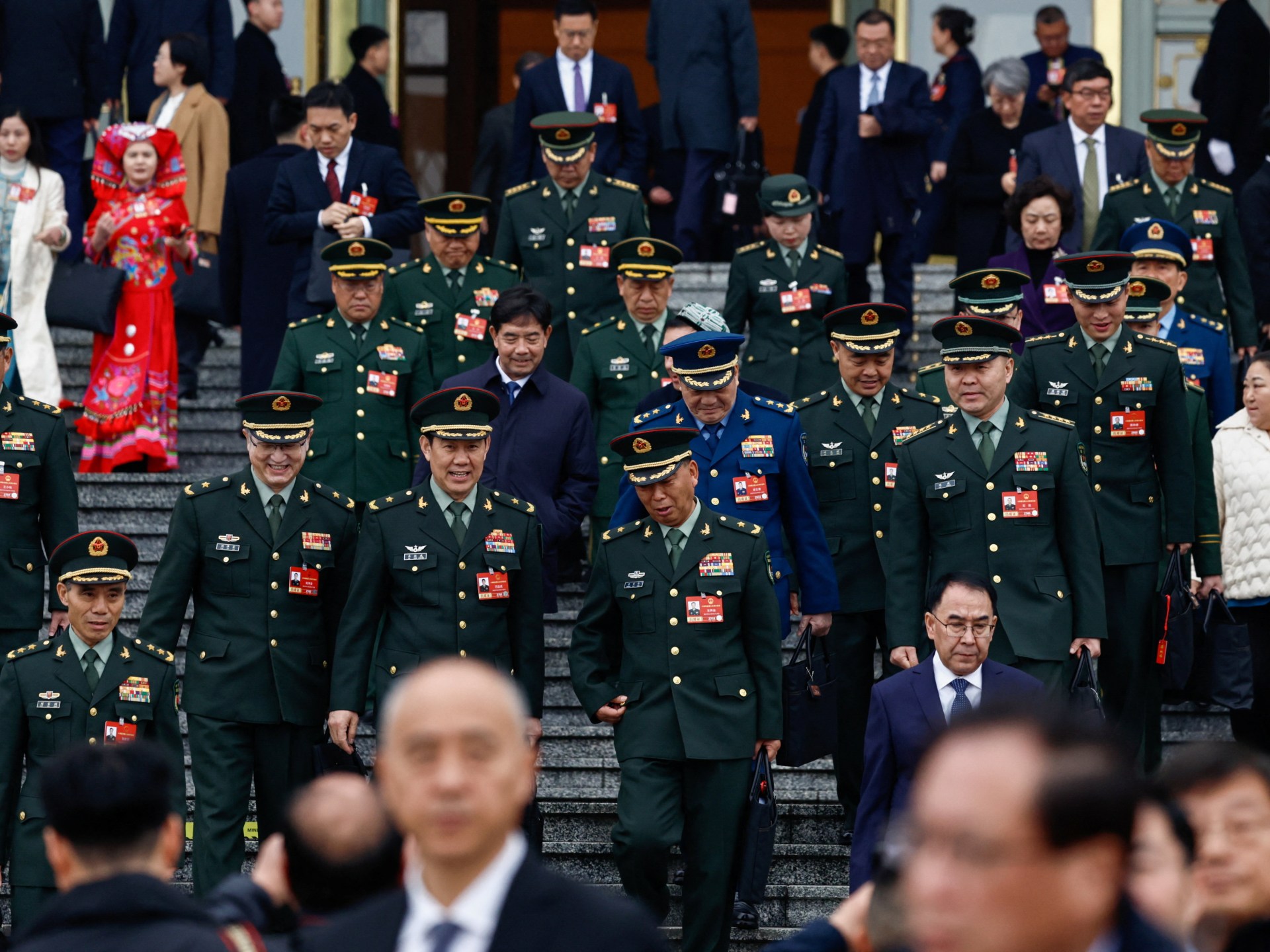
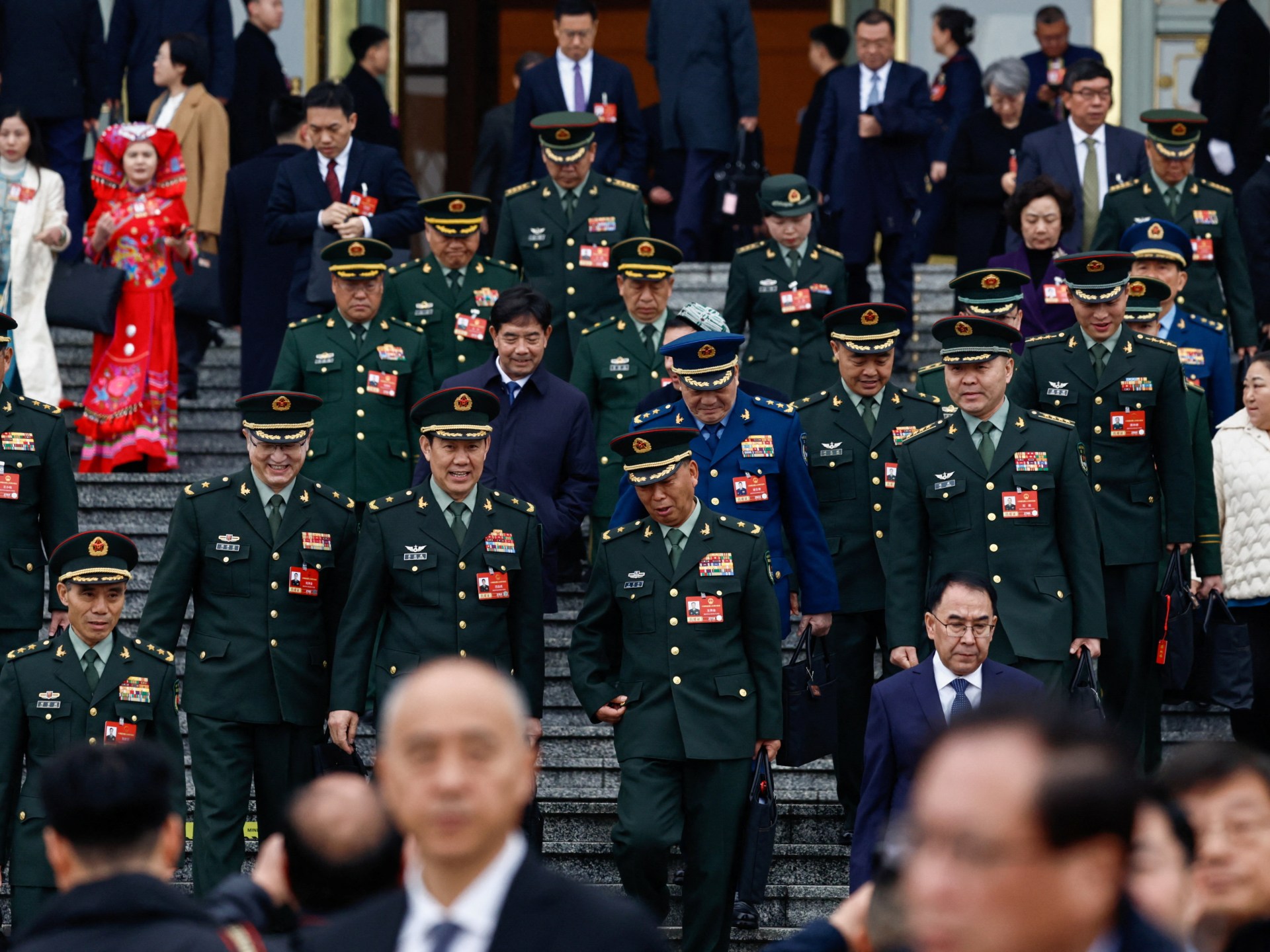
Taipei, Taiwan – As thousands of Chinese government officials gathered in Beijing for China’s annual legislative meetings known as the “two sessions” this month, at least a dozen active and retired military officers were absent from the proceedings.
Among the absentees was General Zhang Youxia, who has been under investigation since late January for “suspected serious violations of discipline and law”, according to China’s state Xinhua news agency.
Zhang is one of the highest-ranking officials to be caught up in a wider anticorruption sweep that has become a hallmark of Xi Jinping’s long tenure as president and chairman of the Chinese Communist Party.
Xi launched the initiative shortly after rising to power in 2012, setting off an “unprecedented anticorruption storm” that targeted “both high-flying ‘tigers’ and lower-level ‘flies'” across China’s state, military, and Communist Party apparatus, according to a Xinhua report last year.
Recent government reports indicate that Xi has embarked on a renewed sweep through the military leadership of the People’s Liberation Army (PLA), according to Chieh Chung, an adjunct associate research fellow at Taiwan’s Institute for National Defense and Security Research.
This time, Xi’s net appears to be even wider, he said.
It now includes operational commanders in addition to members of China’s Central Military Commission and military functional institutions, political commissars, and commanders across the PLA’s five military theatres and various military branches, he said.
Strengthening the PLA in advance of its anniversary According to China’s official military newspaper last month, corruption remains a priority for President Xi.
“Corruption is the biggest cancer eroding combat effectiveness.
The more thoroughly we eliminate hidden dangers, the more promising the century-long battle against corruption will be,” the paper read, according to an English translation.
The PLA’s latest work report – released during the two sessions – placed the fight against corruption as equal to other goals like “political rectification” and ensuring loyalty.
The anticorruption drive comes as the PLA prepares to mark its 100th anniversary in August 2027, when it will take stock of its decades-long modernisation campaign.
Tristan Tang, a non-resident Vasey Fellow at the Honolulu-based Pacific Forum research institute, told Al Jazeera that Zhang and other military targets reflect Xi’s long-running dissatisfaction with management of the armed forces.
The Chinese leader renewed his focus on the military between 2016 and 2017, according to Tang.
The more recent removals should be seen as an extension of that campaign, he said.
“My interpretation is that the leadership has discovered longstanding problems in the PLA’s personnel system.
That may explain why a large number of generals and admirals have been removed or investigated while many positions remain unfilled – because officers across the system, possibly even senior colonels, are undergoing re-evaluation and investigation,” Tang told Al Jazeera.
“As a result, when a unit commander is purged, it does not necessarily mean there was a problem within that unit; the issue may stem from actions taken in a previous post,” he said.
‘Missing or potentially purged’ Zhang and his ally General Liu Zhenli have been two....