A factory near Nichi Mandal village in Morbi district on State Highway 7, around 180 km west of Ahmedabad, was punching out 12,000 boxes of vitrified tiles with a picture of Indian-born former American wrestler 'The Great Khali' on them daily just a week ago.
The factory has stopped production.
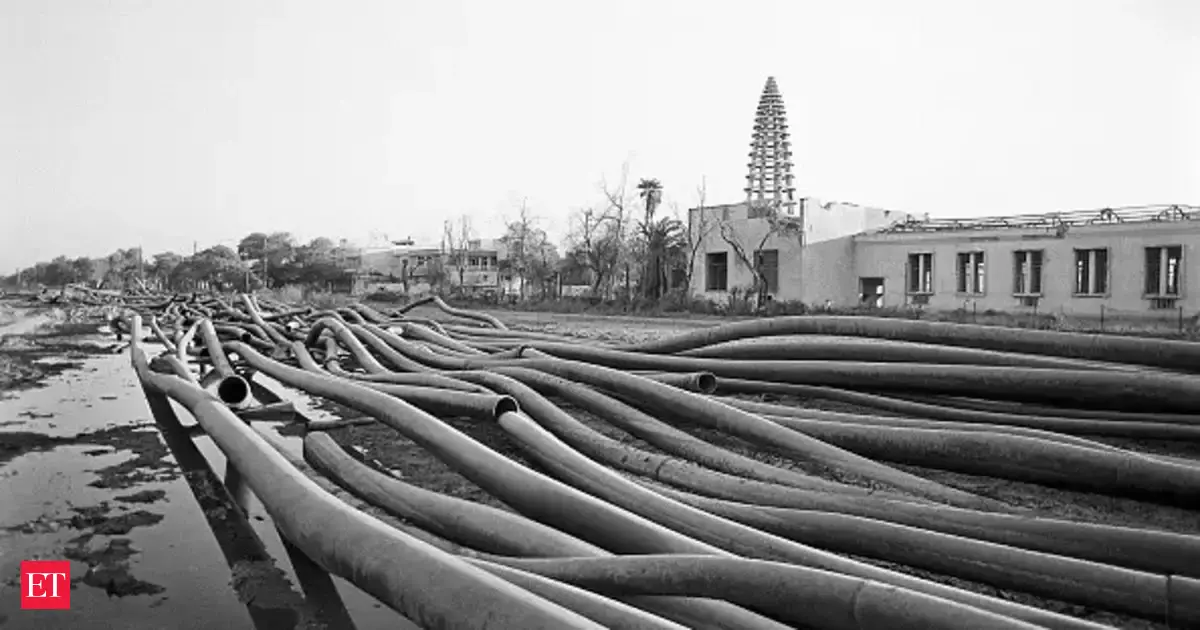
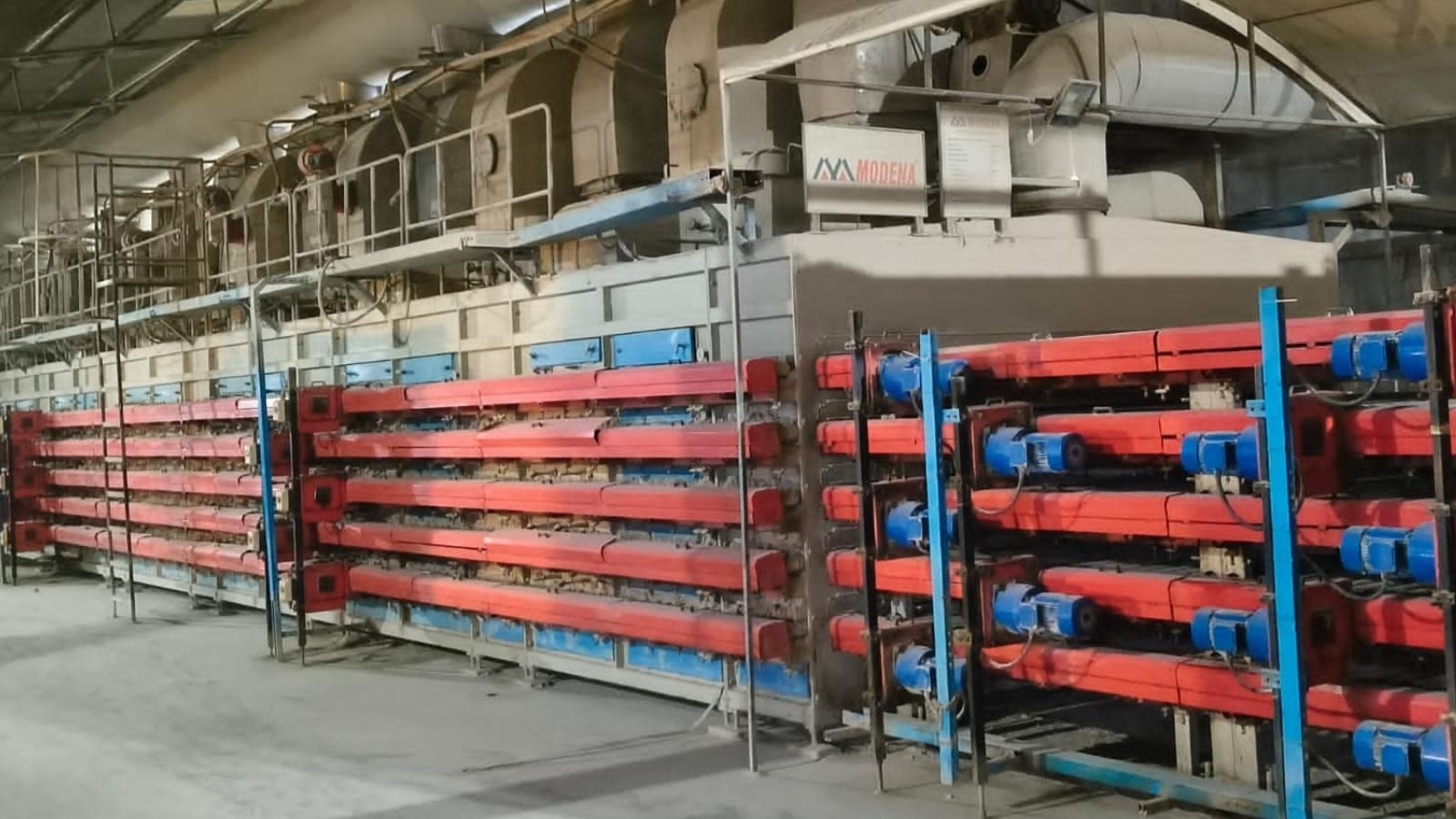
The kilns that would otherwise be baking vitrified tiles at a scorching 12,000 degrees turned cold and the motors pushing tiles through the various stages of manufacturing had their belts pulled out.
In Morbi, the owner of a ceramic unit in a village calculated dismantled profit projections while a migrant worker at the railway station texted his ‘thekedar’ (contractor) to deposit his hard-earned money as he headed home.
An exporter was overseeing the return of shipping containers back to the factory of his client as the order was unfulfilled while many of the small eateries in Morbi town shut down due to lack of customers.
At the factory, one worker held an acetylene torch to the kiln while a few others were reassembling the package.
In another large adjoining shed, construction workers were setting up a massive tile press.
These scenes, played out across over 515 units located within metres of each other producing wall tiles, vitrified tiles and floor tiles in Morbi district of Gujarat – their workforce down to the bare minimum.
Every part of the Morbi ceramic industry ecosystem has been affected by something that is out of their control: a conflict in West Asia.
While the sanitaryware-making units running on natural gas continued to run low key, the propane-powered tile-making units were shut down.
On March 19, when most parts of Gujarat experienced inclement weather and strong winds blew ceramic dust into the air, Kera Vitrified LLP factory worked on a skeleton crew with most of the 100-odd workers sent home at least till April 15 after the Morbi Ceramics Manufacturers Association (MCMA) on March 17 announced the closure of the industry due to fuel shortage.
On the same day, Mono Bathware factory, which manufactures sanitaryware, located 14 km north-west of Morbi on the road to Kandla Port, was running at full capacity when The Indian Express visited it.
The reason: the natural gas such sanitaryware units use continues to be supplied - for now - through a pipeline from Gujarat Gas Ltd.
The Public Sector Unit (PSU) continues to power about 110 such factories which produce sinks, commodes and bath tubs.
The tile factories, however, went into maintenance mode because of the Propane-LPG shortage following the West Asia conflict that started on February 28 when the US and Israel attacked Iran.
Iran has retaliated by targeting Israel and several of its Gulf neighbours where the US has its military bases.
Iran controls the Strait of Hormuz, a key shipping route through which 20 per cent of the world's energy is transported.
Since the conflict, very few ships have been allowed by Iran to cross the Strait.
The blockade has resulted in severe disruptions in energy supply to many countries, including India.
The Government of India asked companies to prioritise LPG gas supply for household cooking.
This led to the strangling of Propane-LPG stocks available for industrial use, with the final remnants burning up in kilns by March 17.
Complete closure by March 24? The sanitaryware units are also expected to close by March 24 because units using natural gas have had supply curtailed to 80 per cent of average consumption as per the Natural Gas (Supply Regulation) Order, 2026 (Gazette notification) dated March 9, 2026.
While Gujarat Chief Minister Bhupendra Patel is said to have assured continued supply in a meeting with the MCMA on March 10, factory owners fear the likely new, increased rates may cut into their margins, making production untenable.
The MCMA’s letter to Union Minister for Petroleum and Natural Gas Hardeep Singh Puri, on March 12, seeking relief on the restrictions imposed on natural gas supply, did not yield the desired result and the industry declared a general suspension of production on March 17.
Ajay Marvadiya, president of the sanitaryware division of the Morbi Ceramics Manufacturers Association, tells The Indian Express, "In sanitaryware units, we use natural gas since the then-CM Narendra Modi set up the pipeline of Gujarat Gas Ltd.
Currently, we are getting 80 per cent of demand according to the notification of the Government of India.
Our plants will be able to run till March 24." "It is a labour-intensive industry that employs 100-125 workers per unit, as opposed to that of tiles, which is more automated.
The government has also asked us to keep up production so that employment of workers is not affected,” Marvadiya said.
“Our main problem after March 24 is going to be the likely higher price of natural gas.
We hope the decision on the new price happens soon so that we can then decide the impact on our production costs and then plan for April.
We are currently getting it at Rs 42 per cubic metre plus GST.
We expect that it may go up to Rs 54-55.
It will be beneficial if we get it at Rs 50," he said.
Marvadiya said the industry could take an increase of 2-5 per cent at current product margins but if the cost of fuel rises beyond that, the burden would have to be passed down to the consumer.
He said that demand is also down because of the slowing growth in the real estate market.
In total, there are about 650 major and about 150 minor ceramic units in Morbi.
The industry runs on two types of fuel: Propane-LPG and/or natural gas (PNG).
Consumption of Propane-LPG is an average of 55 lakh cubic metres per day in the industry and is used by about 500 units.
Propane-LPG is delivered to these units in tankers through road transport by IOCL, BPCL and HPCL, via local traders.
Consumption of natural gas is approximately 25 lakh cubic metres per day and is supplied to about 150 units through pipeline by Gujarat Gujarat Gas Limited.
Despite the difficulties, not all tile units are shut in Morbi.
There are 25-odd firms who invested in propane tanks along with keeping their natural gas connections active.
This has allowed them to continue production, said association leaders.
Nilesh Jetpariya, owner of Kera Vitrified LLP, says, "While natural gas prices would rise in winter due to high demand in Europe, propane prices remained stable.
Secondly, propane has a higher calorific value than natural gas, which means that units can increase production when using it.
Also, while the cost of propane is already decided in advance and paid upfront by manufacturers to the fuel traders who purchased it from companies, the cost of natural gas would often be reflected in the bill that came every 15 days and was variable based on petrodollar." Speaking on the dependence of the sanitaryware units on natural gas, a factory owner said, "Sanitaryware did not move to propane because it requires an investment of Rs 60-70 lakh and return on....
)