US President Donald Trump announced a two-week ceasefire with Iran just about an hour-and-a-half before his 8 pm (5.30 am IST) "deadline" ran out.
Iranian Foreign minister Seyed Abbas Araghchi swiftly agreed to the ceasefire around 40 minutes later.
The announcements came after Pakistan Prime Minister Shehbaz Sharif, in a post on X, "requested" both countries to dial down the tensions.
And so, 39 days since the war began, the world breathed a sigh of relief as the US President stepped back from the edge, just hours after threatening to destroy Iran's energy infrastructure — and its “whole civilization” — if it did not reopen the Strait of Hormuz.
Here are the key takeaways from the two-week “double-sided” ceasefire, as Trump described it.
Trump climbs off the edge First, the US President’s brinkmanship was on full display in front of the whole world.
Trump, who began the war along with Israel’s PM Benjamin Netanyahu by launching strikes on February 28, has been trying to climb off the edge since March 23.
At that time, he had announced a five-day pause on hitting Iran’s power plants, which he extended to a 10-day pause ending on April 6, and finally set a deadline of 8 pm, April 7.
The US President’s much-awaited post on Truth Social said that he has agreed to “suspend the bombing and attack of Iran” for a period of two weeks, as Iran has agreed to “complete, immediate and safe opening” of the Strait of Hormuz.
Trump, who was negotiating with Iran at gunpoint, has managed to get the chokepoint open.
This will be seen as a major win, since US allies in Europe had refused to send any naval or military assets to reopen the Strait of Hormuz.
The meeting called by the UK Prime Minister Keir Starmer had been able to build consensus on “immediate and unconditional reopening” of the Strait and respect for the “fundamental principles of freedom of navigation and the law of the sea”, but had refused to intervene militarily.
Iran’s leverage over the Strait of Hormuz “War is God's way of teaching Americans geography”.
This quote, attributed to Mark Twain and made famous by the comedian Jon Stewart, rings truer than ever now.
Iran has managed to use the Strait of Hormuz as a major leverage and its strongest weapon during the five-and-a-half weeks of the war.
Iran’s National Security Council said in its statement that the upcoming negotiations with the US were under the supervision and with the approval of the supreme leader, Ayatollah Mojtaba Khamenei.
The council called for all political factions and Iranians to support the talks.
The statement warned that if negotiations fail, Iran won’t hesitate to start fighting again.
Iran’s Foreign minister Araghchi, Tehran’s public face to the world, posted the response after the Iranian National Security Council agreed to Trump’s post.
“In response to the brotherly request of PM Sharif in his tweet, considering the request by the U.S.
for negotiations based on its 15-point proposal as well as announcement by POTUS about acceptance of the general framework of Iran's 10-point proposal as a basis for negotiations, I hereby declare on behalf of Iran's Supreme National Security Council: If attacks against Iran are halted, our Powerful Armed Forces will cease their defensive operations.
For a period of two weeks, safe passage through the Strait of Hormuz will be possible via coordination with Iran's Armed Forces and with due consideration of technical limitations.” Expert Explains | 'The US is in a bind to end the war… it also matters if Iran agrees to an off-ramp’ His key point was that the US has accepted the Iranian proposal and that Tehran is reopening the Strait for the time being.
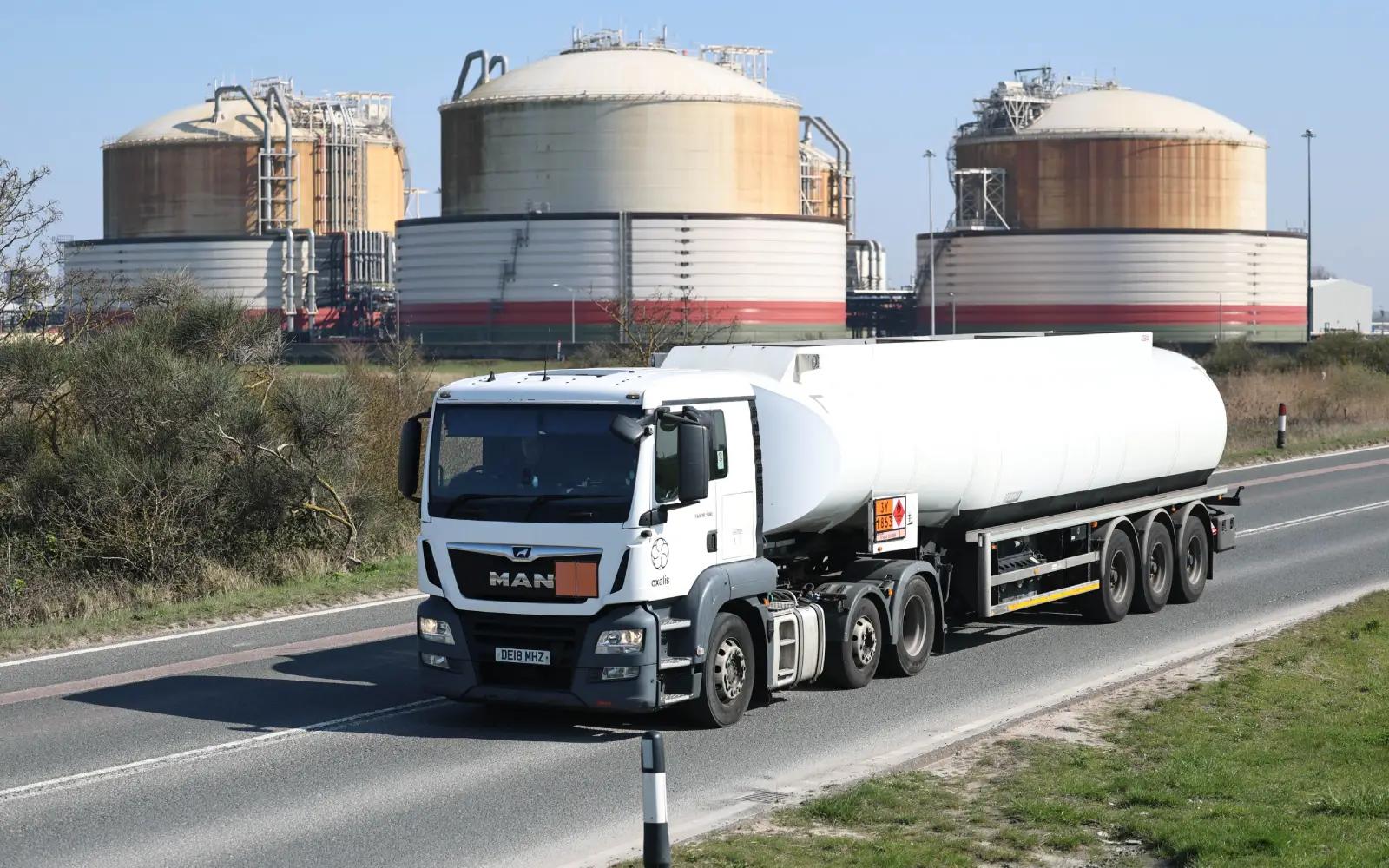
While the Americans don’t import oil that passes through the Strait of Hormuz — which is about 33 km wide at the narrowest point — the critical choke point through which about one-fifth of the world’s energy supply passes through, has led everyone in the world to pray for its reopening.
And, Iran, which had been hitting back on the American targets in the region, and broadened it to the energy and economic infrastructure, had made the Strait of Hormuz as part of its escalation strategy.
It had put a system of rewarding good behaviour by letting vessels of countries — which display either some form of neutrality or were seen on Iran’s side — pass through the Strait.
Within diplomatic circles, it was often referred to as the “Ayatoll booth”.
India and China were among the countries which had benefited from Tehran’s strategy of rewarding good behaviour.
For them, this was their biggest weapon to guard against the destruction of their infrastructure — which has been decimated as Americans have attacked their military industrial complex, the steel plants in Isfahan, industries in Bushehr, the bridges connecting these industries, and that has degraded their ballistic missile capabilities.
This was, in addition to the bombing of the nuclear facilities in Isfahan, Frown and Natanz last year.
For Iran, which was now operating on the Shahed drones and missiles targeting the American and Israeli targets in the region, and the Gulf countries, this two-week window will give them the space to negotiate.
Iran’s maximalist peace terms Iran says it has “forced” the US to accept its “10-point plan” which includes the following terms: Commitment to non-aggression Iran’s control over the Strait of Hormuz Acceptance of Iran's uranium....