Saudi Arabia had prepared and planned for the worst-case scenario for decades.
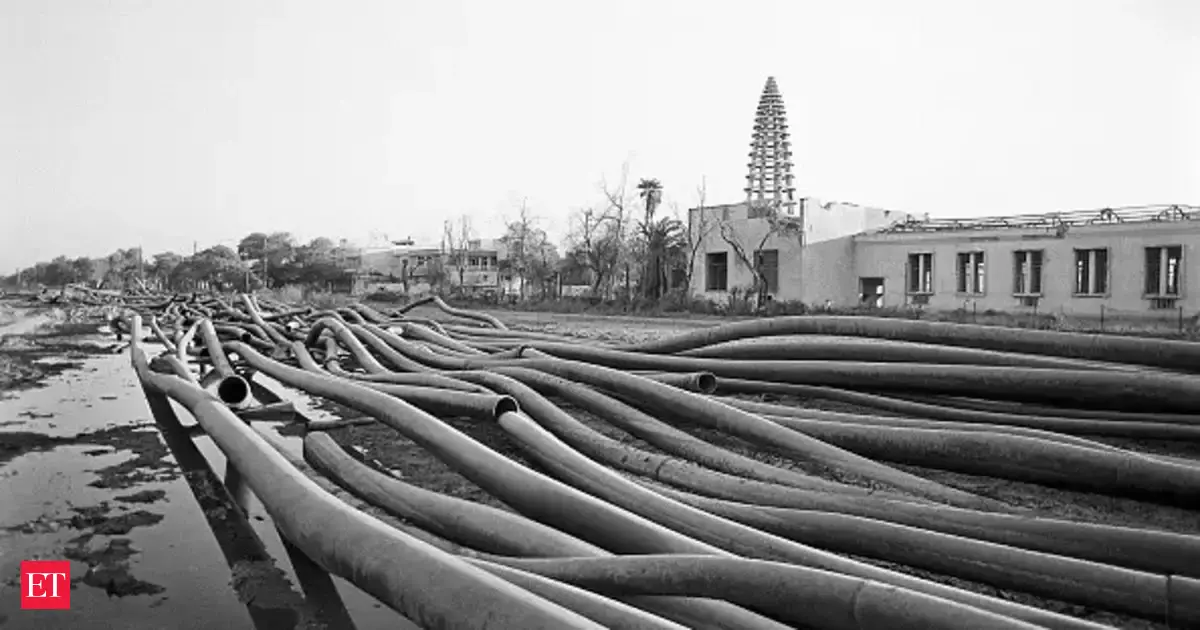
So within hours of the first US and Israeli strikes on Iran which resulted in the effective closure of the crucial Strait of Hormuz waterway, the world’s biggest crude exporter rolled out a contingency plan — one that had waited 45 years to come to fruition — to keep its oil flowing.The cornerstone of that plan is a 1,200-kilometer pipeline, built in the 1980s, which has become a pivotal character in the evolving Middle East conflict.
Running the breadth of the Arabian Peninsula from Saudi Arabia’s massive oil fields in the east of the country, the East-West pipeline empties out at the port of Yanbu on the Red Sea — a modern industrial city where a huge flotilla of oil tankers is massing to load Saudi crude, with more vessels arriving every day.Follow live updates of the West Asia warState-owned oil giant Saudi Aramco now faces the test of how quickly and sustainably it can ramp up flows through the new route.
Crude exports from Yanbu hit a five-day rolling average of 3.66 million barrels on Friday, according to ship-tracking data compiled by Bloomberg, around half of Saudi Arabia’s prewar total.
On Thursday loadings were briefly halted following an Iranian attack, a reminder that flows can be uneven in such a volatile environment.The pipeline route offers a vital release valve to the pressure building on global oil supplies.
About 20 million barrels, one-fifth of global consumption, normally flow through Hormuz on a daily basis.
With no outlet for their barrels, producers have had to reduce output.
However, Saudi Arabia, which has long framed itself as a stabilizing force in the market, has a substantial workaround.Live Events“The East-West pipeline is looking like a strategic masterstroke right now,” says Jim Krane, the Wallace S.
Wilson Fellow for Energy Studies at Houston’s Rice University.
“The entire global economy is better off with the line in operation.”“Were it not for this seamless Hormuz bypass, there’d be even more desperation in Trump’s calls for allied help,” adds Krane, referring to Donald Trump.
On Saturday the US president issued Iran with a 48-hour ultimatum to unblock Hormuz or face attacks on its power plants.
Tehran responded with a threat to strike US and Israeli infrastructure — including energy assets — in the region.
Bloomberg A by-product of an earlier conflict — the 1980s Iran-Iraq war — the pipeline has come into its own since the start of March.
Aramco, which prides itself on high-tech drilling, complex processing and a logistical machine spanning the globe, is now reliant on something a little more low-tech to keep its business running.
The East-West pipeline has fed a surge in crude exports from the port of Yanbu which have risen more than fourfold from pre-war levels of below 800,000 barrels a day, as Aramco rushes oil to market.
Also Read | Saudi Aramco boss pulls out of major international energy conference due to Iran conflict, source saysAramco began contacting customers as soon as war broke out, asking if they would divert their vessels to Yanbu with Hormuz now impassable.
Saudi tanker giant Bahri began making similar requests of shipowners.
By March 4, Aramco confirmed that it had begun ramping up operations on the pipeline.
Within days a major Indian refiner snapped up cargoes from Yanbu, the first sign that the workaround was gaining traction.
Bloomberg By March 10, a flotilla of at least 25 supertankers was heading to Yanbu.
It’s not a cheap operation — people active in shipping markets said Bahri was paying rates of $450,000 a day and more to amass enough vessels to service the Red Sea port.
Yet each day the number of ships pointing at Yanbu continued to climb, a sign the kingdom was flexing its logistical might.
At times last week the port was loading more than 4 million barrels of oil a day as the number of waiting tankers continued to grow.
“The mere existence of an alternative route helps calm markets by reassuring buyers that not all the region’s exports are trapped,” says Carole Nakhle, chief executive officer of energy consultant Crystol Energy Ltd.
“That said, it’s not a risk-free alternative.
If Yanbu and the East-West system were to come under sustained pressure, that would mark a serious escalation.”Iran’s strike on the Samref refinery in Yanbu — a joint venture between Aramco and US oil major Exxon Mobil Corp.
— on Thursday highlighted the threat.
It came a day after Israel struck Iran’s biggest natural gas production and processing infrastructure, which prompted Tehran to attack energy sites across the Gulf in retaliation.
Also Read | US may 'escalate to de-escalate' against Iran: Treasury chiefThe East-West pipeline was targeted as recently as 2019, and could again be in the firing line if there’s a fresh outbreak of tit-for-tat strikes on energy infrastructure in the region.Eastern production facilities have come under attack and the Ras Tanura refinery, the country’s biggest, was forced to shut down temporarily.
The company has cut crude oil production by as much as 2.5 million barrels a day.
All combined, it will result in lost revenues even if oil prices have risen.Aramco declined to comment for this story.“While we have faced disruptions in the past,” Amin Nasser, the chief executive officer of Saudi Aramco, said in a March 10 conference call, “this one by far is the biggest crisis the region’s oil and gas industry has faced.”Yanbu Moves Center Stage Yanbu has, in modern Saudi history, played second fiddle to the massive crude and chemical-processing facilities that dominate the Persian Gulf coastline from Jubail to Ras Tanura from which Aramco exported its first crude by tanker in 1939.
The east is....