India today stands at an important moment in its economic journey.
As the nation moves towards becoming one of the world’s largest economies, growth must increasingly be measured not only by the quantity we produce but by the value we create.A very few sectors reflect this transformation more clearly than the food processing sector.
India is among the largest producers of food grains, fruits, vegetables, milk and marine products.
For decades, our agricultural strength ensured food security for the nation.
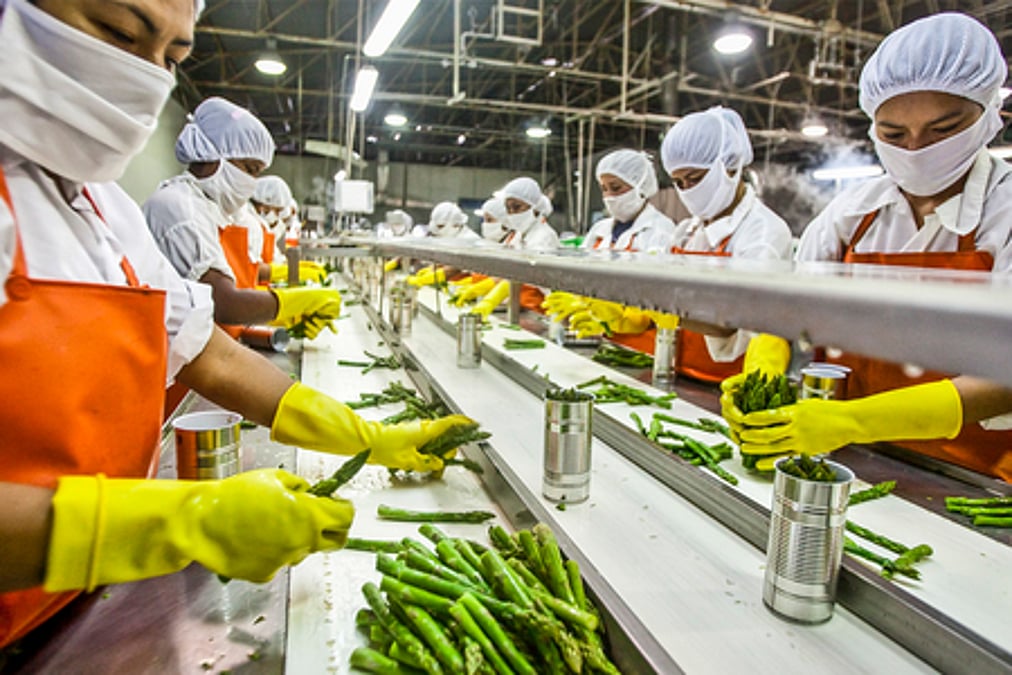
Yet a large portion of this produce traditionally moved directly from farm to market with limited value addition.Today, only about 12–13 percent of India’s agricultural produce undergoes processing.
This gap between production and processing represents one of the largest opportunities in the Indian economy.The next phase of India’s food journey is therefore clear: to transform agricultural abundance into high-value, globally competitive food products.Recognising this opportunity, the government launched the production-linked incentive scheme for food processing industry in March 2021 with a financial outlay of `10,900 crore.
The scheme is being implemented over a six-year period from 2021-22 to 2026-27 by the Ministry of Food Processing Industries.The core idea behind the scheme is simple but powerful:reward companies that invest in expanding food processing capacity, innovation and global branding and ultimately the schemes creates multiple global food manufacturing champions from Indiafunding them for investing in In-store branding, Shelf space in international retail chains and Global marketing campaigns.Strategic Design: Building a Modern Food EcosystemThe PLISFPI scheme has been carefully structured around three key pillars.Incentivising High-Potential Food SegmentsThe first component focuses on scaling production in major food categories such asReady-to-Cook and Ready-to-Eat foods, Processed fruits and vegetables, Marine productsThese categories represent areas where India can rapidly expand both domestic consumption and export potential.Encouraging Innovation and MSME ParticipationThe second component supports innovative and organic food products developed by MSMEs.
Small and medium enterprises form the backbone of India’s food sector, and their integration into....