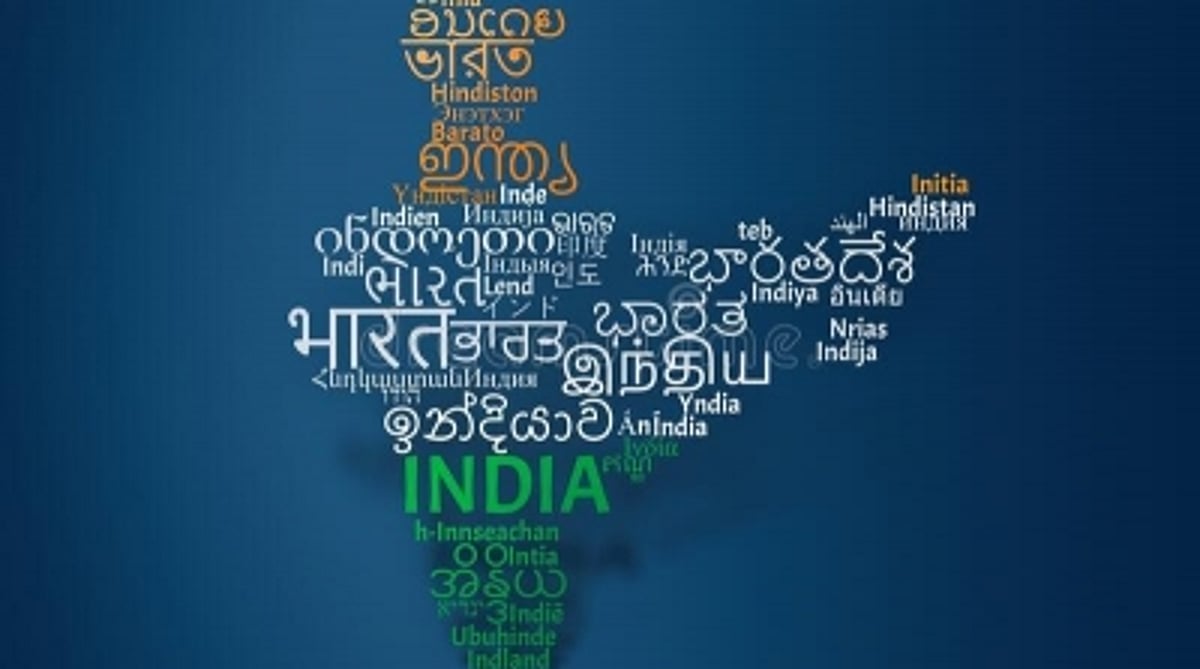
Bharat needs to decolonise the way Bharatiya languages have been seen, examined, studied, interpreted or classified so far.
It’s not just a rhetorical statement; it comes from a very specific historical reality of India.The contemporary linguistic framework through which we classify Bharatiya languages emerged during racio-colonial rule.
In the late 18th century, William Jones famously suggested that Sanskrit, Greek and Latin shared a common linguistic origin.
This observation started the field of comparative philology in the colonial world and became the foundation of what we now call language families.
Studies classified the languages of the northern part of Bharat at three levels: Indo-Aryan, Indo-Iranian and Indo-European.In the next century, Robert Caldwell worked on languages of the southern part of Bharat and argued that they formed a distinct “Dravidian” family.
On the surface, these look like scholarly breakthroughs, and to an extent they were.
But they were also shaped by the racio-colonial climate of the time.The Macaulay Minute of 1835 clearly stated two colonial positions: “I have never found one among [Orientalists] who could deny that a single shelf of a good European library was worth the whole native literature of India and Arabia” and “We must at present do our best to form a class who may be interpreters between us and the millions whom we govern; a class of persons, Indian in blood and colour, but English in taste, in opinions, in morals, and in intellect”..Therefore, colonial scholarship was deeply tied to the broader project of understanding, organising and governing Bharatiya society at large.
Languages became one of the tools for that, as classifying them into neat families made it easier to map populations, draw boundaries and construct narratives about their ancestry and inherent differences.
Often, these linguistic divisions were aligned with racial thinking.Later, the overt racial language faded.
No one in academia today openly says Indo-Aryan equals one race and Dravidian another.
But the categories themselves survived and created other fault lines.
Over time, they turned into linguistic identities and began to carry historical, cultural and sometimes political weight far beyond their original analytical purpose.Now, this is where the concept of language family and classification of Bharatiya languages get tricky.
Beyond linguistics, these classifications started....
)