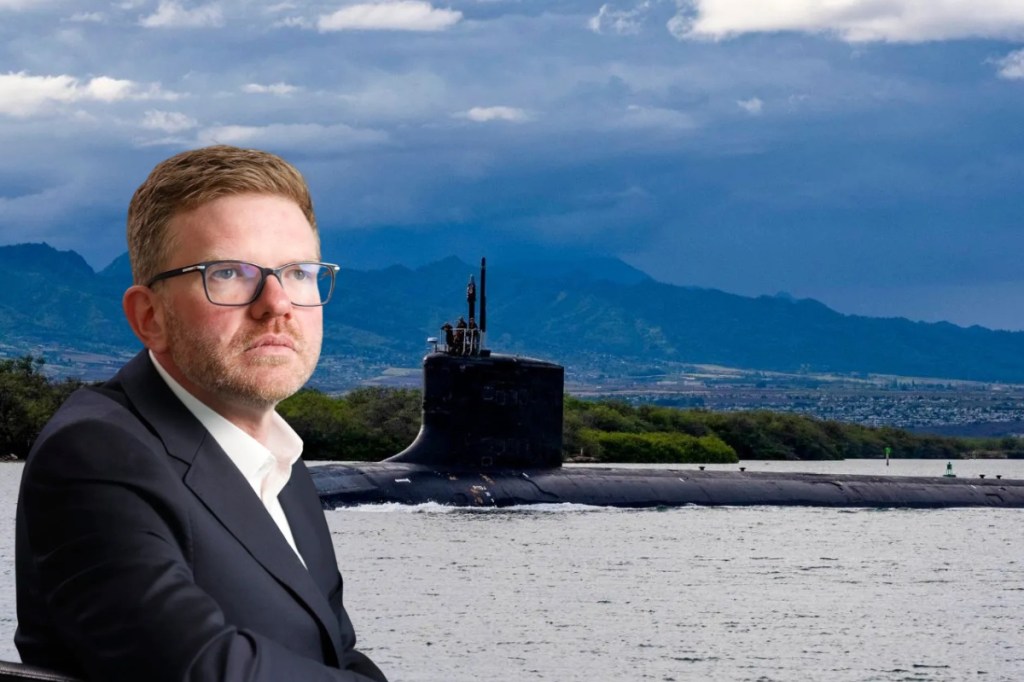
Washington – The failure of US-Iran peace talks has left President Donald Trump with several unpalatable options, as analysts say his order to blockade the strategic Strait of Hormuz could further complicate his next move.
Any hopes that US Vice President JD Vance would emerge from the marathon day of negotiations with top Iranian officials with a deal to end a war that has rippled across the Middle East were dashed when he left Pakistan emptyhanded.
Protracted talks would undermine Trump’s insistence that Iran has “no cards” left to play, while ramping up military action would expose US forces to heightened risk and could alienate voters — already angry with surging gas prices — ahead of midterm elections.
And the blockade of the strait through which a fifth of the world’s oil moves would do little to ease global economic jitters.
For Brian Katulis, a senior fellow at the Middle East Institute, Trump’s propensity to talk off the cuff and make threats — what he called the president’s “carnival barker” style — leaves his close aides scrambling to chart a path forward.
“He may be simply buying more time to move in more military assets or because he doesn’t know what else to do.
I wouldn’t call it a strategy; it is a military-centric approach without strategy,” Katulis told AFP.
Shibley Telhami, a professor of peace and development at the University of Maryland and a fellow at the Brookings Institution think tank, says the threat of a blockade was “bewildering and seems self-defeating.” “Iran already has no trust in Trump,” Telhami told AFP.
“Hard to understate what this makes of what’s left of America’s global credibility.” – ‘Untrustworthy and duplicitous’ – Iran’s powerful Revolutionary Guards on Sunday pledged that Tehran’s enemies would be trapped in a “deadly vortex” if they were to make a wrong move....