The case against AAP leaders didn’t stand the court’s scrutiny.
But that doesn’t matter because the damage has already been done.
Both Manish Sisodia and Arvind Kejriwal spent considerable time behind bars, having had difficulty obtaining bail.
Most importantly, their image was sufficiently tarnished and the party pushed to the wall.
AAP lost the Delhi Assembly election because of anti-incumbency and its many mistakes, but can we ignore the role of the loud accusations and court cases as contributory factors? Many may not find it easy to be sympathetic toward AAP and yet, it would be a folly not to read the subtext of the drama.
The current outcome is, in a sense, irrelevant and surreal.
The purpose behind the court case has been served.
Kejriwal was not the only CM to be arrested.
Hemant Soren followed him to jail.
Nor is AAP the only party to suffer.
The BSP has gone quiet; Congress finds it tough to face the slew of court cases against its leaders.
What happens to such cases is secondary.
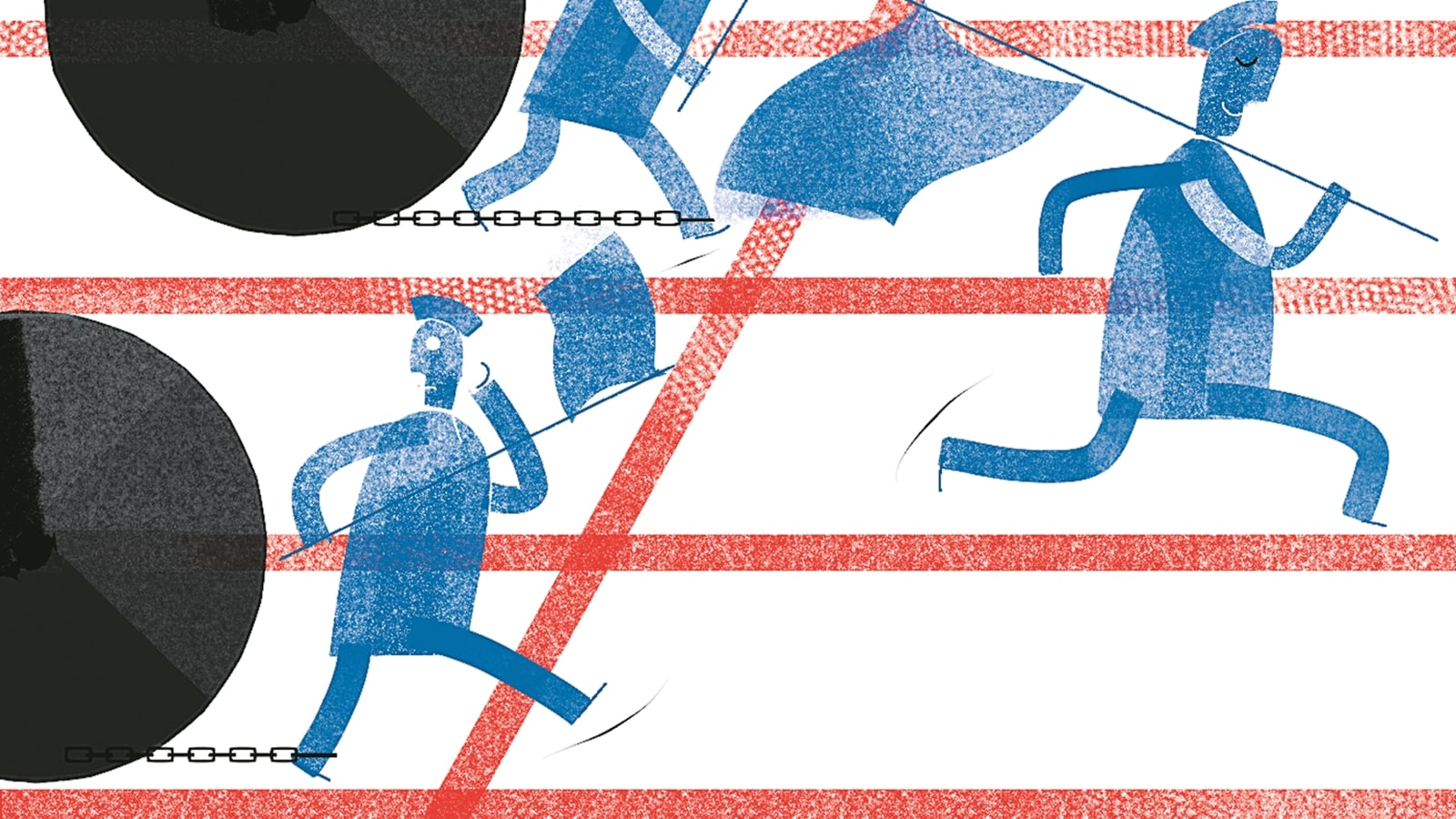
They showcase the ease with which the ruling party at the Centre is wielding the stick to undermine the Opposition.
Court cases are playing a crucial role in the fortunes of parties.
So, legal niceties apart, the fundamental question such episodes force us to consider is this: How free and fair is political competition? Neutral cynics would draw attention to the fact that political competition is never really free and fair — the rich and socially powerful always have an advantage.
It is not easy to form a new political party and get enough space in the political arena.
These criticisms are indeed true.
But what one is encountering in this instance is the misuse of process.
This argument will undoubtedly activate the “what about” industry, pointing out the many misdeeds of other parties when they have been in power.
Their sins notwithstanding, what we witness now is a qualitatively different level at which the unfairness of the process vitiates competitive politics.
Most non-BJP parties have been at the receiving end of this unfairness, but curiously, they seem to be too unconcerned to think about it collectively.
Multiple mechanisms are developed to neutralise as many impediments to fair competition as possible.
The term “free and fair” is not only relevant for a formal conduct of elections, it is central to the existence of multi-party competition.
The level playing....